

Top 8 Features to Look for in Online Examination Software for Secure Exams
a complete guide to choosing secure online examination software, covering online proctored exams, ai-powered fraud detection, authentication methods, analytics, and user-friendly exam management features.
secure online examination software with ai-powered proctoring and real-time monitoring ensures fair, reliable, and cheat-free online exams.
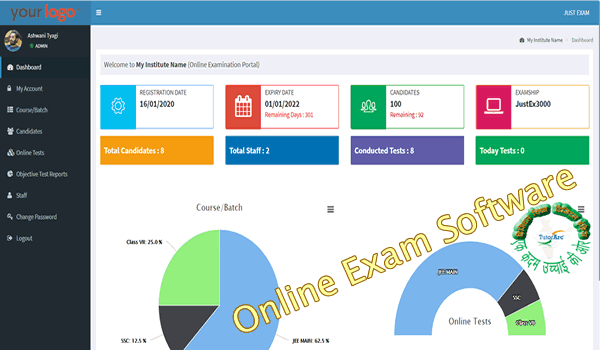
As the world becomes more digitally aware, online exams have become a significant part of educational institutions, recruitment drives, and professional certifications. The ease of accessibility that online examination software provides is unmatched, but to ensure exam integrity and security, it is essential to choose the right platform.
This is where features such as online proctored exams, well-built security systems, and real-time monitoring play an important role. With these advanced tools, organisations can confidently conduct exams without compromising security.
In this blog, we will examine the features to prioritise when selecting an online examination software to ensure a secure exam experience.
Key Features to Ensure a Secure Online Exam Experience
When selecting an online examination software, certain features are essential to ensure the integrity and security of your exams. These tools help prevent malpractice, safeguard against unauthorised access, and guarantee that the entire exam process is secure.
Below are some of the most important features to consider:
- Real-time Monitoring with Online Proctored Exams
- One of the most crucial features of any online examination software is the ability to conduct online proctored exams. Online proctoring ensures that candidates are monitored in real-time during the exam, preventing cheating and malpractice.
There are two main types of online proctoring:
- Live Proctoring: A human proctor monitors candidates in real-time through their webcams and microphones, ensuring that there is no unauthorised behaviour during the exam.
- Automated Proctoring: This method uses AI and machine learning algorithms to monitor candidates' behavior and flag suspicious actions automatically.
With online proctored exams, institutions and organisations can confidently conduct secure exams without being physically present, making it an essential feature of any reliable online examination software.
Secure Login and Authentication
The security of an online exam begins well before the assessment starts, with strong identity verification at the login stage. To ensure that only authorized candidates gain access, modern exam platforms rely on three-point student authentication, which verifies identity through multiple, independent checks.
- Email Authentication: Confirms the candidate's registered credentials and ensures access is granted only through an approved email ID.
- OTP Verification via Mobile Phone: Adds a second layer of security by validating possession of the registered mobile number at the time of login.
- Official Identity Authentication: Requires candidates to present a valid government or institution-issued ID, helping establish authenticity before the exam begins.
Together, these steps significantly reduce the risk of impersonation and unauthorized access, creating a secure and controlled examination environment from the outset.
Customizable Exam Settings
Every assessment serves a different purpose, which makes flexibility in exam configuration essential. Online examination software should support personalized settings that accommodate diverse candidate needs while maintaining exam integrity and flow.
Key customizable settings include:
Compensatory Time for Accessibility Needs: Allows eligible test-takers to receive additional exam time in line with UGC guidelines. Neurodiverse candidates or those with disabilities can request reasonable accommodations to ensure a fair assessment experience.
Unidirectional Assessment Order: Restricts backward navigation during certain tests, ensuring candidates progress through questions in a predefined sequence. This setting helps maintain consistency and efficiency in time-bound or high-stakes exams.
Network Disconnection Management: Automatically manages temporary internet disruptions by enabling candidates to reconnect and resume the exam without data loss, reducing stress while protecting exam continuity.
Together, these configurable options ensure exams remain inclusive, controlled, and adaptable to varying assessment requirements without compromising security.
Advanced Reporting and Analytics
Once an exam is completed, the ability to review performance through detailed reports and analytics is invaluable. Online examination software should provide real-time analytics to track:
- Exam Completion Rate: Understand how many candidates attempted the exam and their completion rates.
- Question Performance: Identify which questions were most difficult for candidates, helping you analyze and improve future exams.
- Candidate Behaviour: View logs of candidate activity, including attempts to switch tabs or any unusual behavior.
AI-powered Fraud Detection
Maintaining exam integrity during the assessment requires continuous monitoring and controlled test conditions. During the exam, online assessment-based platforms, such as Mercer assessments, combine secure browser technology with AI-driven monitoring and human oversight to detect unfair practices in real time.
- Facial Verification Technology: Used to confirm that the same candidate remains present throughout the exam session. Any mismatch or absence can be flagged for further review.
- Automated AI Monitoring Flags: Analyze candidate behavior patterns and raise alerts when predefined anomalies are detected. These flags are reviewed to identify potential integrity concerns without interrupting genuine test-takers.
- Browser Lockdown Mode: Restricts access to unauthorized applications, websites, and system functions, ensuring candidates remain within the exam environment for the entire duration.
These AI tools are particularly useful in online proctored exams, where it is challenging to manually track and monitor every candidate. By integrating AI, the software provides a more secure exam environment.
Seamless Integration with Other Platforms
Many organizations already rely on multiple digital systems for learning, hiring, or certifications. Online examination software should integrate smoothly with these existing platforms to avoid data silos and manual work.
Key integration capabilities include:
Learning Management System (LMS) Integration
Allows exams, scores, and certifications to sync automatically with existing learning management system platforms, ensuring continuity in learning workflows.
Automated Data Synchronisation
Ensures candidate details, exam results, and performance reports are updated across platforms in real time without manual intervention.
Online assessment-based platforms support integrations with widely used LMS tools, helping organizations maintain operational efficiency.
User-friendly Interface
Ease of use plays a critical role in the success of any online examination software. Both administrators and candidates should be able to navigate the platform without confusion or extensive training.
Important usability elements include:
- Intuitive Admin Dashboards
- Simplifies exam creation, candidate management, monitoring, and report generation through clearly structured controls.
- Candidate-centric Exam Interface
- Provides a clean and distraction-free layout that helps candidates focus entirely on the assessment.
- Clear Navigation and Instructions
- Reduces errors during exams by guiding users smoothly through login, test instructions, and submission steps.
A user-friendly interface improves adoption, minimizes technical disruptions, and ensures a smoother exam experience for all stakeholders.
Ensuring Secure and Fair Online Exams
Selecting the right online examination software is crucial to maintaining the security, integrity, and reliability of your exams. Essential features such as online proctoring, real-time monitoring, and AI-powered fraud detection play a vital role in safeguarding against cheating and ensuring a fair exam experience.
These tools enable exam administrators to monitor and assess candidates remotely and offer a level of security that traditional exam methods cannot match.
By prioritizing the right features in your online exam platform, you can build a secure and trusted environment. Thus, enhancing the credibility of your exams and ensuring a seamless experience for all involved.





