

Twin threat from China, Pakistan tests India’s defence Budget ambitions
Twin threat from China, Pakistan tests India’s defence Budget ambitions
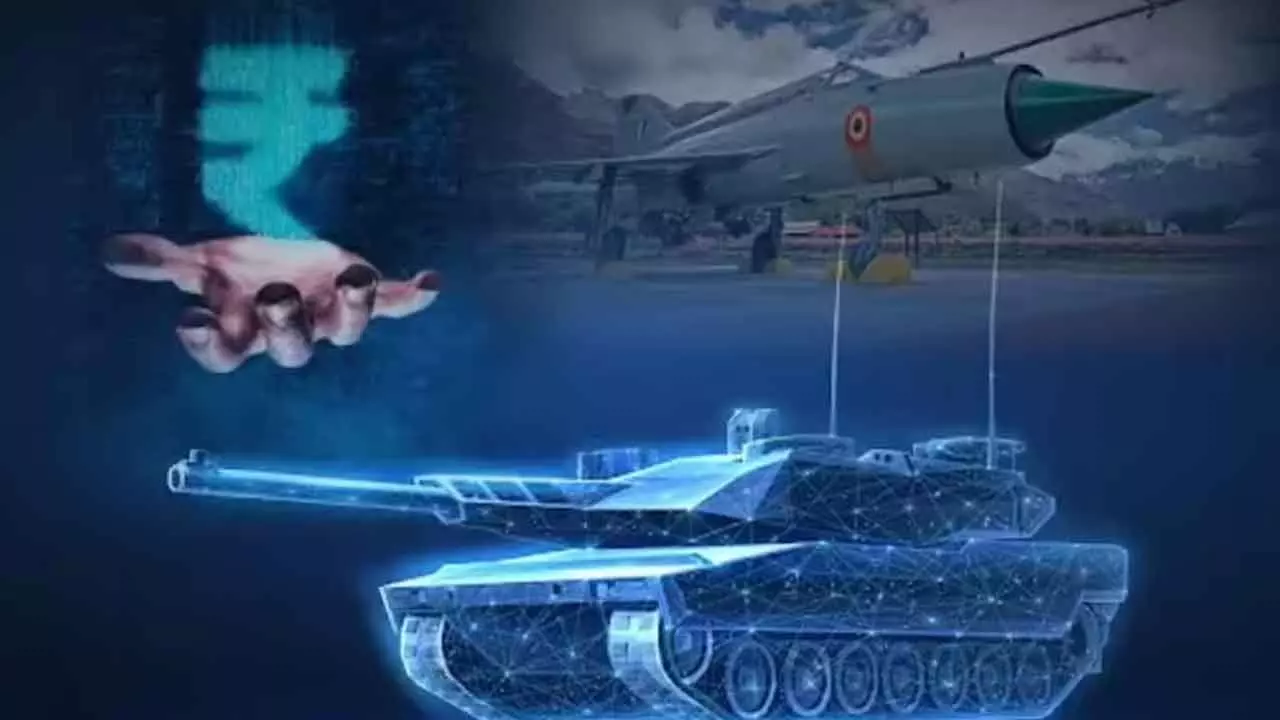
The need for India’s military to be prepared for a two-front, or “twin-threat”, scenario involving China and Pakistan is now seen as a reality rather than a distant possibility by the country’s military leadership. This strategic requirement stems from deepening collusion between the two neighbours, unresolved territorial disputes, and the imperative to secure India’s long borders: 3,488 km with China and 3,323 km with Pakistan.
The timing of this concern is significant. It comes months after India and Pakistan faced a military standoff in May last year. Following a deadly militant attack in Jammu and Kashmir’s Pahalgam, India launched strikes on terror launch pads in Pakistan and Pakistan-administered Kashmir under ‘Operation Sindoor’. Military exchanges followed, before the Indian Army said tensions eased after a ceasefire request from Pakistan’s Director General of Military Operations (DGMO).
Recent conflicts have also altered the character of warfare. During the India-Pakistan standoff, drones and surveillance technologies played a visible role.
Senior military leaders have noted that advanced sensors and Artificial Intelligence (AI) are steadily reducing battlefield surprise. They argue that while a technological edge increasingly decides outcomes, technology alone is insufficient. Intellectual preparedness and adaptive military leadership, they stress, are equally critical.
This raises a key question. Does the new Union Budget adequately support these ambitions? Analysts point out that India needs to finalise several major defence deals. Plans include the purchase of 114 new fighter aircraft and six submarines. A proposed $10-billion submarine deal with Germany is under discussion, while the fighter aircraft programme could cost between $30 billion and $35 billion. Such large projects require sustained, long-term financial planning.
Defence now accounts for 14.68 per cent of the total Union Budget, up from 13.45 per cent last year. Defence budgeting, however, is complex. Factors such as Operation Sindoor, China’s rapid military modernisation, the push for self-reliance, and the urgent need to replace ageing equipment all shape spending decisions.
Modernisation today goes far beyond aircraft and submarines. Drones, cyber warfare and space-based capabilities are now as crucial as traditional platforms. Shortfalls remain severe. The Indian Air Force is authorised 42 fighter squadrons but currently operates only 29 to 30. With each squadron comprising around 20 aircraft, this leaves a gap of nearly 250 to 300 fighters.
Regional comparisons add perspective. After its clash with India, Pakistan raised its defence budget by 20.2 per cent for 2025-26, increasing spending from 2,122 billion to 2,550 billion Pakistani rupees, about 1.97 per cent of its GDP. China’s defence spending in 2024 stood at around 1.7 per cent of its $18.74-trillion GDP, while Bangladesh spent roughly 0.9 per cent of its $450-billion GDP on defence. India’s defence budget is about 1.9 per cent of its $4-trillion economy.
Analysts argue that India needs to spend at least 3 per cent of GDP on defence, a demand military planners have made for decades. While GDP has expanded significantly, defence spending has remained near the 2 per cent mark. Rapid and sustained modernisation, they say, requires a firm 3 per cent commitment.
The new Budget signals intent. The real test will lie in execution, timelines and sustained political will.
Despite the increase in allocations, defence experts maintain that spending of around 2.5 per cent of GDP is the minimum required to effectively counter the dual threat, while the current Budget remains close to 2 per cent of projected GDP for 2026-27. The focus, they say, must remain on strengthening high-altitude warfare capabilities, unmanned aerial vehicles (UAVs) and AI to maintain a decisive edge.





