

The rise of middle class in India and the remaking of economy
Tax relief, rising incomes, and consumption are redefining India’s growth story
The rise of middle class in India and the remaking of economy
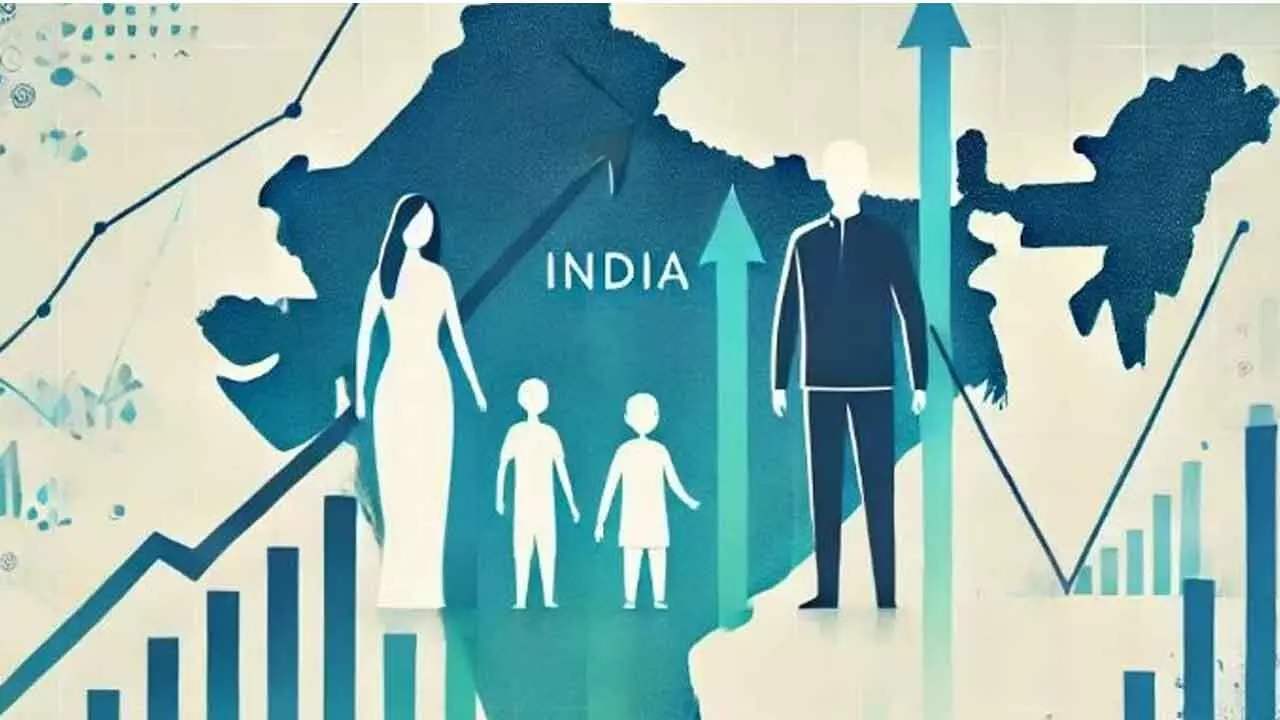
India’s expanding middle class stands at the heart of the country’s economic transformation. Boosted by tax reforms in the 2025 Budget, rising urbanisation, and growing disposable incomes, this demographic is projected to comprise over 40 per cent of the population by 2025 and more than 60 per cent by 2047.
As middle-class households drive demand for housing, education, healthcare, digital services, and consumer goods, they are reshaping domestic markets and attracting sustained foreign investment. Neither ultra-rich nor economically vulnerable, India’s middle class remains the true engine of consumption, growth, and long-term economic resilience
The Indian middle class is set to benefit significantly from the 2025 budget, with tax reforms aimed at providing relief and simplifying compliance. The government has raised the income threshold for zero tax to Rs12.75 lakh, introducing a simplified tax regime, and making return filing easier. The standard deduction of Rs75,000 ensures that even those earning Rs12.75 lakh will pay no tax.
The rise in individual ITR filings indicates that more people find it simpler and worthwhile to comply with tax laws. The faceless e-assessment system and the Unified Pension Scheme are also expected to benefit the middle class, providing more affordable housing and modern public services.
By 2025, the Indian middle class is projected to reach approximately 583 million people, representing about 41 per cent of the country's population.
According to a report, if India's economy continues to grow as anticipated, the middle class will expand significantly, with estimates suggesting it will grow from around 50 million currently to over 583 million by 2025.
This growth is driven by factors such as increased urbanisation, rising incomes, and a growing appetite for consumer goods and services.
The burgeoning middle class is expected to play a crucial role in transforming India into one of the world's largest consumer markets. This demographic shift will lead to increased demand for housing, financial services, telecommunications, and retail products.
As the middle class expands, multinational companies are increasingly targeting this demographic, eager to tap into their growing purchasing power and consumption patterns.
The rise of the Indian middle class by 2025 signifies a major socio-economic transformation, with implications for both domestic and international markets. This demographic shift is not only reshaping consumption patterns but also driving economic growth in various sectors across the country.
The Indian middle class, with its growing purchasing power and disposable income, is expected to have a significant impact on Foreign Direct Investment (FDI) in India. As the middle class expands, it is likely to drive demand for services, technology, and infrastructure, which are essential for the growth and development of the economy.
This trend is expected to attract more foreign investment, particularly in sectors that cater to the needs of the middle class, such as healthcare, education, and entertainment. Additionally, the middle class's increasing influence in the political and economic spheres may lead to more favorable policies and regulations for foreign investors, further enhancing the attractiveness of India as a destination for FDI.
India's strong economic growth, highly qualified human capital, and competitive investor-hostile policies render it a top FDI destination.
The FDI inflow amounted to USD 70.97 billion in the fiscal 2022-23, and stability is expected to be sustained even in 2024-25 despite global market volatility.
Definitions vary. Some say it includes families earning Rs3–30 lakh annually; others stretch it up to Rs1 crore. Broadly, they make up about 20–30 per cent of India’s population. But they’re crucial — they are the fuel for the economy.
Around 31 per cent of India's population is considered middle class, defined by an annual household income of Rs5-30 lakhs (as of 2020-21), a significant jump from 14 per cent in 2004-05, with projections suggesting this segment could reach 60-61 per cent by 2047 as India's economy grows and consumer spending rises.
It’s not the ultra-rich who sustain industries; it’s the middle-class families spending on clothes, phones, education, vehicles, and entertainment that keep demand alive. This pattern powered growth in countries like the U.S., Germany, China, and Vietnam.
India’s middle class saw its best years post-1990s reforms, doubling their market capacity between 2003–2013. But things started sliding around 2012, worsened by the delayed aftershocks of the 2008 global recession, and since then, promises of Acche Din have struggled to materialise.
The middle class significantly drives domestic markets, especially in economies like India, by fueling consumption of homes, cars, digital goods, and travel through rising purchasing power, creating massive demand, jobs, and shaping sectors from retail (D2C to mainstream) to tourism, though they also face pressures from inflation and high taxes, balancing aspirations with financial realities.
Their spending habits, driven by aspiration and access, transform local economies and influence global growth narratives, making them a crucial demographic for economic expansion.
By 2030-31, the number is projected to reach about 715 million people (47 per cent of the population). By 2046-47 (India's centenary of independence), the middle class is forecasted to comprise over 1.02 billion people, accounting for roughly 61 per cent of the total population.
As the upper-income classes rise faster than the lower ones, India's income demographics are transforming. The average annual household disposable income is projected to rise to about Rs20 lakh (approx. $27,000 at 2020-21 prices) by 2047.





