

Sabeer Nelli Reflects on Day Three at Davos 2026: Systems, Scale, and the Future of Global Commerce
Sabeer Nelli shares insights from Davos 2026 on economic policy, AI infrastructure, and how fintech platforms like Zil Money power global commerce.
image for illustrative purpose
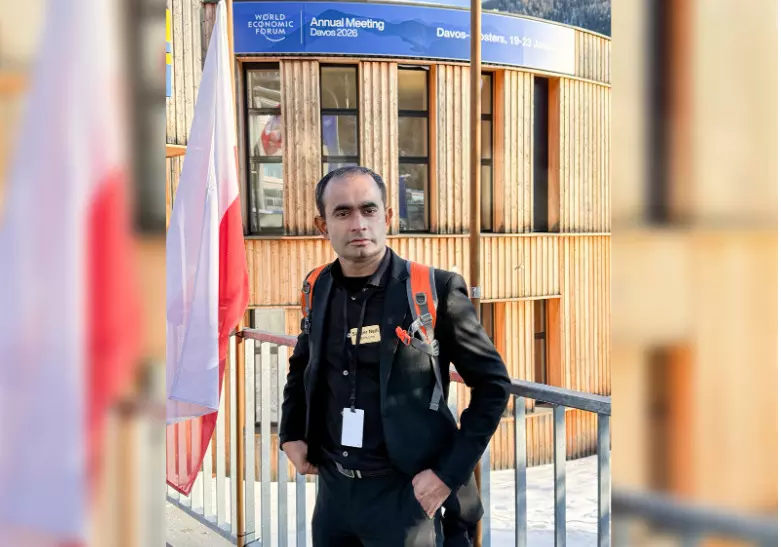
The third day of the forum was characterized by discussions on economic policy, AI infrastructure and financial systems.
Davos, Switzerland - Sabeer Nelli, the CEO of Zil Money, remarked on his third day at the World Economic Forum 2026 as a condensed perspective of the way the global economic direction is formed, not with slogans but systems, scale, and implementation.
On day three, there were talks that were based on macroeconomic indicators and the infrastructure that facilitates international trade. Sessions were accompanied by comments by Donald J. Trump that described the economic priorities and fiscal results, which placed the further context of competitiveness, capital flows, and economic positioning in the long-term. The preoccupation during the day was on concrete outcomes and not abstract intentions.
Also in tandem with the debate about the economy, the infrastructure of technology became a very prominent theme. Jensen Huang, an NVIDIA executive, mentioned artificial intelligence infrastructure as the biggest construction ever in modern history in one of the most attended sessions. The statement echoed throughout various discussions, not as a prediction, but as a comment on the reality of capital already being implemented in compute, data centers, and energy-intensive systems.
In the case of Sabeer, what is important about these discussions was what is under them. Operational layers are what enable businesses to operate on a day to day basis and hence global policy and technology investment are eventually dependent on them. Infrastructure Payments infrastructure, reliability of transactions and financial controls over and over again emerged as part of the under infrastructure that converts macro direction to actual economic activity.
Considering these discussions, Sabeer wrote that disruption was not so much discussed at Davos, rather durability. International businesses demand a system which can allow them to operate at scale, compliance and high speed without being fragmented. It is against this backdrop that integrated financial platforms came into focus especially when it comes to serving small and mid-sized enterprises who were maneuvering through an ever-more complex world.
The place of Zil Money in these debates was on implementation. The platform is a built-in payments layer through which businesses can handle ACH, wire transfers, virtual cards and check workflows in one system. Such layers of operation are necessary in an environment where the signals of policy and investment in technology are fast and remain in control.
The third day at Davos confirmed a bigger point to the fintech CEO: the world of global commerce is being more and more determined by the efficiency of connections than the volume of their publicity. The financial platforms and AI infrastructure, as well as economic policy, are not two isolated discussions anymore. They are mutually dependent, with one dependent on the other in order to transform intent to outcome.
Contact Info
Website: www.sabeer.com
LinkedIn: linkedin.com/in/sabeer-nelliparamban





