

Middle class surge set to transform India’s economic landscape
As smaller cities rise, India’s middle class is set to dominate spending and shape future markets
Middle class surge set to transform India’s economic landscape
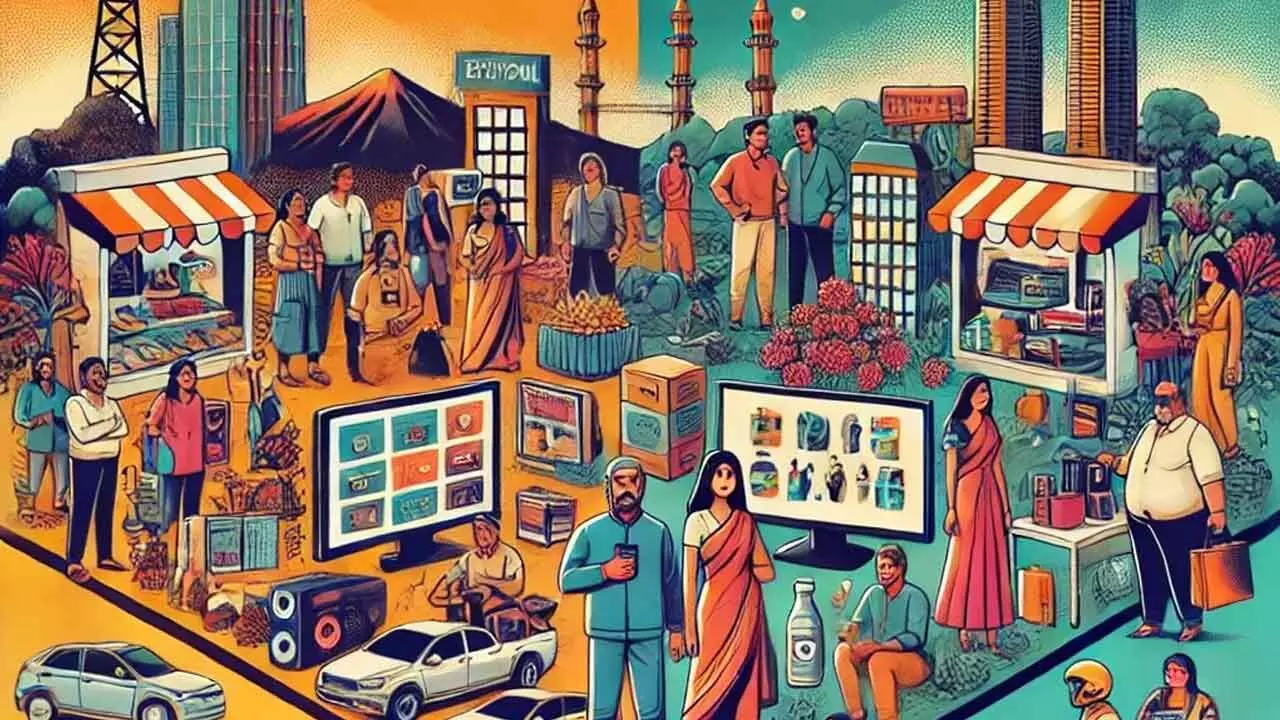
By 2026, India’s middle class is transforming into a dominant economic force, propelling the country toward becoming the world’s third-largest consumer market. This transformation is marked by a shift toward discretionary spending, premiumisation, and digital commerce. Even as consumption rises, urban consumers remain cautious amid rising living costs, increasingly favouring experiential, sustainable, and health-focused products.
India’s megacities continue to command attention. The country is home to two of the world’s ten most populous cities: New Delhi (29.5 million) and Mumbai (22.1 million). However, the real story of growth lies beyond these metros. Nearly 93% of India’s urban consumer class expansion through 2040 will occur outside the five largest cities, including New Delhi, Kolkata, Mumbai, Bengaluru, and Chennai, which together will account for just 7% of new entrants.
By 2035, India is projected to have 499 “consumer cities,” where at least 75% of residents belong to the consumer class (spending $13 or more per day), more than double the current number. By 2040, India will have 149 cities with over half a million consumers, compared to 53 in the US and 112 in Europe, second only to China’s 190.
This growth is not limited to Tier-2 cities but is spread across hundreds of rapidly developing urban centres nationwide. Consumer behaviour is evolving. The traditional focus on “value-for-money” (sasta, sundar, tikau) is giving way to a preference for quality, premium brands, and experiences. At the same time, households are making deliberate trade-offs, cutting back on categories like homecare to spend more on food, health, and lifestyle upgrades.
Digital adoption continues to reshape consumption. Online shopping and digital financial services are now embedded in daily life, with rising expenditure on electronics, tech gadgets, and AI-enabled home solutions. Demand remains robust for SUVs, high-end smartphones, travel, wellness, and lifestyle services.
Importantly, this consumption boom is no longer confined to Tier-1 cities. Emerging “boom towns” are driving the next wave, even as urban households grapple with rising housing and living costs. Growing health awareness is also accelerating demand for healthier diets, protein-rich foods, and preventive healthcare.
While consumer growth is strongest outside major metros, New Delhi remains the highest-spending city. In 2026, the average Indian spends $1,927 annually, compared to $3,265 for a New Delhi resident, nearly 70% higher than the national average. Spending patterns also differ. Food and beverages account for a smaller share of spending in the city (18%) than the national average (29%). This follows Engel's Law: as incomes rise, the proportion spent on food declines, even though absolute spending remains the same or higher.
Alcohol and clothing account for a smaller share of spending in New Delhi compared to the national average. Transport expenses are also higher in New Delhi, likely due to increased commuting needs and mobility costs.
Spending on education, personal care, and financial services is higher in the city, indicating that investments in human capital and premium services play a larger role as incomes rise. These patterns may signal what's coming as hundreds of smaller cities reach critical mass over the next decade. As consumer cities proliferate, they are likely to form interconnected urban clusters, where consumption patterns and labour markets extend beyond administrative boundaries. Viewing these clusters as economic regions will be critical for effective market strategies.
By 2036, India’s middle class and affluent consumers are expected to account for 93% of total spending, up from 80% in 2026. By 2035, over 20% of each major generation, including baby boomers, Gen X, millennials, and Gen Z, will spend $45 or more per day, creating opportunities across demographics. This creates opportunities for businesses to develop products and services that appeal to a wide range of age groups.
India’s middle class is projected to drive a surge in consumer spending from $1.9 trillion to $5.2 trillion by 2031, firmly establishing the country as a consumption-led economy. Millennials and Gen Z, in particular, are shaping demand, prioritising self-care, experiences, and status-driven purchases.
Policy also plays a role. Budget 2026, with its revised personal tax regime, aims to boost disposable income and consumption. While rural areas see higher income growth, urban consumption has been cautious, with moderated discretionary purchases despite higher income levels. High unemployment rates for graduates (nearly 29%) have created a paradox where a well-educated, young, and large workforce still feels economic pressure. High-income households still face substantial direct and indirect taxes (GST), impacting their overall purchasing power.





