

How Budget 2026 rewires India’s logistics engine
Capital, technology and resilience define the next phase of growth
How Budget 2026 rewires India’s logistics engine
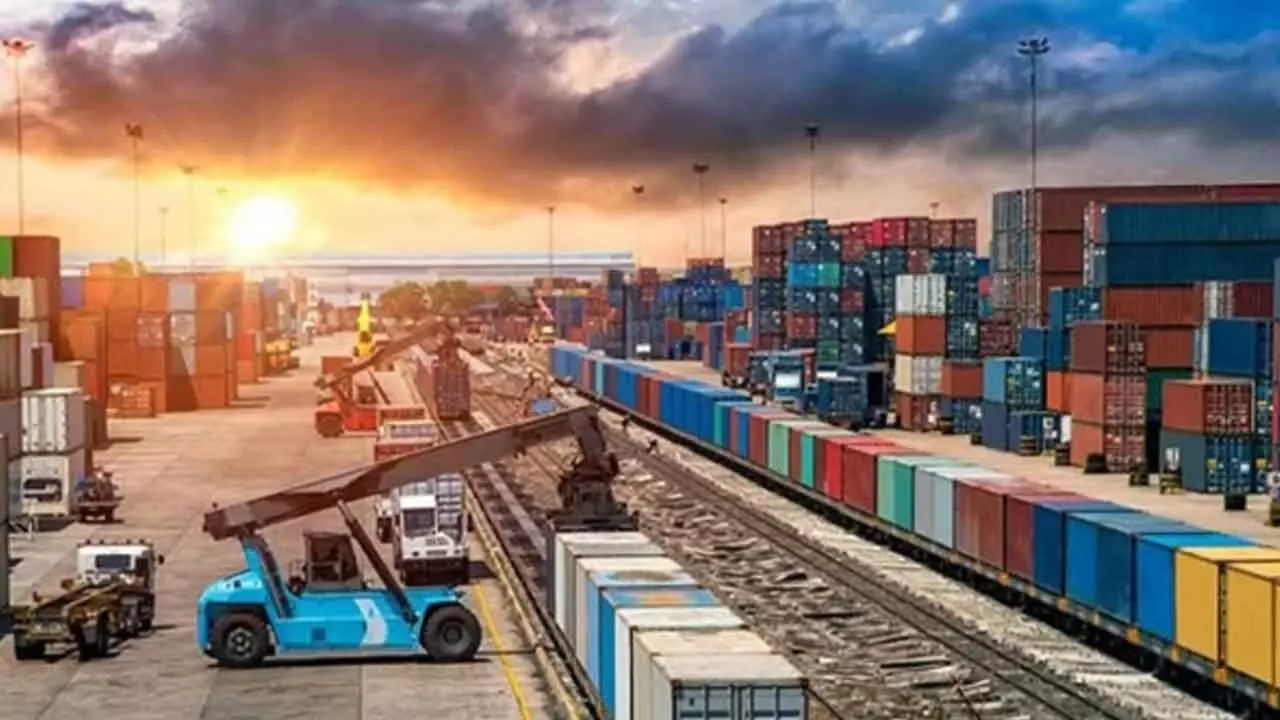
Union Budget 2026 marks a structural policy shift toward infrastructure-led economic growth. With a record capital expenditure of Rs12.2 lakh crore, the budget positions logistics and road transport as core enablers of manufacturing, trade and regional development.
Over the past several years, transportation and logistics networks have absorbed a series of shocks that redefined “normal” operations. Pandemic-era demand imbalances, escalating geopolitical tensions, energy price instability, labor shortages, climate-driven disruptions and the rapid rise of cyber risk compounded pressures on an already strained ecosystem.
These events triggered volatility across capacity, cost, reliability and network resilience, forcing operators to reassess long-held assumptions around sourcing, pricing, inventory and asset strategy.
The impact was cumulative. Transportation providers were compelled to rapidly digitize, diversify and derisk their operations while also strengthening capital discipline. What has emerged is an industry that no longer treats disruption as episodic, but as a constant condition requiring structural adaptation.
Shifting alliances, trade restrictions and ongoing conflict elevated cross-border risk and rerouted global flows. Carriers adapted to longer routes, higher insurance costs and increasingly localized demand patterns, all of which added to structural cost pressure.
Fuel price volatility, rising labor costs and higher asset replacement expenses reshaped cost structures. Even as demand stabilized, margins remained under pressure, eroding pricing power and accelerating consolidation, network rationalization and tighter cost management.
Customer expectations also evolved sharply. Clients now demand real-time visibility, predictive service, pricing transparency and reliability levels that legacy systems struggle to deliver. Investment in automation, analytics and artificial intelligence (AI)-enabled forecasting has shifted from optional to essential for competitiveness.
Meanwhile, emissions standards, reporting requirements and regional compliance mandates continue to drive fleet modernization and network redesign — often without aligned global frameworks.
Together, these dynamics place the sector at an inflection point: more stable than during the crisis years, yet fundamentally transformed in both economics and expectations.
2025 proved to be a pivotal year. After years of reacting to crisis, transportation and logistics operators shifted toward rebuilding for advantage. Organizations focused on restoring discipline across their networks — streamlining routes, right-sizing capacity and recalibrating fleet and asset deployment to match the new cadence of global and domestic demand.
This marked a transition from improvisation to intentional design, as companies reset the economic and operational baselines that will carry them into 2026.
Financial leadership played a defining role in this shift. Chief financial officers (CFOs) tightened control over cash and cost, accelerating initiatives to improve working capital efficiency, reduce structural expenses and allocate capital more strategically. The objective moved beyond survival toward restoring capital velocity and ensuring every rupee deployed delivered measurable enterprise value.
Customer expectations continued to rise. Shippers increasingly rewarded precision, predictability and transparency. Operators capable of delivering consistent on-time performance and real-time visibility gained share, while others faced pricing pressure and churn.
Looking ahead, the next wave of value creation will come from tightly linking commercial, operational and financial levers — from quoting and execution to billing and settlement. Integrated margin management, continuous forecasting and working-capital optimization will be critical capabilities.
AI’s role will expand from operational prediction to enterprise orchestration — optimizing cost-to-serve, automating bid responses and enabling dynamic scenario planning for network risk and capacity pricing.
Nearshoring, friend-shoring and regionalized manufacturing will reshape demand corridors. Chief operating officers (COOs) must redesign network footprints, while CFOs model capital structures that support these shifts.
Stricter emissions and reporting requirements will accelerate investment in electric and alternative-fuel fleets, digital compliance platforms and modal shifts where feasible.
Scale, technology capability and pricing sophistication will increasingly define winners. Well-capitalized operators are likely to pursue acquisitions, while distressed or under-optimized carriers may become consolidation targets as capital costs rise.
Automation, workforce training and talent retention will remain central challenges — particularly in warehousing, last-mile delivery and maintenance operations.
The past several years have reshaped transportation and logistics more profoundly than any single cycle in recent memory. What began as relentless disruption has evolved into a strategic turning point. The operators that rethink their networks, cost structures and digital foundations will define the competitive landscape of 2026 and beyond.
COOs and CFOs now share a common mandate: convert volatility into value by building systems that are faster, smarter and more resilient. Those that embrace this moment of reinvention will not only stabilize performance — they will create durable advantage in an industry where the next disruption is always just ahead.





