

Why India–US trade negotiators must choose their words carefully
Why India–US trade negotiators must choose their words carefully
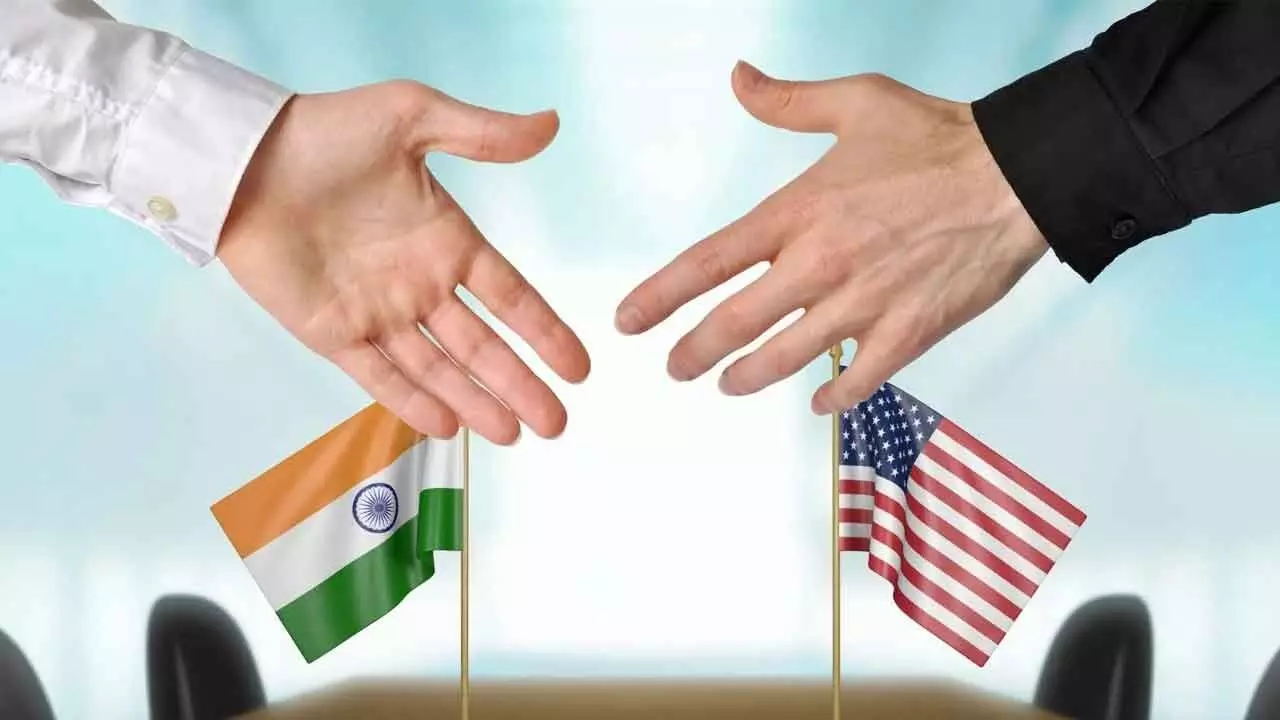
The unilateral release of a fact sheet by the White House on the interim India–US trade agreement could not have come at a more inopportune moment.
The Narendra Modi government has already been facing criticism from the Con-gress-led Opposition, as well as a range of intellectuals and activists, for alleg-edly selling out the national interest or acting at the behest of US President Donald Trump.
Against this backdrop, issuing a document that deviated from the joint state-ment released by the two countries was either an act of political irresponsibil-ity or sheer bureaucratic stupidity.
Thankfully, saner counsel prevailed in Washington, and the fact sheet was re-vised to bring it into alignment with the joint agreement signed days earlier. The original version had unilaterally added “certain pulses” to the list of goods on which India had agreed to eliminate or reduce tariffs. In the revised fact sheet, those two words were removed.
The fact sheet also made another significant change. The original wording stat-ed, “India committed to buy more American products and purchase over $500 billion…” The revised fact sheet said, “India intends to buy more American products and purchase over $500 billion…” The confusion over digital ser-vices taxes and bilateral digital trade rules has also been resolved.
Even so, the original fact sheet created serious difficulties for the Modi gov-ernment. Anti-Americanism remains widespread in India, as it does elsewhere in the world. Both the Left and the Right harbour hostility towards the United States—the former because it is seen as the foremost bastion of capitalism, and the latter because of its perceived role as the ultimate repository of pashchatya sanskriti (Western culture).
This episode underscores why politicians, bureaucrats and experts involved in finalising the India–US trade agreement must exercise extreme care in both speech and writing. First, coordination between the two sides must be com-plete and seamless when it comes to joint statements and public communica-tions.
Any divergence, even if unintended, can create uncertainty and fuel con-spiracy theories—especially in a hyper-connected world where news travels fast and speculation travels faster.
Second, the phraseology used in official documents must be chosen with preci-sion. There is a world of difference between “India committed to buy” and “In-dia intends to buy”. Those responsible for drafting such texts must be acutely conscious of how individual words will be interpreted.
Third, negotiators and communicators must anticipate domestic political reac-tions and prepare for them. Trade liberalisation in agriculture is politically sen-sitive in both countries. Likewise, the interests of small and medium enterpris-es cannot be ignored or even appear to be ignored. Any suggestion that tariff reductions threaten local producers is bound to provoke resistance and acquire political overtones.
Fourth, transparency must be balanced with strategic discretion. While demo-cratic accountability requires that citizens be kept informed, premature or par-tial disclosures can complicate negotiations. Carefully sequencing announce-ments, synchronising releases and offering consistent explanations can help minimise confusion.
Finally, there is a need for institutional memory and continuity. Trade negotia-tions often stretch across years and multiple administrations. Ensuring that negotiators are aware of historical sensitivities in bilateral relations can prevent avoidable missteps. The India–US partnership is too important to be under-mined by careless phrasing.





