

India–Uzbek trade set for robust growth, says Ambassador sardor Rustambaev
India–Uzbek trade set for robust growth, says Ambassador sardor Rustambaev
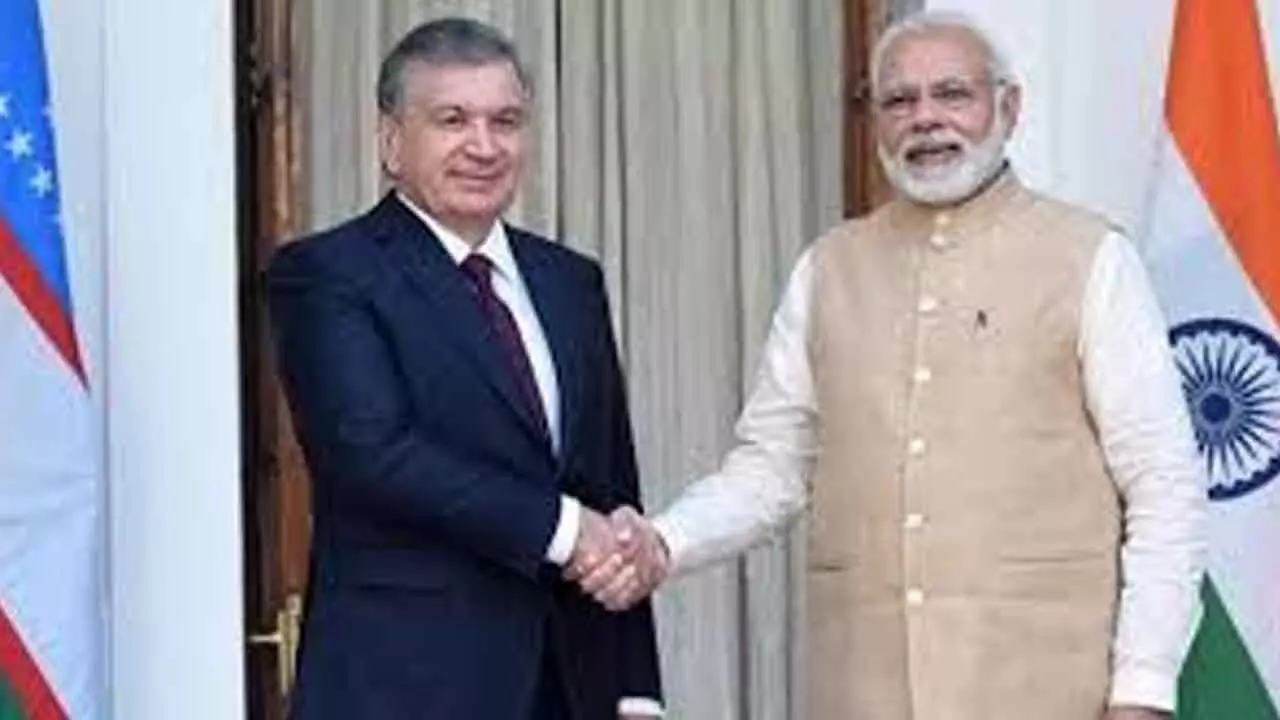
India–Uzbekistan trade stands at an inflection point. With sustained political will, improved connectivity and expanded sectoral cooperation, the partnership can evolve from modest bilateral commerce into a dynamic economic corridor linking South Asia with the heart of Eurasia.
Uzbekistan will not only offer its own domestic market to Indian investors, but will act as a gateway to CIS countries and Europe, said Sardor Rustambaev, Uzbekistan Ambassador to India. Uzbekistan is one country that is free from any geo-political unrest or tension, he said.
Interestingly, trade between the two nations has expanded significantly over the past decade. According to official estimates, bilateral trade approached nearly $980 million in 2024 and is going further up with India emerging as one of Uzbekistan’s top ten trading partners.
India’s exports include pharmaceuticals, machinery, vehicle parts and optical equipment, while Uzbekistan exports fertilisers, fruits, vegetables and other agricultural products to India. Tourism is another big area where Uzbekistan is looking forward to India.
The prospects are promising, said Rustambaev, adding that Uzbekistan is actively positioning itself as a regional manufacturing and investment hub, offering tax incentives, modern industrial zones and access to a market of nearly 300 million consumers across the CIS region.
Ambassador Rustambaev has emphasised that Uzbekistan provides “land, tax benefits and robust infrastructure” for foreign investors, inviting Indian firms to explore opportunities in pharmaceuticals, IT, electronics and green energy.
Several emerging sectors could redefine bilateral economic cooperation. Renewable energy, digital technology, rare earth minerals, textiles and tourism offer strong avenues for collaboration.
Uzbekistan’s ongoing economic reforms and India’s strengths in technology and services create a natural complementarity.
Significantly, the economic relationship between India and Uzbekistan—two historically connected civilisations linked by the ancient Silk Route—is gradually entering a new phase. In recent years, bilateral trade and investment flows have grown steadily, yet the partnership still remains far below its true potential.
With Central Asia gaining strategic prominence and supply chains being reconfigured globally, India–Uzbekistan economic engagement offers both countries an opportunity to deepen connectivity, diversify markets and build resilient partnerships.
The momentum is clearly visible. Uzbekistan’s ambassador to India, said, adding that bilateral commerce is showing “steady and robust growth” and could soon surpass the $1-billion mark, reflecting the strategic ambitions of leaders in both countries.
Investment ties are also strengthening. Indian companies—particularly in pharmaceuticals, education, healthcare and mining and jewellery—have steadily expanded their footprint in Uzbekistan. More than 300 enterprises with Indian capital are currently operating in the country, reflecting growing business confidence.
In this connection, he mentioned that Kolkata-headquartered P C Chadra Group has evinced keen interest in setting up base there. Explaining how new areas are being identified, he said that an Indian entrepreneur has started importing foodstock for aquarium fish from Uzbekistan and is doing good business now.
However, experts are of the view that despite this progress, the economic relationship remains underdeveloped. Geography and logistics remain the most significant constraints.
Unlike many of India’s major trading partners, Uzbekistan is landlocked, and direct overland connectivity between India and Central Asia remains limited due to regional geopolitical complexities. Transporting goods often requires circuitous routes through Iran, the Caucasus or Russia, raising costs and lengthening delivery times.
Another challenge lies in the relatively narrow trade basket. India’s exports are heavily concentrated in pharmaceuticals and machinery, while Uzbekistan’s shipments to India remain dominated by agricultural products and raw materials. For a partnership aspiring to scale up to several billion dollars in trade, diversification into higher-value sectors is essential.





