

India’s export outlook brightens as US proposes sharp tariff reduction
India’s export outlook brightens as US proposes sharp tariff reduction
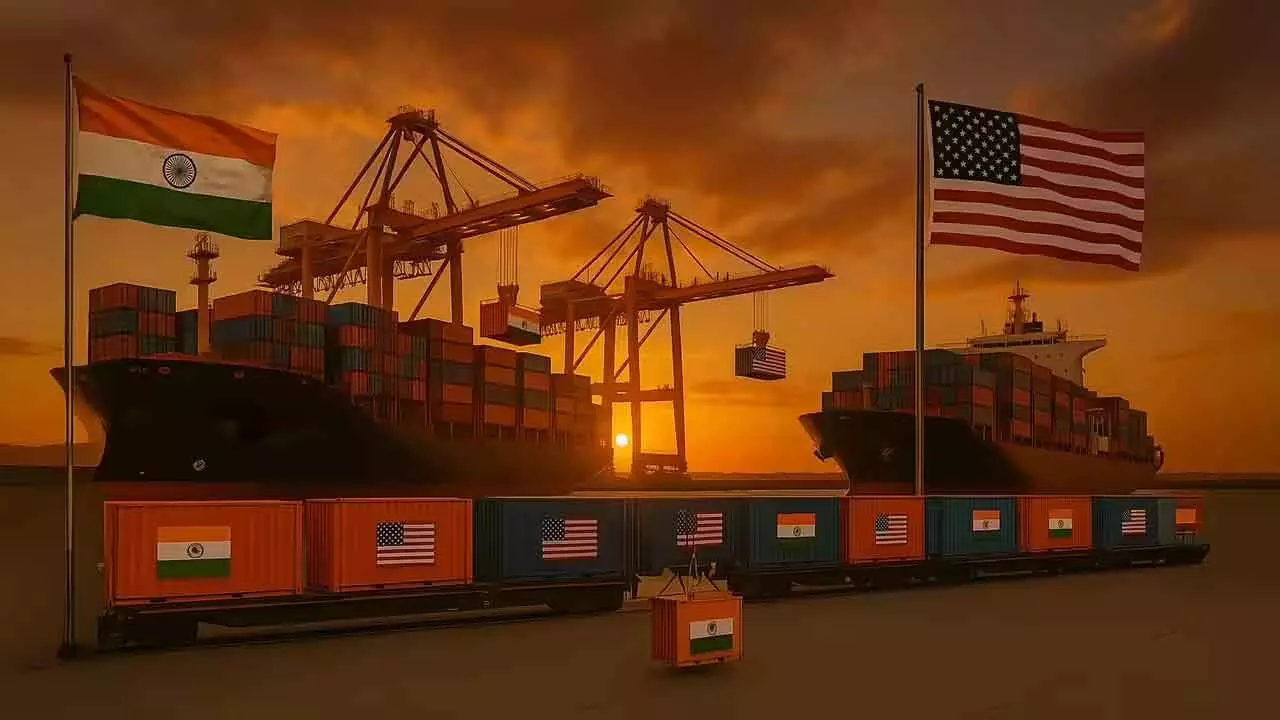
The announcement of a sharp reduction in tariffs on Indian goods entering the United States—from an onerous 50 per cent to a far more manageable 18 per cent—marks a potentially significant inflection point for India’s export economy and, more broadly, for global trade sentiment. In an era clouded by protectionist reflexes and geopolitical unease, such a move, if implemented, signals a rare tilt towards pragmatism in trade policy.
For Indian exporters, the implications are immediate and tangible. Lower tariffs directly ease cost pressures across a range of labour- and capital-intensive sectors such as textiles, engineering goods, chemicals, pharmaceuticals, auto components, and select manufacturing segments. Reduced border levies enhance price competitiveness in the world’s largest consumer market, allowing Indian firms not merely to defend market share but, in many cases, to expand it. Higher export volumes can translate into increased capacity utilisation, job creation, and improved corporate earnings—outcomes that carry both economic and political resonance at home.
At a macroeconomic level, stronger export momentum can help stabilise the rupee by boosting dollar inflows and narrowing trade imbalances. Export-linked industries, buoyed by better margins and demand visibility, may also become more attractive destinations for foreign investment. Equity markets tend to respond favourably to such structural tailwinds, particularly when they reinforce India’s narrative as a dependable manufacturing and sourcing hub in a diversifying global supply chain.
The global ramifications are equally noteworthy. A meaningful reduction in tariffs between two major trading partners helps ease supply-chain frictions that have persisted since the pandemic and the subsequent wave of geopolitical disruptions. Improved trade engagement can boost global risk appetite, encourage cross-border capital flows, and mitigate inflationary pressures that are often exacerbated by protectionist barriers. In this sense, the move is not merely bilateral in impact; it contributes to a broader recalibration of trade expectations. Yet markets are rarely one-dimensional in their responses.
The interplay between easing trade tensions and lingering macroeconomic uncertainty is evident in the behaviour of precious metals. As market analysts, including firms such as VT Markets, point out, a clearer trade outlook tends to reduce risk aversion, thereby capping aggressive upside moves in gold and silver. Fear-driven buying may moderate as confidence in global commerce improves.
However, gold’s enduring appeal lies precisely in its role as a strategic hedge rather than a short-term speculative asset. Persistent concerns around inflation trajectories, currency stability, and geopolitical flashpoints continue to underpin demand.
Silver, while sharing its safe-haven attributes, occupies a more complex space: its substantial industrial usage means that improved global trade and manufacturing prospects can, in fact, support prices even as safe-haven demand cools. In short, while tariff relief may temper panic-induced rallies, both metals are likely to remain structurally firm as long as economic and policy uncertainties endure.
Another market observer, Stoxkart, echoes this cautiously optimistic assessment. A tariff reduction of this magnitude, it argues, would materially strengthen India’s export ecosystem by improving margins and reviving demand across key sectors. From a market standpoint, export-oriented stocks could see a near-term sentiment boost, reinforcing India’s standing in global supply networks.
The operative caveat, however, is execution. Markets have learnt—often the hard way—to distinguish between intent and implementation. Until there is formal policy confirmation and clarity on timelines, conditions, and sectoral coverage, optimism will remain measured.
Announcements can move sentiment, but sustained economic impact flows only from credible, consistent action. If the proposed tariff cut does materialise, it could mark more than a tactical trade adjustment. It would underscore the economic logic of engagement over exclusion—and remind markets that even in uncertain times, cooperation can still yield dividends.





