

Anna Lukashenko and the Strange Idea That Art Might Still Matter
image for illustrative purpose
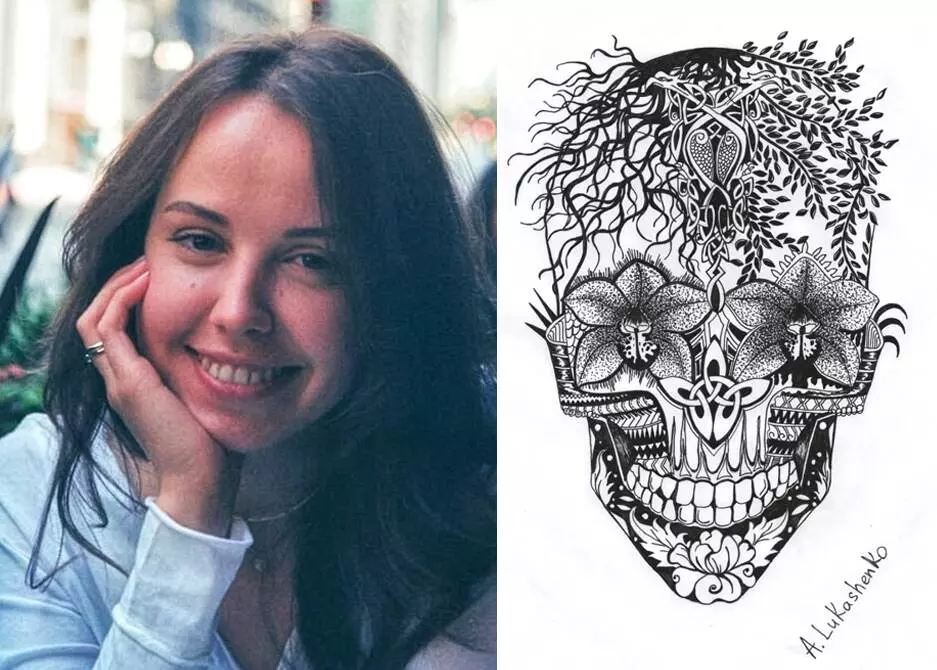
There was a period, not that long ago, when commercial art involved objects you could accidentally cut yourself on. Knives, glue, paper. Things that required gravity. You could tell how much work went into an image by how much it smelled like ink and effort. Art did not arrive instantly. It passed through presses and bindery rooms and distribution chains before it ever met an audience, which meant that creation itself contained delay. And delay, it turns out, is a form of meaning.
The internet eliminated that pause. Images now appear everywhere, all the time, without friction or context. The same image can function as an advertisement, a social post, a product, and a gallery piece in the span of a day. The categories that once separated commercial art from fine art did not collapse because someone made a philosophical argument. They collapsed because the platforms stopped caring. Now the only real question is not whether something is beautiful, but whether it can survive long enough in your field of vision to register as anything at all.
This is the environment in which Anna Lukashenko makes her work, which is interesting mostly because her work does not behave like it belongs here. Her drawings do not try to outpace the algorithm or charm it into submission. They assume that the viewer might actually stop. That assumption alone feels almost confrontational.
Lukashenko was trained in Kyiv, where art education still involves materials that resist improvisation. Leather, thread, technical schematics. She began in footwear design, a discipline that does not tolerate ambiguity. A shoe either works or it fails. That logic carried into her drawing practice. Her images are controlled. Symmetry matters. Ornament has a job to do. Emotion is not splashed across the page but contained, almost supervised, by structure.
During her student years at the Kyiv University of Technology and Design, she also modeled and took on commissioned illustration work that later appeared as textile prints. This matters because it explains why her sense of visual balance feels intentional rather than expressive. She learned early that images operate in systems. They are worn. They are used. They circulate. Beauty, in this context, is not spontaneous. It is designed.
Then the war happened, which rearranges priorities whether one wants it to or not. When Lukashenko relocated to the United States, she brought with her not just memories but a kind of accumulated pressure. That pressure shows up in the work. The drawings became more symbolic. The compositions started behaving less like pictures and more like diagrams of feeling. They resemble maps, not because they tell you where to go, but because they assume that location matters.
Her work does not treat the audience as a demographic. It treats them as participants who have agreed to slow down. This is a strange bet to make in a culture organized around speed. But the drawings insist on it. You do not glance at them. You study them. They reveal themselves incrementally, the way meaning used to reveal itself before everything became skimmable.
One of her recurring images, a lion whose mane becomes branches and whose body turns into a kind of ecosystem, makes this approach clear. The image does not prioritize dominance or power. It emphasizes connection. Strength exists, but it is inseparable from vulnerability. The lion is not a brand symbol. It is a system. This is the kind of image that refuses to simplify itself for easier consumption.
Anthropologists might call this world-making, but that term often sounds more academic than it needs to be. What Lukashenko is really doing is insisting that care counts. That attention is not optional. That making something carefully is still a meaningful act, even if the culture has moved on to faster rewards.
Her experiences of war, migration, and motherhood did not sentimentalize the work. They complicated it. Fragility and endurance occupy the same space. Ornament becomes a way of negotiating balance rather than decoration. The drawings ask a specific question: how much of a person survives when everything else changes?
For Lukashenko, art is not therapy and it is not escape. It is communication. Symbols matter because they can carry meaning where language breaks down. Each drawing functions like a sentence that does not insist on being finished. The viewer completes it simply by staying with it.
Her arrival in the United States is not a reinvention. It is a continuation. The same discipline, the same precision, the same insistence on structure remain intact. What has changed is the scale of circulation. Her images now move through the same systems that flood us with disposable content, yet they resist becoming disposable themselves. They still feel touched.
In a culture that rewards speed, Lukashenko’s work quietly suggests that speed might not be the point. That drawing a line is still an act of connection. That beauty, when made deliberately, can push back against the flattening effect of constant motion. The work does not argue this aggressively. It just exists, patiently, waiting to see who is still willing to look.





