

How to build a long-term crypto portfolio in India: Smart strategies explained
Learn how Indian investors can build a long-term crypto portfolio, key risks, top cryptocurrencies, and proven strategies for disciplined investing.
How to build a long-term crypto portfolio in India
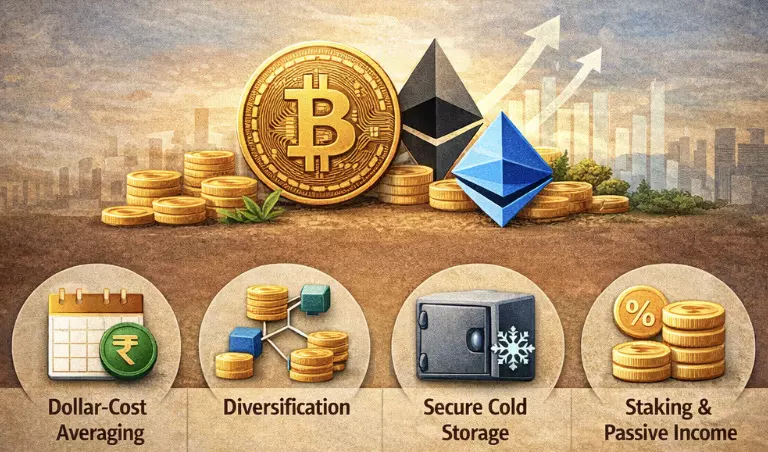
Building a long-term cryptocurrency portfolio in India requires careful planning, diversification, and risk awareness. This guide outlines the benefits of crypto investing, key risks, suitable cryptocurrencies, and proven strategies Indian investors can use to navigate volatility and pursue sustainable long-term growth.
Cryptocurrency has evolved from a niche digital experiment into a globally recognised asset class, attracting growing interest from Indian investors. While crypto markets are known for sharp price swings, many investors are exploring digital assets as part of a long-term portfolio strategy. Success in this space, however, depends on disciplined investing, a clear understanding of risks, and a structured approach to asset selection and management.
Why Consider Crypto for Long-Term Investment?
Crypto is often described as a high-risk, high-reward asset class. One key reason investors consider it is the long-term growth potential driven by rising global adoption. Over the past decade, cryptocurrencies and blockchain-based systems have moved from the fringes to mainstream financial conversations.
Another factor is portfolio diversification. Crypto assets often behave differently from traditional investments like equities, bonds, or real estate. This low correlation can help diversify overall portfolio risk, though it does not eliminate volatility.
Investors are also drawn to technological exposure. Blockchain innovations power decentralised finance (DeFi), NFTs, and smart contract platforms that could shape future digital economies. Additionally, some market participants view crypto as a potential inflation hedge, though this claim remains debated and varies across market cycles.
Key Risks to Understand
Despite the potential, crypto investing comes with substantial risks.
1. High Volatility:
Cryptocurrency prices can rise or fall sharply within hours. While this volatility creates opportunity, it can also lead to significant losses, especially for investors who lack experience or a long-term mindset.
2. Regulatory Uncertainty:
India has introduced crypto taxation, but the broader regulatory framework continues to evolve. Global regulatory shifts can also affect prices and market access. Investors must stay informed and prepared for policy changes.
3. Security Risks:
Digital assets require careful storage. Funds held in online (hot) wallets can be vulnerable to hacking. Using hardware (cold) wallets and secure practices is essential for long-term investors.
4. Intrinsic Value Debate:
Unlike traditional assets such as gold or stocks, cryptocurrencies derive value largely from network adoption, technology use, and market demand. This makes valuation more complex and sentiment-driven.
Cryptocurrencies for Long-Term Portfolios
A long-term crypto portfolio often begins with established projects:
Bitcoin (BTC): The oldest and most recognised cryptocurrency, often called “digital gold.” It has shown long-term resilience despite volatility.
Ethereum (ETH): A leading smart contract platform powering DeFi and decentralised apps. Its shift to Proof of Stake improved energy efficiency, and scalability upgrades continue.
Solana (SOL): Known for fast transactions and low fees, popular in DeFi and NFT ecosystems.
Cardano (ADA): Focuses on research-driven development, with emphasis on security, scalability, and sustainability.
Strategies for Long-Term Crypto Investing
Dollar-Cost Averaging (DCA):
Investing a fixed amount at regular intervals reduces the impact of short-term price swings and avoids the challenge of timing the market.
Diversification:
Avoid concentrating funds in a single coin. Combining large-cap assets with smaller exposure to other projects can balance risk.
Cold Storage:
Long-term holdings should be stored in hardware wallets, reducing exposure to online threats.
Periodic Rebalancing:
As prices change, portfolio allocations can drift. Rebalancing helps maintain intended risk levels.
HODL Approach:
Buying and holding through market cycles can reduce emotional decision-making and encourage a long-term perspective.
Index-Style Investing:
Since true crypto index funds are limited in India, investors often create diversified baskets manually to mirror broader market exposure.
Value-Based Selection:
Researching project fundamentals—use case, adoption, development activity—can help identify long-term opportunities.
Staking and Lending:
Some cryptocurrencies allow holders to earn passive income through staking, though lock-in periods and platform risks must be considered.
For Indian investors, crypto should typically be viewed as a satellite allocation—a smaller portion of a broader portfolio that includes traditional assets. Building a long-term crypto portfolio requires realistic expectations, security awareness, and the ability to stay disciplined during volatile periods.
Understanding regulation, managing risk, and choosing quality projects are just as important as chasing returns. With a structured approach, crypto can play a complementary role in a diversified long-term investment plan.





