

Crypto Deal: How Donald Trump made ₹12,800 crore in his second term
Donald Trump’s second term sees his wealth jump by ₹12,800 crore through Indian real estate, crypto deals with Pakistan, lawsuits and global business ventures.
Crypto Deal: How Donald Trump made ₹12,800 crore
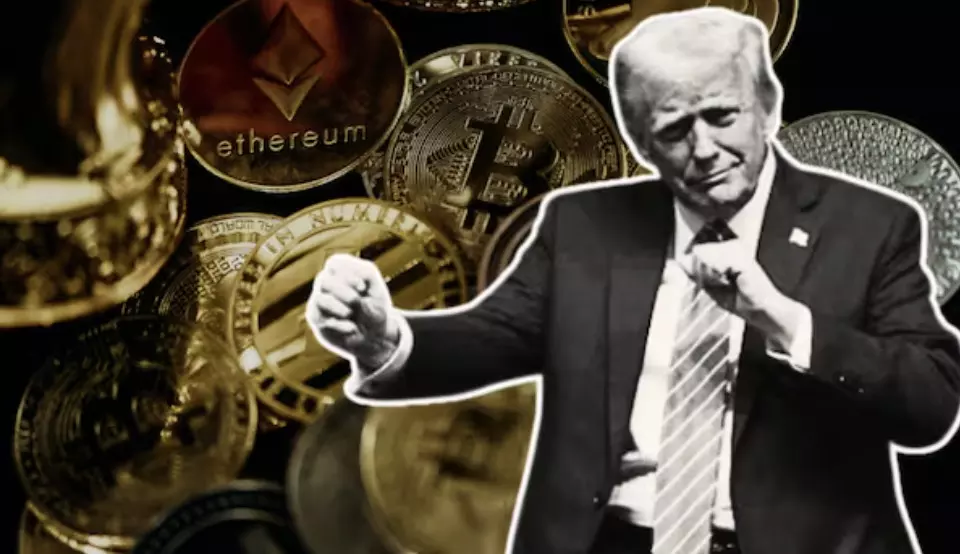
As Donald Trump returned to the White House pledging to make America rich again, his personal wealth surged dramatically. From Indian real estate projects to crypto ventures linked to Pakistan, Trump’s second term has also proved extraordinarily profitable for the president himself.
Donald Trump’s second stint as President of the United States has been marked not just by aggressive trade policies and geopolitical shocks, but also by an extraordinary expansion of his personal fortune. While addressing global leaders at the World Economic Forum in Davos, Trump boasted about reviving American prosperity. Yet, according to a detailed investigation by The New York Times, the biggest financial winner of his policies may well be Trump himself.
The report estimates that Trump’s net worth has increased by at least $1.4 billion (around ₹12,800 crore) since he returned to office in January 2025. The figure, compiled using publicly available data and estimates from multiple media organisations, is likely conservative, as several streams of income tied to Trump and his family businesses remain opaque.
To put the scale of this wealth surge into perspective, the average US household earns about $83,000 a year. Trump’s gains in just 12 months amount to more than 16,700 times that figure, underscoring the widening gap between the president’s fortunes and the economic pressures facing ordinary Americans amid rising prices and tariff-driven costs.
Real Estate: Trump Brand Goes Global Again
A significant portion of Trump’s earnings during his second term has come from licensing the Trump brand for overseas real estate projects. According to estimates cited by the NYT, Trump earned around $23 million by lending his name to nearly 20 international developments, spanning luxury hotels, golf courses and office towers.
One of the most prominent projects is the Trump World Centre in Pune, Maharashtra, set to become the first Trump-branded commercial office tower in India. The project alone is expected to generate revenues exceeding $289 million for Trump-linked entities over time. The irony has not gone unnoticed, given Trump’s earlier comments describing India as a “dead economy” during tariff negotiations.
Beyond India, Trump-branded developments are expanding across the Middle East and Southeast Asia. Luxury golf resorts and hotels in Oman, Saudi Arabia, Indonesia, and Vietnam have all moved forward since Trump resumed office, often coinciding with favourable diplomatic or trade developments.
In Vietnam, for instance, tariffs on exports to the US were sharply reduced after the government approved a $1.5 billion Trump Organisation-backed golf complex near Hanoi. Reports suggested local regulations were fast-tracked to accommodate the project, raising questions about the overlap between Trump’s policy decisions and business interests.
Crypto Emerges as the Biggest Money Spinner
While real estate remains a steady income stream, cryptocurrency has emerged as the most lucrative business for Trump and his family during his second term.
Trump is linked to World Liberty Financial, a crypto venture backed by family members and close associates. The NYT estimates that Trump personally earned at least $867 million from crypto-related activities over the past year, including revenues from a meme coin and private token offerings.
In 2025, a UAE-based investment firm reportedly funnelled $2 billion into a Trump-linked crypto company, weeks before Washington approved semiconductor exports to the Gulf nation. While no direct quid pro quo has been established, the timing has drawn sharp scrutiny.
Even more striking is Trump’s apparent warming towards Pakistan, a country he harshly criticised during his first term. During his second term, Trump-backed crypto ventures entered into deals estimated at ₹17,000 crore with Pakistan-linked entities. World Liberty Financial, in which Trump and his sons reportedly hold stakes worth more than $5 billion, now counts the Pakistan crypto deal as one of its largest international engagements.
Lawsuits, Films and Luxury Gifts
Trump’s wealth has also been boosted by legal settlements and media deals. Tech and media giants including X, Meta, YouTube and Paramount collectively paid around $90.5 million to settle lawsuits filed by Trump.
YouTube alone paid $24.5 million to resolve a case linked to the suspension of Trump’s account after January 6, while Paramount reportedly paid $16 million over allegations related to the editing of a Kamala Harris interview.
Meanwhile, Trump and First Lady Melania Trump earned $28 million from Amazon for the rights to a documentary centred on her life and public role, adding yet another income stream to the family portfolio.
Luxury gifts have also played a role. Qatar reportedly gifted Trump a $400 million aircraft, described as a “palace in the sky”. The jet is expected to be used temporarily as Air Force One, with Trump later suggesting it could remain with him after leaving office. Notably, the gift followed a Trump Organisation agreement to develop a high-end golf resort in Doha.
Ethics and the ‘Make Trump Richer’ Debate
Critics argue that Trump’s second term has blurred the line between public office and private profit more visibly than ever before. While Trump maintains that his business dealings are legal and managed by family members, watchdogs point to the scale and timing of these deals as troubling.
During his first presidency, Trump promised to distance himself from business operations. In his second term, that distance appears even narrower, with personal wealth growth increasingly tied to foreign policy outcomes, trade negotiations, and regulatory decisions.
Supporters counter that Trump is simply a businessman-president whose success reflects deal-making prowess. Detractors argue that the optics — and potential conflicts of interest — undermine democratic accountability.
The Bigger Picture
As Americans grapple with high living costs, volatile markets, and geopolitical uncertainty, Trump’s personal financial boom stands in stark contrast. His second term highlights how global capital, crypto innovation, and branded real estate have converged to create unprecedented wealth for a sitting US president.
Whether history remembers this as savvy entrepreneurship or as a troubling fusion of power and profit remains to be seen. What is clear is that Trump’s second term has not just reshaped global politics — it has dramatically reshaped his balance sheet as well.





