

7 Smart Risk Rules for Online Trading Beginners
With today’s powerful mobile platforms, commission-free trading, and the rise of fractional investing, online markets have never been more accessible.
image for illustrative purpose
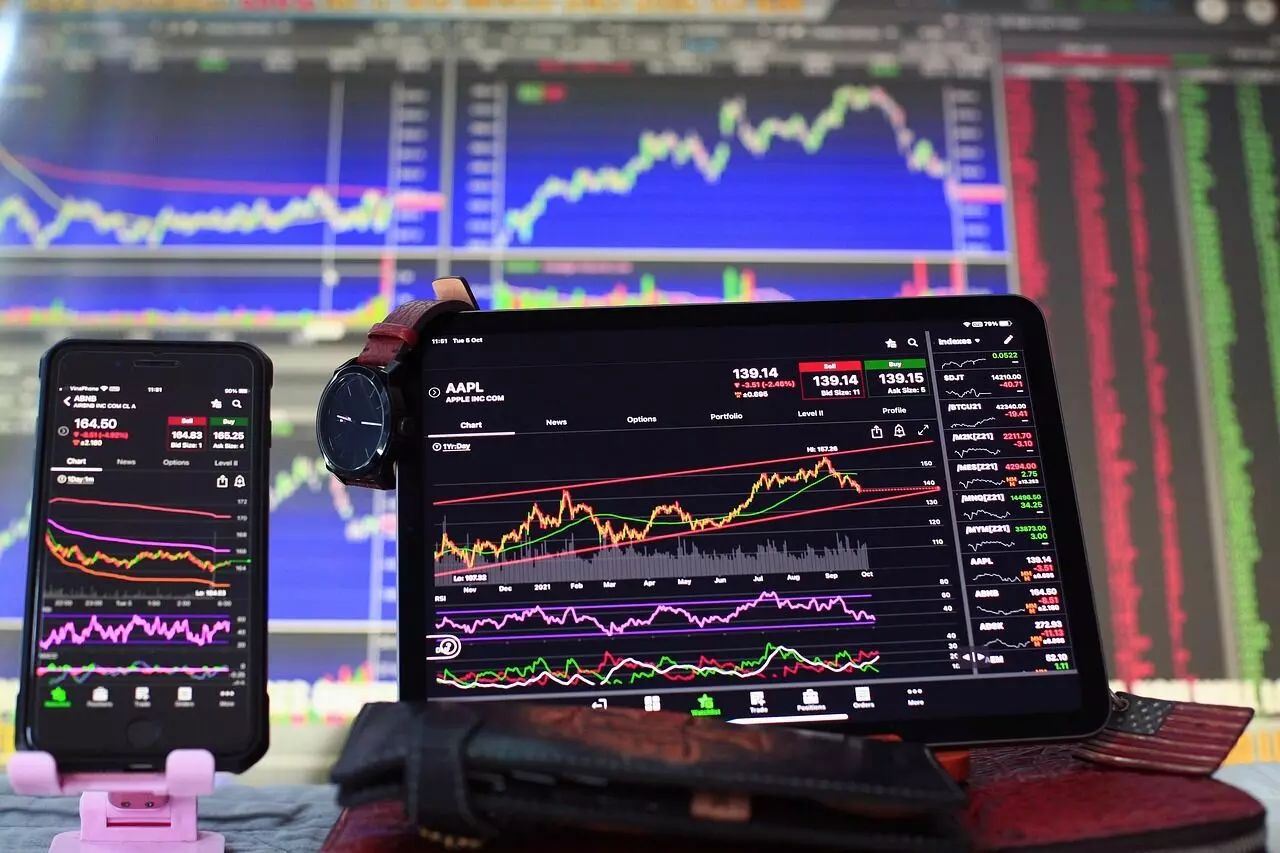
With today’s powerful mobile platforms, commission-free trading, and the rise of fractional investing, online markets have never been more accessible. Anyone can participate—but accessibility doesn’t guarantee success.
Trading is not a shortcut to wealth. Most short-term traders lose money. Sustainable success requires a long-term mindset, consistent learning, disciplined risk management, and emotional control.
In this article, we’ll outline several essential rules to help you navigate market volatility, manage risk effectively, and build a foundation for lasting growth.
1. Use a Demo Account
The good news is that you don’t have to go into online trading blindfolded. Nor do you need advanced financial studies to make it big. It’s easy to find high-quality educational resources online, often provided by the platforms themselves.
A reputable trading platform like AxiTrader LLC offers free education, resources, support, and the option to practice with a demo account. We suggest you take this option every time you go to a new platform, since it takes some time to get used to how each trading tool works.
A demo account lets you “trade” using a replica of the live trading environment, so you can get a feel of how each feature and tool works. With Axi, you also have access to real-time spreads and execution speeds, helping you better understand the whole process.
2. Set Stop-Losses & Risks per Trade
A stop-loss order is an instruction you give your broker to automatically sell a security when its price reaches a specified level. Once set, it closes your position without requiring you to constantly monitor the market.
The Risk per Trade or Capital Risk per Trade is the maximum percentage of your total trading capital you are willing to lose on any single trade.
Start by defining the percentage. For instance, a conservative starting point is 1% to 2%. (e.g., with a $10,000 account, a 1% risk is $100). This means that, for an account of $10,000 with a 1% risk rule, your Maximum Loss (Max Risk) on that specific trade is mathematically capped at $100.
This dollar amount remains your absolute risk limit for that trade, irrespective of the share price or the total value of your position. You manage this limit by adjusting the position size relative to your stop-loss placement.
3. Avoid Overleveraging
Overleveraging is when you use excessive borrowed capital (leverage) to control a position size that is far too large relative to your account size. The practice can be successful, but it’s dangerous because a small adverse price movement can trigger a margin call or result in the loss of a significant portion of your total capital.
Overleveraging fuels emotional trading, which is quite common in beginners.
4. Track an Economic Calendar
An economic calendar is a list of global events, in chronological order, that may cause market volatility and affect prices, such as interest rate decisions, GDP reports, and employment figures.
The top three most widely used and highly regarded economic calendars for traders are:
- Forex Factory for Forex traders.
- Investing.com for comprehensive, multi-asset coverage.
- Trading Economics for detailed data and macroeconomic context.
To use such a calendar, filter by the countries/currencies you trade (e.g., USD, EUR). Focus on high-impact events (often marked in red) and compare the market Forecast to the Actual release to gauge the news's surprise factor and potential market reaction.
To keep risks low, adjust or close positions before major high-impact releases.
5. Limit Screen Time
High-impact economic news releases (like interest rate decisions or Non-Farm Payrolls) cause extreme, unpredictable volatility. Being glued to the screen during these periods can lead to emotional decision-making, overtrading, and decision fatigue. All of these are bad for your portfolio, so it’s best to stay away.
It also helps to learn how to think like a rich person and implement emotional discipline. Otherwise, you risk selling when the market is low, only to buy back later, at a higher price.
6. Secure Your Accounts
Your brokerage or exchange account is the vault that holds your capital and income. There’s no way you would want an untrusted party to gain access to it!
Online trading platforms are among the most appealing targets for cybercriminals, and there will always be scam attempts to look out for. So don’t give them the chance. Reduce the risks by implementing Two-Factor Authentication (2FA) or Multi-Factor Authentication (MFA) for your account.
This way, if your password is stolen through a phishing attack, a data breach on another site (if you reuse passwords), or malware, a hacker cannot log in to your account without the second code generated on your phone.
7. Journal Your Trades
Journaling your trades is one of the most essential and beneficial practices for any serious trader, regardless of experience level.
A trading journal transforms your subjective trading experiences into objective data that you can analyze and learn from. It serves as your personal performance database, strategy validator, and psychological coach.
In Summary
There you have it: a list of steps to take to increase your account security and trading discipline as a beginner. To succeed, approach trading as a serious business, not a hobby. Start small, use a paper-trading (demo) account first, and treat capital preservation as your highest priority.





