

Why a real estate titan chose the camera?
Reinventing Life at 75: A first-generation entrepreneur embraces acting and storytelling, proving ambition and curiosity don’t retire with age
Pradip Chopra, Founder, Chairman, iLEAD Institute
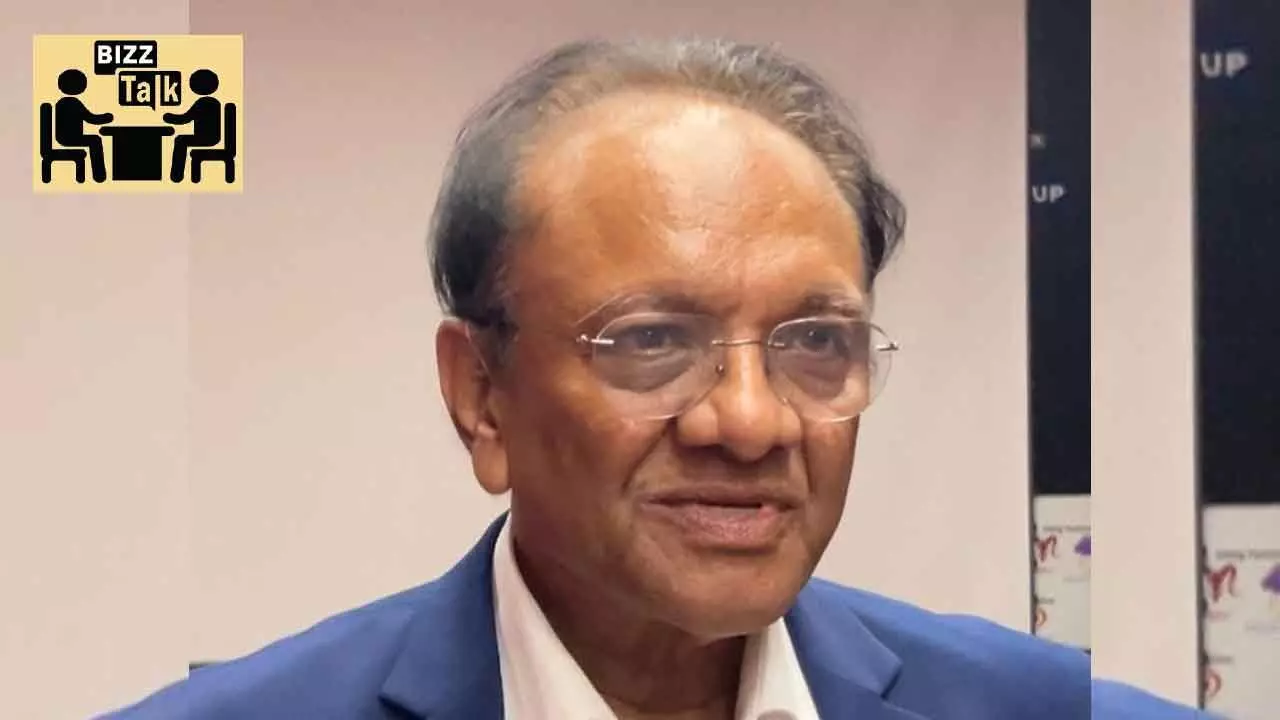
Kolkata’s skyline may bear the stamp of PS Group, but founder Pradip Chopra’s recent visibility in national cinema raises a compelling question: what draws a seasoned industrialist and educator to filmmaking—and acting—at this stage of life? Now, at 75, Chopra has added another unexpected chapter—cinema. Increasingly visible on the silver screen, he has quietly emerged as a serious actor, choosing films that carry strong social messages and double as immersive learning platforms for his students.
His latest Hindi release marks his fourth outing as an actor, surprising audiences who assumed such reinvention belonged to youth alone. Chopra is best known as the force behind PS Group, the real estate giant that has helped shape modern Kolkata with over two hundred landmark projects and nearly 20,000 homes. He defies every convenient label. Builder, teacher, actor, technologist, dreamer—he is all of these and more.
At an age when many slow down, he accelerates, reminding us that the most powerful reinvention is not of careers, but of mindset. In a free-wheeling interview with Bizz Buzz, Pradip Chopra, Founder, Chairman, iLEAD Institute and PS Group, explains how at seventy five (75), he is continuously reinventing himself and delves at length on films, failure, first Principles and the future
Kolkata’s skyline is dotted with PS Group landmarks, yet of late you seem equally visible on the silver screen. Your latest Hindi film marks your fourth outing as an actor. What drew you into cinema at this stage of life?
Films, for me, began not as a career shift but as an extension of education. We started making films primarily to give students of iLEAD—especially those in filmmaking—a real, immersive exposure. Classroom cameras and simulated projects can only take you so far.
A professional film set, with expensive equipment, seasoned technicians and real deadlines, offers an education no textbook can.
The second, equally important objective was to tell stories with a message. Every film we made carried a social purpose. My first film was deeply personal, drawn from my experience of watching my mother battle cancer. Doctors advised that treatment would cause more pain than relief.
We chose palliative care, and she lived two peaceful, meaningful years. I wanted people to understand that blind medical intervention is not always compassion. Families often exhaust their savings and subject patients to needless suffering while fighting a battle already lost. That truth needed to be told.
Your latest film, releasing nationally, has a very different theme—justice and resistance. Could you tell us about it?
This film is about a 75-year-old ordinary man—whom I play—whose entire family is killed by a politically connected criminal. Society assumes that someone of that age, without power or resources, cannot fight such forces. The film challenges that assumption.
It is about willpower, courage and perseverance. If you have the resolve, you will find a way, regardless of age or circumstance.
The film, shot largely in West Bengal and the Sundarbans, features many local actors. It was important for us to give regional talent and our students national exposure.
Students participated in every department—cinematography, costumes, makeup, pre-production, post-production—making it a holistic learning experience. It releases on January 9 in around 150 theatres across India.
You often say that acting was something you were once told you could never do. Why did you decide to prove that wrong?
When I was in school, someone bluntly told me, “Mr. Chopra, you can’t act—don’t even try.” For nearly seventy years, I believed that. Yet I constantly tell my students that the greatest joy in life is doing what you were told you couldn’t do. At some point, I realised I had to practise what I preached.
So I acted in the first film—and discovered I wasn’t bad at all. Veteran actors like Zarina Wahab and Mushtaq Khan told me my performance felt natural, not theatrical.
Recently, after a premiere in Mumbai, senior actors and directors said they couldn’t believe I wasn’t a professional. That reaffirmed my belief: age is just a number, and self-imposed limitations are often the biggest barriers.
How does it feel to reinvent yourself publicly at 75, knowing audiences will judge your performance?
It feels liberating—and inspiring, I hope, for others. Too many people believe life ends at retirement. I tell them: today is the first day of the rest of your life.
Whatever you couldn’t do earlier, start now. You’re never too old or too young to learn something new. All you need is intent, courage and willpower.
Has this philosophy guided your business journey as well?
Absolutely. I am a first-generation entrepreneur. My father was in service and left me no capital. When I did my first real estate deal, I didn’t even have ₹100 in my pocket. Yet I signed a ₹20-lakh deal and made ₹8 lakh without investing a rupee. Our first housing project on Chakraberia Road was built with negative capital.
We created a model based on joint ventures with landowners and advance sales. People told me real estate was impossible without money. Today, PS Group has completed over 200 projects and nearly 20,000 apartments—the highest in Kolkata. Any significant land deal in the city still comes to us first, largely because of trust.
Was that early success luck, or business acumen?
It was a mix of luck, courage and insight. Luck brought the opportunity. Courage allowed me to take the risk. Insight helped me execute it. Opportunity favours those who understand their subject deeply.
What advice would you give young entrepreneurs today?
Never pursue an idea that everyone approves of. If everyone agrees, competition will be fierce. The best ideas are those people say are impossible.
That’s where opportunity lies. I entered industries others dismissed—whether real estate without capital, exporting granite to Germany, or creating an education model centred on wisdom, not just knowledge. Being the first mover makes all the difference.
That philosophy also shaped iLEAD, didn’t it?
Yes. People said creating institutions like Harvard or Oxford in India was impossible. I wanted to prove them wrong—not by copying them, but by reimagining education. Knowledge alone isn’t enough. Life requires wisdom and life skills—how to handle failure, disappointment, setbacks.
Our campus walls speak. They carry quotes and ideas that can transform lives. Each classroom is dedicated to a visionary—Charlie Chaplin, Bill Gates, Azim Premji—so students are constantly surrounded by inspiration. Albert Ford of the Ford Foundation once told me our campus was more inspiring than many global universities because we teach wisdom, not just syllabi.
You often speak of teaching as your most fulfilling role. Why?
Because the impact is lifelong. A former student from our first batch once called me from the United Nations. She reminded me how she was terrified of speaking in class, how I pushed her to confront that fear.
Twenty-five years later, she was being congratulated by the UN Secretary-General for a presentation. Moments like that matter more than building ten more skyscrapers. Creating human capital has far greater societal impact.
You seem deeply engaged with emerging technologies—AI, AR, VR—at an age when many shy away from them. Why?
I am not technology-driven; I am dream-driven. Technology is merely a tool to realise dreams. With AI and augmented reality, we can recreate history, bring monuments alive, transform education and healthcare.
Imagine Newton teaching physics in a classroom, or Charlie Chaplin explaining acting. We are already doing this at iLEAD. We are building AI-driven films on Indian mythology and history, museums that use immersive technology, and even exploring AI-based healthcare solutions for remote areas where doctors refuse to go.
Some fear AI will destroy jobs. Your response?
Every transformative technology has faced that criticism. Computers did, too. AI will create more jobs than it destroys. It won’t replace humans; humans proficient in AI will replace those who aren’t. You can hate it or fear it, but you cannot ignore it. As I often say, no army can stop an idea whose time has come.
Looking back, which role have you enjoyed the most—builder, educator, or filmmaker?
I’ve enjoyed every phase. Building PS Group was about creating a company with values. Education was about shaping lives. Films, museums and technology projects are about leaving behind ideas and inspiration. At this stage of life, I’m pursuing what I once postponed. Money is no longer the motivator—meaning is.
Finally, what keeps you going at 75?
Curiosity. Dreams. And the belief that life is a continuous journey of reinvention. As long as I can imagine a better way of doing something—and find the courage to try—I feel young.





