

Reinsurance sector under tremendous pressure as mounting catastrophe losses challenge traditional models
There’s a clear shift happening inside the insurance industry, says Anuj Kumbhat, co-founder & CEO, WRMS Global
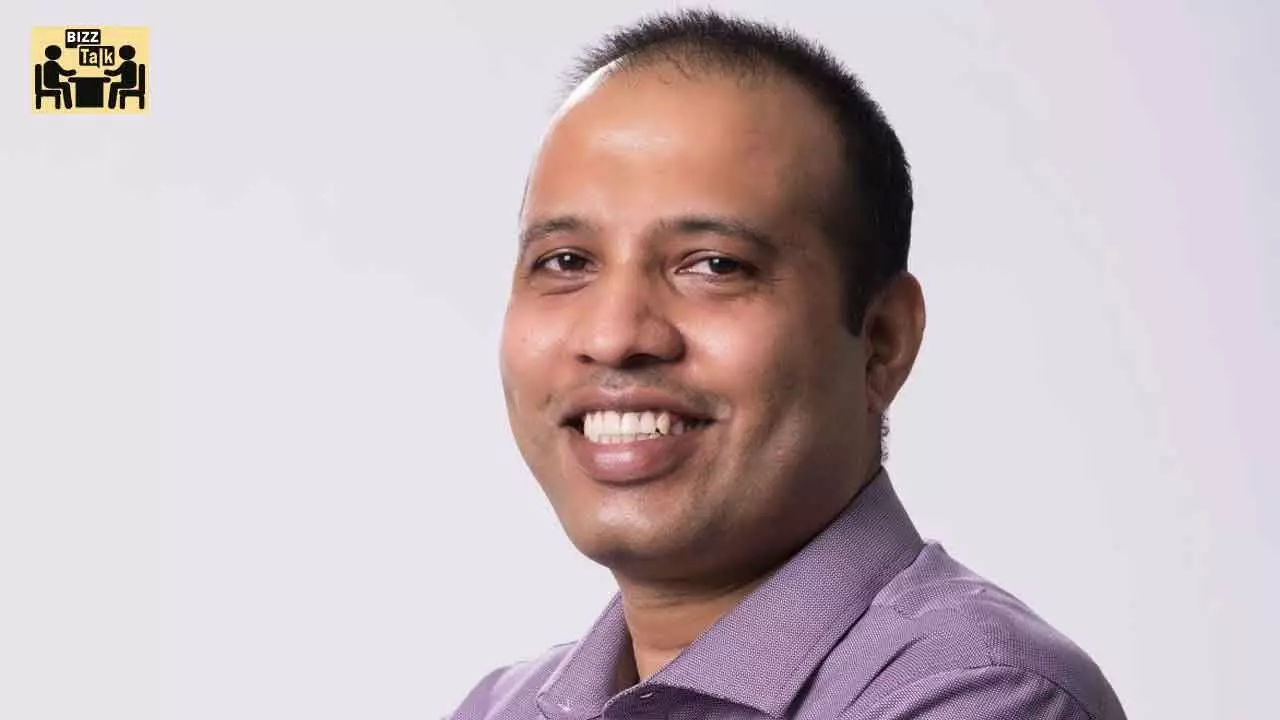
Anuj Kumbhat, Co-founder & CEO, WRMS Global
The reinsurance sector is under enormous pressure, “with mounting catastrophe losses challenging the reliability of traditional actuarial models. Historical baselines on their own are no longer reliable predictors of future risk.
But the most critical issue is one of equity: the most vulnerable communities are often left out of the global safety net - first to be impacted, last to recover. That, to us, is the real crisis,” says Anuj Kumbhat, Co-founder & CEO, WRMS Global in an exclusive interaction with Bizz Buzz
What are the most pressing climate-related risks globally in 2025, especially with the reinsurance sector under pressure from recent catastrophe losses?
In 2025, we’re facing cascading climate risks: prolonged droughts, erratic monsoons, unrelenting heatwaves, and flooding in places never previously vulnerable. These aren’t isolated anomalies—they’re now part of the norm.
While the scientific consensus is strong, the economic implications are equally severe. The reinsurance sector is under enormous pressure, with mounting catastrophe losses challenging the reliability of traditional actuarial models. Historical baselines on their own are no longer reliable predictors of future risk. But the most critical issue is one of equity: the most vulnerable communities are often left out of the global safety net - first to be impacted, last to recover. That, to us, is the real crisis.
How are insurers and reinsurers adapting to a landscape defined by high-frequency, high-intensity climate events?
There’s a clear shift happening inside the insurance industry. For decades, the model was based on post-event estimation; someone shows up and assesses the damages, quantifying loss, and compensation begins to flow. However, in the current weather climate, that simply doesn't work. And if there is any delay, it can be devastating.
More insurers are embracing satellite data, weather APIs, and AI models to predict and automate responses. What excites us most is the growing openness to parametric insurance—a model where payouts are triggered automatically based on a measurable index, like rainfall or wind speed. It’s fast, transparent, and scalable. We’re collaborating with forward-thinking insurers and reinsurers who are working to build more responsive and equitable systems.
Why is parametric insurance emerging as a preferred solution for climate and disaster risk management?
Parametric insurance is fundamentally about trust and speed. Claims for traditional insurance are processed based on documentation, conflicts, or onsite investigation, which takes a long time to resolve. For someone whose livelihood depends on a single crop cycle, that delay can be devastating.
Parametric insurance replaces complexity with clarity. If rainfall falls below a defined threshold, for instance, payouts are triggered automatically. It’s not just insurance—it’s financial dignity during a crisis. For smallholder farmers, it means they can recover quickly, without waiting for damage to be verified or assessed.
How does WRMS’s SecuRisk platform simplify and speed up claims, especially for underserved communities?
SecuRisk was designed with one simple principle: speed and simplicity should be non-negotiable, especially for the most vulnerable. The platform integrates remote sensing, real-time weather data, and AI to monitor whether a predefined parameter has been breached—and then automates payouts accordingly.
But technology alone isn’t enough. Many of our users live in remote, low-literacy contexts. That’s why we’ve added multilingual voice support, SMS alerts, and localized field assistance. We’ve seen claims processed often within days, way faster than traditional systems. That kind of speed restores not just livelihoods, but confidence.
What were the initial challenges in building risk solutions for smallholder farmers and how has that experience shaped WRMS’s current global strategy?
Our biggest challenge wasn’t just awareness or trust—it was scalability. Implementing parametric insurance at scale required reliable data, localized infrastructure, and intuitive interfaces—all in low-resource settings. SecuRisk was born out of this need: to offer a flexible, data-integrated platform that works even in fragmented ecosystems.
These early hurdles shaped our approach globally. We now focus on building modular, API-ready solutions that can adapt across geographies, grounded in tech, but always designed around people.
How do platforms like SecuSense provide hyperlocal, real-time intelligence to communities?
SecuSense is our hyperlocal climate intelligence platform. It fuses IoT, satellite data, and AI to deliver live, actionable insights. For a farmer, that could mean an alert about an incoming pest attack. For a government official, it could be an early warning of a flood. For an insurer, it could mean live risk analytics for a particular region.
But what makes SecuSense truly powerful is its accessibility, which works in low-bandwidth settings. That’s the difference—we’re just not building dashboards for experts; we’re building tools for impact on the ground.
What’s next for WRMS, especially in terms of tech development and global partnerships?
We’re at an inflection point. The next frontier for WRMS is scaling up not just in terms of reach but in impact. We’re doubling down on AI-driven climate forecasting, developing API-first platforms for insurers, and exploring embedded insurance where climate risk protection is built directly into agri-finance products, solar loans, or even public schemes.
We’re also expanding our footprint through global partnerships, working with governments, reinsurers, NGOs, and fintechs. And we’re looking beyond agriculture into urban resilience, renewable energy risk, and coastal protection. The climate crisis doesn’t recognize sectoral boundaries, and neither should solutions.
How do you envision the future of climate risk management in the next 5–10 years?
I really feel that the next decade will be transformational for how we view resilience. Climate risk management will not just be a separate function; it will be a fundamental component of how governments, companies, and individuals make choices.
We will see significant advances in predictive modelling, in the creation of digital risk pools, and in satellite and other forms of observational monitoring. Insurance will not be a separate product unto itself; it will be incorporated into every interaction with risk.
However, the most important thing I hope happens is that we progress towards climate justice so that those who have contributed the least to climate change are no longer the ones paying the most. If we use technology to bridge the gap to protect, serve, and elevate, then we have successfully done our job.
What inspired you to found WRMS in 2004, and how has your vision evolved over two decades?
When we launched WRMS in 2004, our motivation wasn’t to be a tech company or chase scale. It was deeply personal. We had witnessed how one failed season could wipe out a farmer’s livelihood and plunge families into distress. That vulnerability was unacceptable to us.
There was data available: weather data, crop information, and even price data. It was all publicly available data, yet disconnected from the farmers who needed it the most. So, it was simple—we just had to connect it. As time passed, and the realities of climate change became more visible, we realized that this was not just an agricultural challenge—it was a global resilience challenge.
Today, WRMS is working not only with farmers in rural India but also with diverse stakeholders across Asia, Africa, and Latin America (insurers, governments, humanitarian agencies, etc.) to create tech solutions to democratize access to climate risk protection. It’s been a humbling journey, and it’s shown us that innovation, when rooted in empathy, can drive transformative change.





