

Indian workplace is evolving into a high-performance ecosystem, integrating people, technology and culture
Our ultimate goal is to align real estate with workforce performance, says Rohit Raj Puniani, Managing Director, (North India & Hyderabad), Space Matrix
Rohit Raj Puniani, Managing Director--North India & Hyderabad, Space Matrix
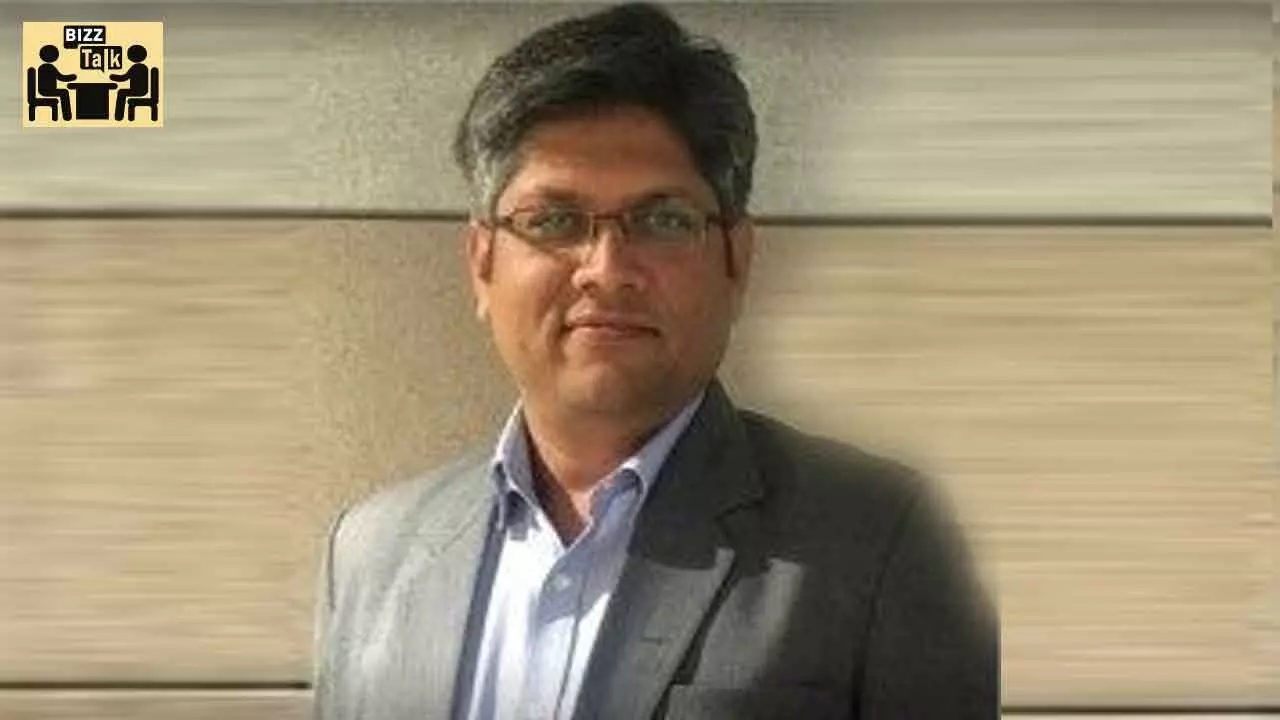
Rohit Raj Puniani, Managing Director--North India & Hyderabad, Space Matrix, is a dynamic and driven professional with a rare blend of strategic insight and operational expertise. He has a proven track record of driving business growth, improving operational efficiency, and delivering value across diverse sectors. Rohit combines analytical rigour with creative problem-solving.
He is adept at leading cross-functional teams, building strong stakeholder relationships, and navigating complex challenges with agility and clarity of vision. Rohit’s ability to translate data-driven insights into actionable plans has consistently powered performance improvements, whether in product development, process optimisation or market expansion.
Colleagues recognise him for his energetic leadership style, unwavering commitment to excellence and knack for turning bold ideas into measurable outcomes. Passionate about continuous learning and innovation, Rohit is always ready to take on the next opportunity—poised to deliver strategic impact and foster growth wherever he goes.
With Gen Z now shaping the modern workforce, Rohit shares his insights on how workplace design is evolving to meet their expectations around flexibility, inclusivity, digital integration, and purpose, while still driving collaboration and performance in an exclusive interview to Bizz Buzz.
He says the Indian workplace is now a high-performance ecosystem, a fusion of people, technology, and culture. The conversation has definitively shifted from spatial planning to strategic enablement. Organisations are demanding answers to a critical question: This transformation is fundamentally driven by data, sustainability, and a clear understanding that human behaviour is the ultimate metric for workplace success.
"At Space Matrix, we don't just observe these shifts," he explains, elaborating on how design intelligence, regional dynamics, and emerging technologies are reshaping the modern Indian office
Are you observing regional differences in how companies are approaching workplace redesigns?
Absolutely, regional dynamics are the micro-climates of the Indian market, dictating the pace and priority. For North (Delhi-NCR), the driving force is governance, efficiency, and consolidation at scale. Our clients here, often mature enterprises, use design for rigorous space optimisation and operational control, aligning to high-fidelity global standards.
Projects are large-scale, data-led, and focused on long-term, adaptable infrastructure. In contrast, Hyderabad is an innovation engine, operating on a high-velocity cycle. The technology and life-sciences base means design briefs are all about agility, experimentation, and culture-building.
They demand highly collaborative, tech-rich layouts and an energetic aesthetic that directly reflects a disruptive, innovative mindset. While our ultimate intent across all regions is to align real estate with workforce performance, the approach differs, shaped by regional economic maturity, cost structures, and growth trajectories.
Inclusivity and belonging are key priorities for Gen Z. How can thoughtful design nurture these values within organisations?
Inclusivity and belonging are not HR mandates, yes. However, they are also design deliverables that directly impact retention and collaboration. We approach this by embedding these values within the core spatial logic:
Inclusion through equitable access: This starts at the planning stage. We ensure equitable access to all facilities, consistent design quality across all zones (removing the symbolism of 'better' spaces for leadership), and circulation patterns that eliminate physical or symbolic hierarchy.
When every employee experiences the same quality of space, inclusion becomes a visible and non-negotiable principle. This also means designing for diverse needs—acoustic zones for neurodivergent teams, wellness rooms, and universally accessible facilities.
Belonging through autonomy and authenticity: Belonging is fundamentally strengthened by personalisation and choice. This involves integrating technology that allows individuals a high degree of control—the ability to adjust lighting, temperature, or choose varied seating options fosters autonomy and comfort.
Furthermore, design elements that reflect local culture, heritage, and regional materials add authenticity and identity, making people feel 'at home' rather than in a standardized corporate shell.
The outcome- psychological safety: The synergy of equitable design and personalization creates psychological safety.
When people feel seen, respected, and empowered to control their immediate environment, collaboration improves organically. Design therefore acts as a silent but constant reinforcement of an authentic, caring culture, which is paramount for the Gen Z workforce.
Sustainability has become a key priority for organisations today. How can design firms embed sustainability practices while ensuring cost efficiency?
Sustainability is no longer a tactical add-on; it is a core metric for organisational performance and value. Our design approach ensures sustainability aligns directly with ESG mandates and human capital strategy. The higher-level impact is multi-fold:
Employer branding and authenticity: Employees, particularly Gen Z, demand that companies walk the talk. A physically sustainable workplace—transparent use of low-carbon materials, measurable energy reduction, and abundant natural light—serves as the most visible evidence of a company's commitment. This authenticity drives employee pride and is a powerful differentiator for attracting top talent.
Active employee care: Sustainable design inherently improves human well-being. Features like enhanced air quality (through low-VOC materials and better ventilation), acoustic comfort, and access to biophilia are tangible ways the organisation demonstrates it actively cares for its people, leading to better focus and retention.
ESG Integration: We embed metrics like Embodied Carbon and Operational Efficiency into the design brief. This ensures that the real estate footprint contributes positively to the firm's overall ESG reporting, making the space a strategic asset rather than a liability.
Our work for Nestlé India in Gurgaon, for example, demonstrates how adaptive lighting and modular planning balance energy savings with measurable comfort, turning ecological intent into operational and employee benefit.
What role does technology, especially AI and digital workplace systems, play in shaping modern office experiences?
The fundamental principle guiding our technology integration is that technology must augment work, not hinder it. We are emphatically not interested in technology for technology's sake. The primary function of digital infrastructure is to enable frictionless work and drive superior human performance.
Technology serves as the critical connective tissue that converts the workplace from a static asset into a responsive, data-informed system. Our proprietary WorkspaceOS platform is the central nervous system, integrating all digital layers—from access control to climate control—into a single interface.
AI-driven analytics move beyond simple automation to deliver the necessary foresight. This means the office self-calibrates to optimize individual comfort, predict maintenance needs, and seamlessly manage dynamic occupancy.
At the Innovation Hub of an American multinational telecommunications company in Hyderabad, for example, smart systems allow staff to find a workspace, control their micro-environment, and collaborate instantly, ensuring that technology disappears into the background while facilitating the work itself. The result is a high-performance environment that focuses all human energy on value creation.
Could you highlight a few projects that stand out for their uniqueness and impact on workplace design?
We gauge a project's impact by the business challenge it solves, not just its aesthetic. I’ll highlight three that showcase this strategic alignment:
American Telecom Company, Hyderabad: The challenge here was speed and scale—creating a world-class, future-ready hub that supported high-velocity agile teams and retained top tech talent in a competitive market. Our solution used modular architecture and embedded technology, engineering the entire space for rapid deployment and continuous cultural iteration, effectively positioning the office as a talent magnet.
Kohler Corporate Office, Gurugram (North): The business challenge was leveraging design to instill brand pride and visually express the company's rich heritage and design philosophy to employees and partners.
We translated their luxury, craft, and material innovation into the spatial language, creating an environment that elevated the employee experience and served as an authentic physical manifestation of the Kohler brand identity, deepening employee connection and loyalty.
American Bank, Bengaluru: The core challenge was breaking down organizational silos and driving genuine, spontaneous interaction across multiple floors.
We solved this by creating a "vertical city" connecting five themed floors through open staircases and shared hubs, forming a continuous spatial experience that inherently encourages movement and cross-functional collaboration.
In each case, the physical form was dictated by a specific, measurable organizational intent.





