

India will remain world’s fastest-growing aviation market for next two decades: Boeing MD Ashwin
We continue to maintain deep, enduring partnerships with Indian airlines and will support them through fleet expansion in the coming years, says Ashwin Naidu, MD (Commercial Marketing), Eurasia and Indian Subcontinent, Boeing
Ashwin Naidu, MD, Commercial Marketing, Eurasia and Indian Subcontinent
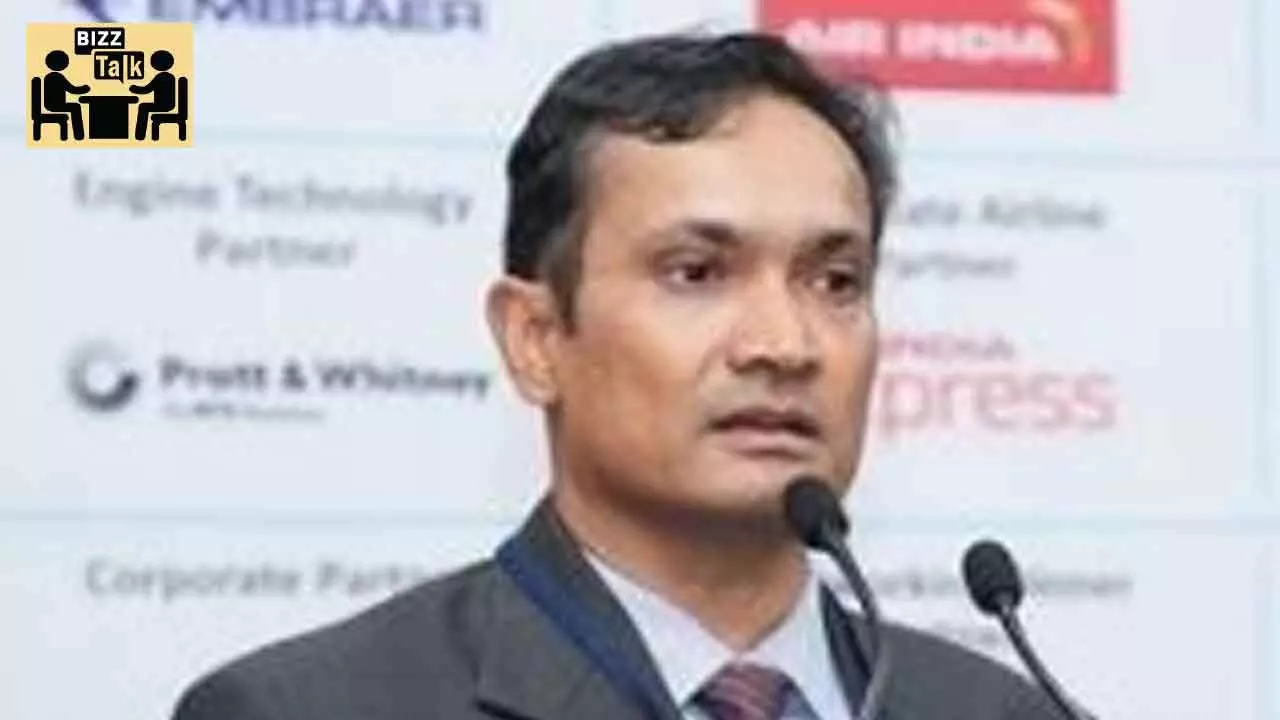
India will continue to be the world’s fastest-growing aviation market over the next 20 years, outpacing developed regions such as North America and Europe, even as supply chains stabilise, aircraft deliveries accelerate, and long-haul opportunities expand, according to senior Boeing officials.
Speaking to Bizz Buzz, Ashwin Naidu, Managing Director- Commercial Marketing, Eurasia and Indian Subcontinent outlined its traffic forecasts, aircraft delivery plans, workforce requirements, cargo growth prospects, and its outlook on wide-body and regional aircraft in India
India’s aviation traffic has been growing at around 7%. How sustainable is this growth?
India has remained the fastest-growing aviation market globally for many years, and we see that trend continuing for at least the next two decades. While developed aviation markets such as North America, Europe, and Northeast Asia are growing at a more modest pace of around 3–4%, emerging markets are expanding much faster.
Within the Asia-Pacific ecosystem, India, South Asia, and Southeast Asia stand out. Southeast Asian markets—including Thailand, Vietnam, and other ASEAN countries—are growing at approximately 6.5%, similar to India. This makes the broader Asia-Pacific region the primary engine of global aviation growth.
How do traffic flows from India to Africa and South America compare?
We forecast traffic flows from India to all major global regions. South America remains a relatively small market in absolute terms, but growth rates are high due to a low base.
India–Africa traffic, however, is far more compelling in the medium term. The market is ready for its next phase of expansion, supported by strong economic partnerships and a sizeable Indian diaspora, particularly in South Africa, Kenya, and Mauritius.
Indian airlines have already begun expanding into destinations such as Nairobi and Mauritius, and we see continued growth opportunities, even though these markets remain smaller compared to Europe or North America.
Boeing has projected a requirement of 141,000 new aviation professionals in Asia. What role will Boeing play in this?
The figure of 141,000 aviation professionals represents incremental demand on top of the existing workforce. Airlines will be responsible for hiring pilots, cabin crew, and technicians. Boeing’s role is to support customers in building training and capability infrastructure.
We work closely with airline partners and training organisations to expand pilot training capacity. Through partnerships with simulator providers such as CAE and FSTC, we are steadily increasing simulator availability in India. By the end of 2026, Boeing expects to have partnerships supporting up to 10 simulators in the country.
For aircraft maintenance technicians, we collaborate with training institutions and airlines to develop structured training plans aligned with fleet growth.
Does Boeing plan to directly invest in aviation training or operate aircraft in India?
No. Boeing does not have plans to invest directly in operating aircraft or owning training academies. Our approach is to work with stakeholders—airlines, regulators, and training partners—to support capability-building rather than operate these assets ourselves.
With ongoing global supply chain disruptions, are aircraft deliveries to Indian airlines being delayed?
There are no delivery delays affecting Indian customers. Boeing works very closely with its airline partners to manage supply chain challenges.
Recent deliveries include an Air India 787-9 delivered just two weeks ago and an Akasa Air aircraft delivered a few weeks earlier. On an average, Boeing is delivering at least two aircraft per month to its primary Indian customers. While supply chain management remains a constant focus, it is not impacting aircraft availability in India.
Has the FAA production cap impacted deliveries, and where do production rates stand today?
The FAA has authorised Boeing to increase production rates, and we are currently producing 42 aircraft per month. Any future increases—to 47 or 52 aircraft per month—will be determined through careful internal assessments and continued engagement with the FAA. We are taking a systematic and methodical approach to scaling production.
How many aircraft does Boeing expect to deliver to India going forward?
Deliveries in 2025 were influenced by production constraints carried over from 2024. Looking ahead, we expect a steady run rate of approximately two aircraft per month in 2026. This translates to around 24–25 aircraft deliveries to Indian airlines next year, a significant increase compared to 2025.
How do you see the air cargo market evolving in India?
While India’s dedicated cargo fleet is still small—around 17 aircraft today—the growth trajectory is extremely promising. Just six or seven years ago, India had only six cargo aircraft. The fleet has nearly tripled since then.
Several structural factors are driving this growth: rapid expansion of e-commerce, rising consumer expectations for faster deliveries, growth in pharmaceuticals, and increasing high-tech manufacturing. These trends will inevitably fuel demand for air cargo.
Existing cargo operators are showing interest, and we also expect new entrepreneurial entrants to capitalise on this opportunity. Air cargo is set to grow rapidly in India.
What role could the Boeing 777X play in India’s long-haul market?
The 777-9 builds on the successful 777-300ER platform, which Air India has operated for over 15 years on long-haul routes to the US. The 777X offers 30–40 additional seats, a longer wingspan, and a new all-composite wing, significantly improving fuel efficiency.
As Indian airlines increasingly fill 350–360 seat aircraft on non-stop routes to the US and Canada, the 777X becomes a compelling option, offering higher capacity with superior efficiency.
Does India need a strong global hub airport for wide-body aircraft like the 777X to succeed?
India’s major metros already generate sufficient traffic to support large wide-body aircraft. Millions of passengers currently travel from cities like Delhi, Mumbai, and Bengaluru to North America.
That said, well-designed hub-and-spoke connectivity within India would enhance competitiveness. For example, instead of passengers from smaller cities connecting through Middle Eastern hubs, they could connect domestically and fly non-stop to international destinations on Indian carriers.
Developing world-class hubs is not mandatory for success, but doing so would significantly strengthen India’s competitive position in long-haul aviation.
Why does Boeing remain conservative on regional jet projections for India?
Historically, regional jets have struggled to achieve sustainable economics in India. Aviation success here depends on strong seat-mile economics, which become challenging with smaller aircraft.
Congested airports further incentivise airlines to deploy higher-capacity aircraft rather than regional jets. While regional jets may work in the initial years of an operation, markets in India often outgrow them quickly.
This is why single-aisle aircraft continue to dominate India’s aviation landscape. Our forecasts on regional jets have remained accurate over the past decade, and we continue to maintain a cautious outlook.
Boeing forecasts around 395 wide-body aircraft for India over 20 years. Isn’t this conservative?
A wide-body aircraft represents a significant capital investment. While Indian carriers such as Air India and IndiGo are expanding internationally, scaling wide-body operations requires time, connectivity infrastructure, and sustained investment.
Even so, a fleet of 395–400 wide-body aircraft would represent more than a fivefold increase from current levels—an extraordinary outcome for Indian aviation. We believe this forecast balances optimism with realism, though we would be pleased if actual numbers exceed it.
What does Boeing’s order book from India look like?
Boeing has a substantial order book from Indian customers, including Akasa Air, Air India, Air India Express, and long-standing partners such as SpiceJet. These details are publicly available.
We continue to maintain deep, enduring partnerships with Indian airlines and will support them through fleet induction and expansion over the coming years.





