

High population density and vast market size make West Bengal India’s strategic demand hub
The overall business scenario in India is extremely positive across sectors including manufacturing, services and retail, says Sanjay Chhajer, Executive Director, BNI Kolkata South
Sanjay Chhajer, Executive Director of BNI Kolkata South
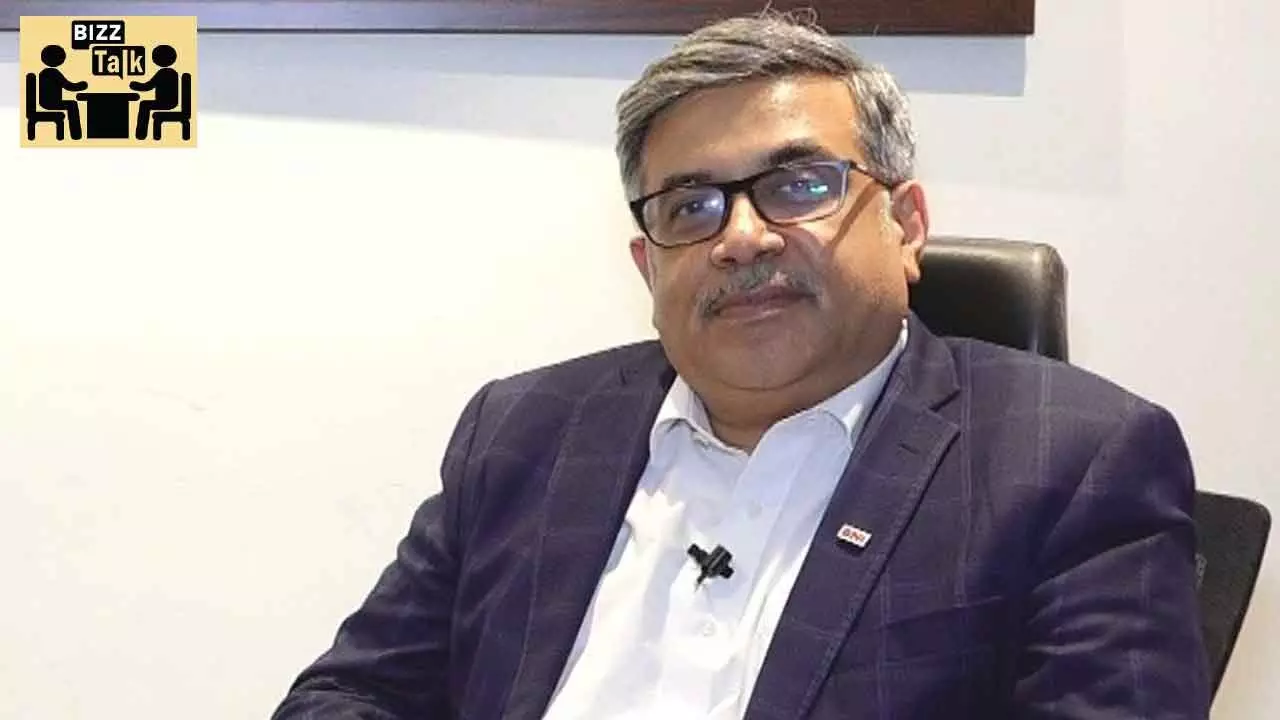
Sanjay Chhajer, Executive Director of BNI Kolkata South, has long been an evangelist for the transformative power of relationships in business. At a time when India’s economic story is being rewritten by rising consumption, entrepreneurial ambition and a renewed regional confidence, Chhajer speaks to Bizz Buzz with measured optimism about the country’s trajectory—and about eastern India’s moment in the sun.
In this wide-ranging conversation, he reflects on the evolution of India’s business climate, the centrality of structured networking, and why Kolkata and West Bengal could well be on the cusp of a new entrepreneurial renaissance.
Sanjay Chhajer’s optimism is grounded not in rhetoric but in observation of markets expanding, of youth rising, and of relationships shaping opportunity . In his view, India’s growth story is not merely about capital—it is about connection
How have you seen the overall business ecosystem evolve over the last four to five years in India?
It is quite apparent that the overall business scenario in India is extremely positive. Across sectors—whether manufacturing, services, or retail—demand has been steadily increasing, and consumption is robustly supporting that demand. When you look at macroeconomic indicators, GDP is rising and per capita income is improving.
This creates a virtuous cycle. Higher income fuels greater consumption; greater consumption drives production and investment. In that sense, the entire economic wheel is moving in a forward direction. There will always be periodic challenges, but the larger trajectory is unmistakably upward.
The confidence in the market today is far stronger than it was even a few years ago. Businesses are more willing to invest, expand, and take calculated risks.
There was a time when networking was almost dismissed—“if someone is not working, he is networking.” Today it is considered fundamental to business. How did this shift happen?
That shift has been dramatic. In today’s era of valuations and enterprise-building, we often say, “Your network is your net worth.” It may sound like a cliché, but it has never been more relevant.
Networking is not merely exchanging business cards. It is about expanding meaningful connections and, with that, expanding opportunities. No matter what level of business you operate at, relevant networking multiplies possibilities.
Importantly, it cannot always remain a purely transactional, professional relationship. Genuine relationship-building is the key.
When trust enters the equation, networking becomes far more powerful than any conventional professional engagement. Trust accelerates business decisions; it reduces friction and builds long-term sustainability.
What specific role does BNI play in strengthening businesses?
Very simply put, BNI optimises the most valuable asset of every member—their network. When I speak of assets, I mean the connections each individual possesses. BNI opens up those connections to the larger group, allowing members to benefit collectively.
Imagine being connected to a hundred people individually. Now imagine those hundred connections becoming accessible to the entire chapter in a structured, disciplined manner. That is powerful.
Another crucial aspect is credibility. Building credibility is a continuous process, and BNI teaches you how to do that systematically. How do you present yourself? How do you ensure that others trust you enough to refer business to you? How do you maintain that trust?
It is, in many ways, a complete package—learning how to grow your network and then how to derive value from it ethically and sustainably. What distinguishes BNI is its structure and its “win-win” philosophy.
Both parties benefit. With a 41-year legacy and presence across nearly 78 countries, it has refined the art of business networking to a science.
Speaking of Kolkata and Bengal, what opportunities do you see here for young entrepreneurs?
When you look at the contribution of eastern India to the country’s overall business output, yes, we are relatively behind. But that is precisely where the opportunity lies. If there is a gap, there is room to grow.
With the population density and market size of eastern India—particularly West Bengal—the demand is enormous. Interestingly, much of that demand is currently being fulfilled by players from other states. The moment local entrepreneurs start investing in construction, services, manufacturing or distribution, the market is ready.
The idea that business cannot thrive in eastern India is a myth. Over the past decade, I have seen numerous enterprises—large and small—establish units here and flourish. Warehousing hubs, distribution centres, multinational operations—all are expanding.
That is a strong signal. Add to this the port advantage, connectivity to neighbouring states and countries, improving infrastructure, and a strong educational base. Few states are as strategically positioned. While some more developed states may approach saturation,
Kolkata and West Bengal are poised for fresh growth. This is the time to invest and move forward.Young entrepreneurship seems particularly close to your heart. How do you view the current generation of entrepreneurs?
I have absolutely no doubt—they are coming up in a big way. When we were younger, in the 1980s and ’90s, a 35-year-old doing well in business was considered exceptionally successful. Today, I see 22- or 24-year-olds running impressive ventures.
Age is no longer a determining factor. What stands out is clarity of vision. Many of these young entrepreneurs are first-generation business people. They may not come from established business families, yet they possess sharp understanding, strategic thinking and digital fluency.
The barriers to entry have lowered in many sectors. Access to information, technology, mentorship and networks has empowered them. They are confident enough to build something from scratch.
What more can be done to nurture and accelerate this entrepreneurial surge?
Ecosystem support is critical. Mentorship platforms, structured networking forums, access to finance and skill development—all these are essential. We must also change mindsets. Entrepreneurship should not be viewed as a risky alternative to employment but as a legitimate and respected career path.
Encouraging collaboration instead of isolated competition will help young entrepreneurs scale faster. Platforms that promote knowledge-sharing and referrals can dramatically shorten the learning curve.
Which sectors in Kolkata and Bengal hold the greatest promise?
Historically, Kolkata was the financial capital of India. Major banks, insurance companies and chartered accountancy firms were headquartered here. That legacy still offers immense potential.
Financial services remain promising, but so do technology, education, healthcare and personal care. Each of these sectors has both domestic demand and scalability. With the right policy push and entrepreneurial energy, they can flourish again.
Finally, do you believe the time has come for us to move from being consumers of technology to creators of technology?
I see consumption and creation as two wheels of the same bicycle. You cannot isolate one from the other. Unless there is consumption, there is no incentive to innovate. And without innovation, consumption stagnates.
As demand for technology grows, so will the impetus to develop and customise solutions locally. In that sense, India’s growing market will naturally drive indigenous innovation. The transition is already underway; it just needs sustained momentum.





