

From historic trade routes to genomic frontiers: Mo Fakhro launches ‘Dhows to DNA’ India–Bahrain biotech initiative
Our goal is to prove that a Bahraini-founded entity can be a global leader in technology, says Stanford-trained scientist and technology entrepreneur Mo Fakhro
Mo Fakhro, Stanford-trained scientist and technology entrepreneur
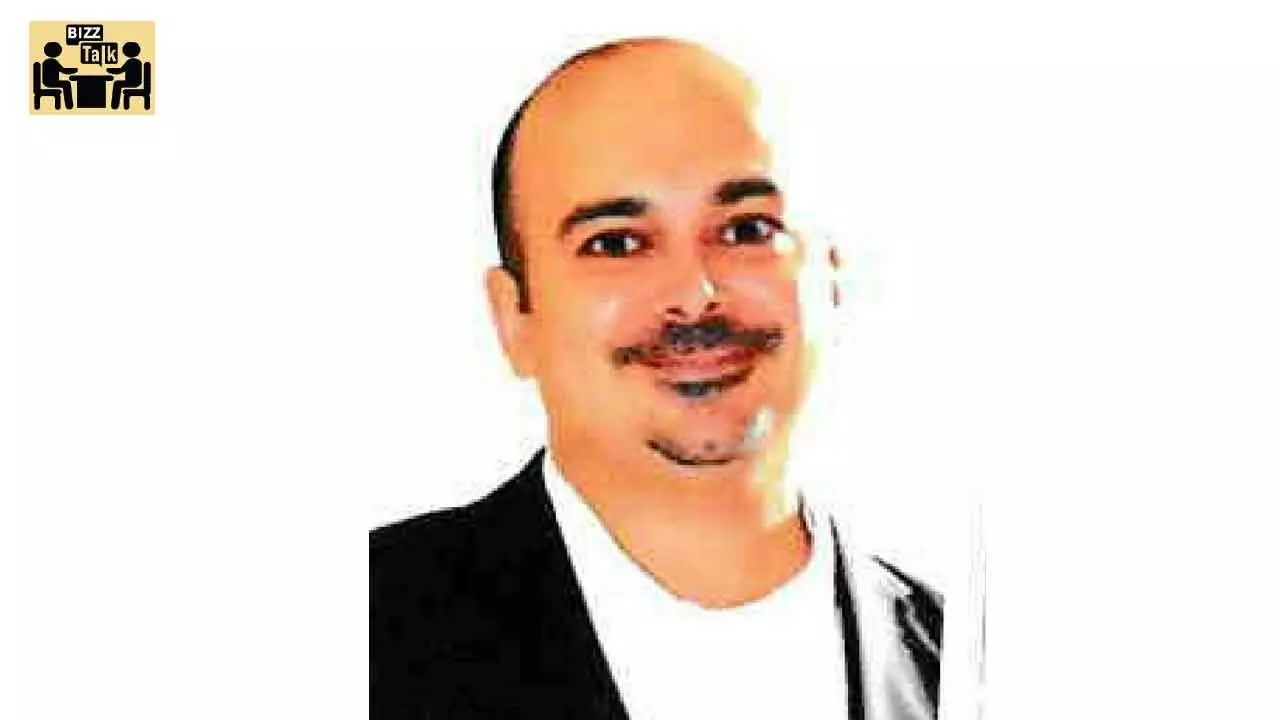
Mo Fakhro is a Stanford-trained scientist and technology entrepreneur whose experience spans genomics, biotechnology commercialisation, cross-border venture structuring, and scalable franchise-driven enterprise development. His work focuses on designing institutional and operational systems that bridge scientific innovation with execution across emerging markets.
He has recently launched a structured India–Bahrain biotech collaboration framework aimed at accelerating cross-border research, commercialisation, and scalable life sciences ventures. Branded “Dhows to DNA,” the initiative draws inspiration from historic trade routes connecting Indian ports such as Mumbai with Gulf commercial hubs like Manama.
While rooted in this shared maritime history, the mandate is firmly future-facing: To build a modern innovation corridor linking Indian scientific institutions with Gulf capital networks, regulatory ecosystems, and expansion markets. Speaking to Bizz Buzz, Mo Fakhro, outlines his vision and his plans, going forward
How have you seen overall business scenarios and climates evolved in India and the Middle East over the last five years or so?
The last five years have marked a shift from 'transactional' to 'transformational.' Historically, our regions were linked by the exchange of goods—dates, pearls, and spices. Today, we are exchanging intelligence. In the Middle East, the push for diversification is no longer a policy goal; it’s a lived reality.
In India, we’ve seen the 'Digital India' mission create a base of human capital that is now world-class. The climate has moved from being risk-averse to being 'innovation-hungry.' We are no longer looking for the next franchise to bring from the West; we are looking for the next breakthrough to build together."
What are the most significant or key trends in this regard?
The most significant trend is what I call the 'IP-fication' of the economy’. Businesses are realising that long-term value doesn't lie in distribution, but in ownership of patents and code. Another key trend is ‘Regional Self-Reliance’ — the desire to build local solutions for local problems, whether in fintech or food security.
Lastly, the ‘Institutionalisation of Startups’: We are seeing 'Startup Studios'—like what we do at MBA Fakhro — where businesses are built in a scientific, repeatable way rather than just through sporadic entrepreneurship."
Which are the key areas where India and Bahrain or Middle East have natural synergies?
Our synergies are built on the 'Three Pillars: Capital, Talent, and Market Access’. India has a deep pool of R&D talent and a massive testing ground. Bahrain offers a highly sophisticated regulatory environment and serves as a strategic gateway to the wider GCC and Western markets. Specifically, biotech, finTech, and renewable energy are the natural intersections.
My family’s business roots in both India and Bahrain give me a unique perspective: we are two pieces of a puzzle that, when joined, create a global powerhouse.
What was the basic objective behind launching the India-Bahrain Biotech Corridor? What are the focus areas?
The objective was to create a 'highway for DNA.' My Stanford thesis focused on how patents drive innovation in genomics, and I wanted to apply that practically. The corridor aims to allow Indian biotech firms to leverage Bahrain’s strategic location and capital to reach global markets, while Bahrain benefits from Indian scientific prowess.
Our focus areas are genomics, vaccine research, and agritech. We want to move beyond just 'healthcare services' and into 'life sciences creation'—owning the patents for the cures of tomorrow.
How should India and Gulf move from trading commodities to building scientific collaboration and intellectual property creation?
We must adopt the ‘creator mindset. For too long, the 'merchant' mentality of buying low and selling high has dominated.
To change this, we need to invest in 'fundamental R&D.' We should be co-founding research labs that bridge our universities—like the IITs in India and the leading institutions in the Gulf. We need a unified framework for intellectual property that makes it as easy to file a patent across our borders as it is to ship a container of oil or rice.
How can joint research partnerships be built between Indian institutions and Gulf investors?
By moving toward ‘venture philanthropy and applied research.’ Investors in the Gulf should fund 'Innovation Chairs' at Indian universities with the specific goal of commercialising the output.
At MBA Fakhro, we operate as a 'Startup Studio' where we don't just wait for ideas; we create them in our labs. If Gulf investors and Indian institutions co-own the 'Labs,' they will naturally co-own the 'Future.' It’s about sharing the risk of discovery to reap the rewards of ownership.
What role should technology play in the next phase of growth? How can the region move from being tech consumers to tech creators?
Technology must be the ‘architecture, not just the tool.’ To move from consumer to creator, we must focus on 'hard tech'—AI, robotics, and genomics—rather than just 'service tech.' In my venture, we are betting on ‘human innovation’.
We invest in things like 3D printing and autonomous vehicles because these are the sectors where the 'creator' earns the lion's share of the value. The shift happens when we stop asking 'What can I buy?' and start asking 'What can I invent?'
What is your take on the growing and evolving start-up ecosystem in the two regions? How can they come together?
The energy is unparalleled, but it needs a bridge. I see India as the 'Engine' and the Middle East as the 'Fuel.' At ‘MBA Fakhro’, we’ve established a presence in Bengaluru, Dubai, and Silicon Valley, specifically to be that bridge. Startups in both regions should think 'cross-border' from Day 1.
An Indian startup should have a GCC strategy in its seed stage, and a Bahraini startup should look at India for scale and engineering. When we stop seeing each other as 'foreign markets' and start seeing each other as 'co-founders,' the potential is limitless.
At MBA Fakhro, we’ve pioneered the '3-3-3 Strategy'' focusing on three markets (US, India, Gulf), across three verticals (Technology, Financial Intermediation, and Franchising), over three years. We aren't just an investment firm; we are an 'Innovation Lab'.
Whether it’s through our software division or our work in life sciences, our goal is to prove that a Bahraini-founded entity can be a global leader in technology by leveraging the historical and intellectual ties we share with India.





