

Engg colleges need to change their approach for producing industry-ready students in the AI era
image for illustrative purpose
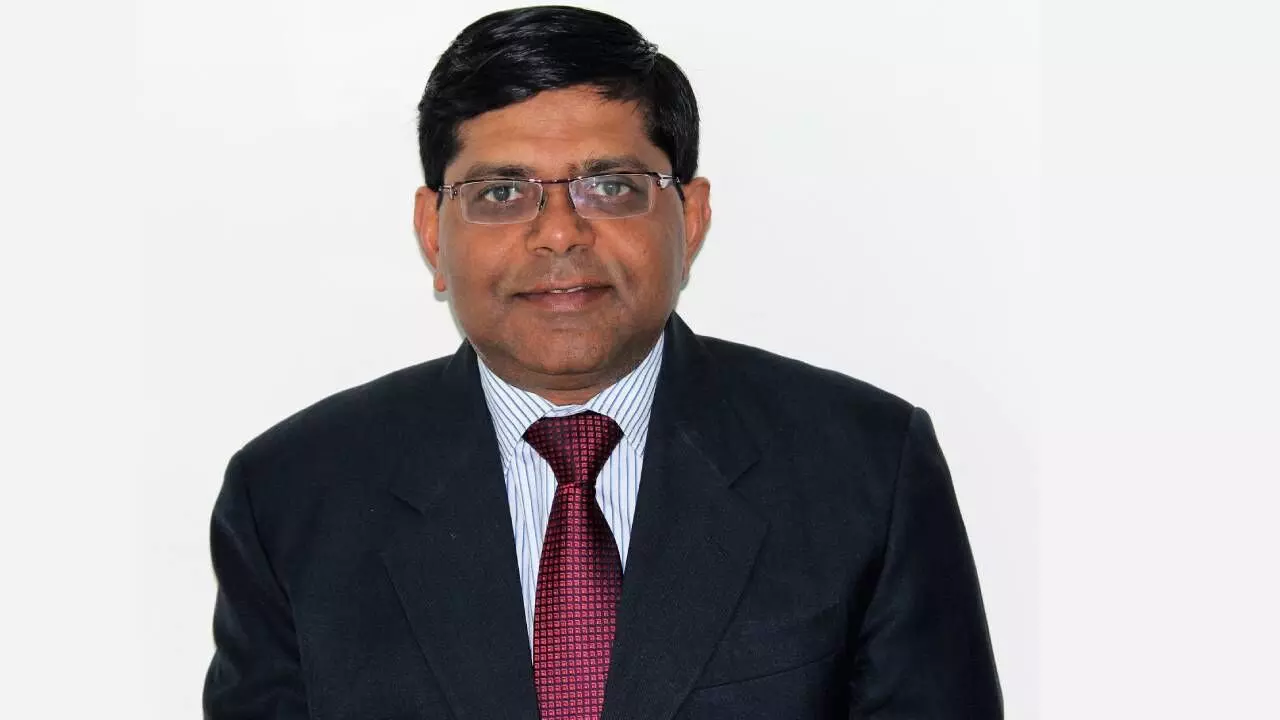
Adoption of AI-powered solutions and platforms has brought in a paradigm shift in Indian IT industry. From hiring of professionals to project delivery; from recruitment of fresh engineering graduates to strength of reserved employees (called as bench in IT industry parlance), IT industry is witnessing multiple changes. In a conversation with the Bizz Buzz, Aditya Narayan Mishra, CEO of HR consultancy firm, CIEL HR said that industry has to change rapidly to adapt to the new changes. According to him, companies are leveraging AI in multiple ways to automate processes. Therefore, professionals have to graduate to the next level for solving complex problems as less complex and repetitive tasks are being automated through AI. He said engineering colleges have to geared up to create industry-ready students by imparting knowledge that can help in solving real world problems. Mishra said that IT firms are facing cost pressure and looking at bench strength more closely in order to optimise it. According to him, demand for skills in the emerging technology domains remains strong
Do you expect subcontractor expenses go up for Indian IT services companies in the coming quarters? There are reports indicating that visa approval rates have gone down significantly for movement to the US. How do you see this whole thing playing out in the coming quarters? Will more work be done from India and other offshore locations as an outcome?
The visa expenditure for new entrant is going to be higher for companies if they decide to send resources to the US after the introduction of new entry fee by the US. Only, those who are already working there, they don’t have to pay the new fee. What we are hearing from our clients is that companies are not going for H1B visa anymore. Because of the high fees, such applications have come down. As far as more project work getting done from India, it will, of course, happen. Companies will opt for H1B visa route for sending talent to the US, only when it is unavoidable. The cost (coming from higher entry fee for H1B visa applications) will be passed on to the customers in someway or the other.
When more project work gets done from India, an uptick in hiring should be seen as a natural outcome. Has such hiring uptick seen in recent months? What is your perspective in this matter?
It has not happened yet. Large companies already have bench strength (number of reserved employees & freshers to be deployed in new projects. That’s how IT companies are managing the pipeline. Hiring is happening in the mid-size companies, & GCCs (Global Capability Centres). Foreign firms are setting up GCCs for cost advantage and talent availability.
Q2FY26 earnings showed some kind of stability in IT companies’ earnings. Do you see hiring confidence coming back among top leaders of Indian IT firms? What is your reading into this matter as AI adoption grows?
We don’t see any significant uptick in hiring. This is the new normal and the industry has to adjust to this. Hiring is happening in new technology and skills. So, professionals should have such skills. They should do additional qualifications and certifications in the new technology domains. They should demonstrate those skills to crack interviews. This is one part of the story, that is playing out.
Second important aspect is that bench strength is being viewed with a magnifying lens. Why the staffer is on bench; for how many days the person is on bench and related matters are being scrutinised closely. If there is no redeployment, then chances of being laid off is high. So, there is a cost optimisation pressure on the companies, which is huge.
Does it mean that upskilling should be pursued on an urgent basis by technology professionals?
Yes, professionals have to go for upskilling and reskilling in new technology areas. Apart from that technology professionals have to increase their problem-solving capabilities. Because, all the repetitive tasks are getting automated through AI (artificial intelligence). Companies are building and some have already built tools, through which they are able to fetch appropriate code sets that can be used in solving the present problem. Such library is helping them to solve problems better and faster by fetching previous code. So, this is also the new normal that AI tools will solve the low-complexity repetitive tasks. High-complexity tasks like problem solving, architecting, understanding of the business model, domain expertise are the areas in which software engineers have to work on. In this regard, our colleges have to be geared up for inculcating such mindset and curriculum.
Then, what kind of changes should be brought in academia? Can you provide a perspective in this matter?
The new normal (brought in by AI) is not limited to IT companies alone. Because IT industry is very closely associated with academia. So, academic institutions have to change. Campus to corporate is the model of the Indian IT industry. So, campuses have to be geared up for making students industry-ready. Educational institutions have to bring in live projects. They have to arrange interface with senior professionals from various industries like guest faculty, and lecturers. Moreover, companies have to allow their senior professionals to go and teach in these campuses, which will make them aware that what kind of students are available in the colleges. Nobody can manufacture students. India has to utilise the talent available in the country. So, all these steps have to done on a priority basis.
Have the ways of recruiting candidates changed in the recent time? What is your take in this matter?
Recruitment process has changed in recent times. It has become more stringent. Now, detailed assessment is happening of the candidates. Assessment process is becoming more automated. Talent assessment becomes psychometric. Some of these are new things, which have started happening.
To help colleges adapt to this new normal, we at CIEL HR are helping colleges through our structured programmes. We term it as ‘VIBEAITHON’. Under this programme, we are conducting coding competitions among engineering colleges. In this programme, we give real life problems to students and evaluate the competition through our experts. Such programmes are helping students in tier-II and tier-III colleges to be industry ready.
Agentic AI tools are getting deployed at a faster pace by the industry. Is demand for such talent going up as of now?
A lot of companies are developing AI agents for doing automated work. For instance, BPMs, call centres, consumer companies are leveraging those tools for servicing clients. Software developers, project managers who understand the business, and professionals with process engineering skills are required for developing Agentic AI tools. So, demand for these professionals is on a rise.





