

Building the future: Ramky aims to drive next phase of growth through sustainable infrastructure
India’s infrastructure and real estate sectors are poised for robust growth, creating a favourable environment for well-positioned players, says Ramky’s CEO Sunil Nair
Sunil Nair, CEO, Ramky
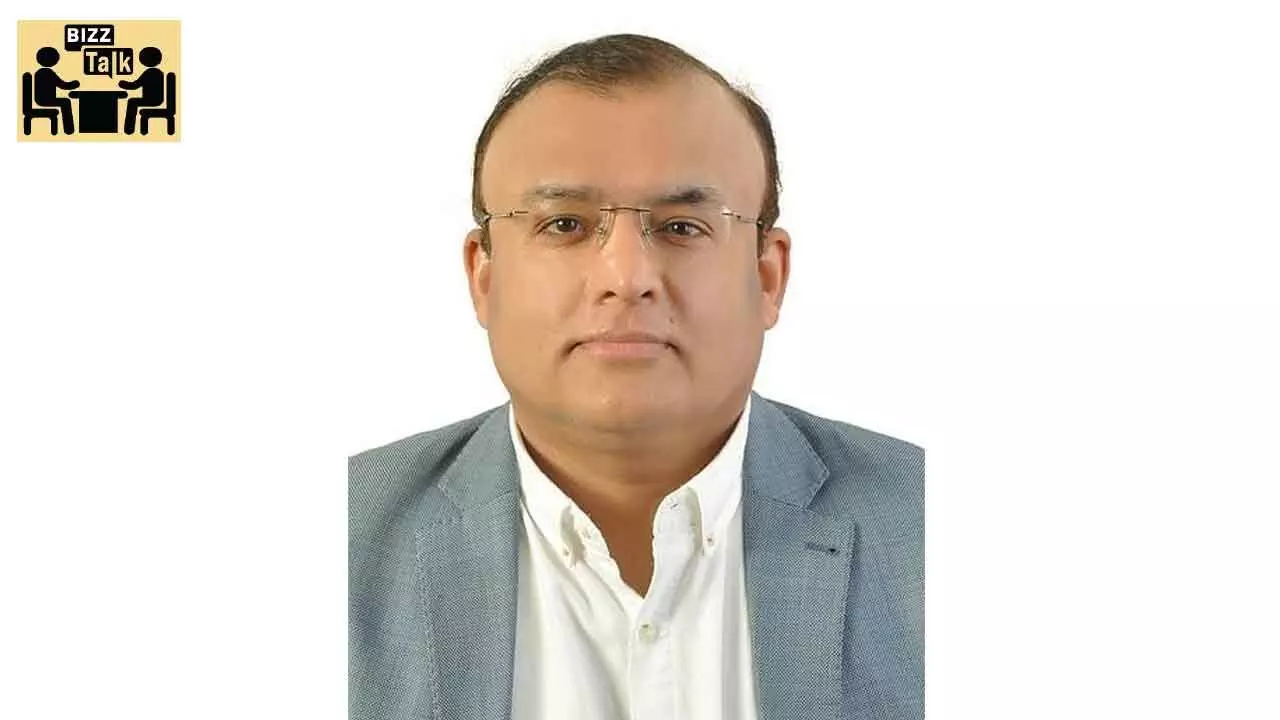
Sunil Nair is a seasoned business leader with nearly three decades of experience across the EPC, infrastructure, water and wastewater, energy, and oil and gas sectors. He has worked extensively across India, the Middle East, Africa, and Southeast Asia, earning recognition for driving sustainable growth, operational excellence, and business transformation.
A Chemical Engineering graduate from the University of Calicut, Nair also holds a CFA certification and has completed the Advanced Management Programme at INSEAD, combining technical depth with strategic and commercial acumen. He has held Chief Executive Officer and Managing Director roles at organisations including Utico FZC, Litwin PEL, CAE, and Galfar Engineering.
At Utico FZC, he currently leads the expansion of the water business into a fully integrated developer with in-house EPC capabilities, overseeing a $200 million P&L and large-scale BOO, EPC, and O&M projects. Earlier, as CEO for the UAE, Oman, and Africa, he led a successful turnaround, scaling revenues from $10 million to $250 million.
Nair’s board-level experience includes serving as Director at SBM Offshore India. His diverse global experience positions him well to lead Ramky Infrastructure’s next phase of growth. Recently, he interacted with Bizz Buzz sharing his vast experiences and life at Ramky Infrastructure. Excerpts
How would you describe Ramky Infrastructure’s growth journey under your leadership?
I took charge as CEO of Ramky Infrastructure on 1 October 2025, at a time when the company had already emerged from a challenging restructuring phase that began in 2015. Since then, the Board, management, promoters, and lenders worked collectively to stabilise operations and complete ongoing projects.
My mandate is to steer Ramky into its next phase of growth with a renewed focus on water, wastewater, and urban infrastructure. Given Ramky’s hands-on experience in sustainable infrastructure and the increasing emphasis on such projects in India and globally, I am confident of guiding the organisation toward long-term, responsible growth aligned with regulatory and implementation frameworks.
What are your top priorities as CEO today?
My immediate focus is on strengthening governance, compliance, and financial discipline as Ramky enters a new growth phase. Internally, we are working to standardise margins across projects, strengthen internal controls, enhance transparency, and improve systems to meet third-party assessments.
We are also investing in fresh talent to improve execution capabilities while fostering a culture of technology adoption, including AI, to prepare the organisation for future challenges.
Externally, our priorities include selective project acquisition aligned with our strengths in sustainable infrastructure, replicating successful models such as the Hyderabad STP HAM project and the Visakhapatnam Pharma City model across India, and building a predictable, practical order book.
We aim to reduce dependence on external debt by aligning execution with cash flows. Additionally, we are evaluating opportunities in the Middle East and Africa, particularly in water, wastewater, and industrial infrastructure.
What makes Ramky Infrastructure different from other infrastructure companies in India?
Ramky is not a generic EPC player. We have built a strong niche in water supply, wastewater, solid waste, and environmental infrastructure, including India’s first legacy leachate treatment plant and large waste-to-energy facilities.
This positions us at the intersection of infrastructure, environment, and the circular economy, which is central to India’s urban future.
We also bring proven experience in executing complex PPP and HAM projects, combining EPC capabilities with developer expertise. Headquartered in Hyderabad, Ramky has delivered projects across multiple states and has an international track record, with plans to expand selectively overseas.
What are the biggest challenges in executing large infrastructure projects?
Infrastructure execution in India involves challenges related to land acquisition, right-of-way issues, regulatory approvals, and coordination among multiple stakeholders.
Cost inflation, delayed payments, and financing risks further impact project timelines and cash flows. Ramky addresses these challenges through careful bid selection, conservative risk assumptions, and strong contract and claims management systems.
How does Ramky ensure timely completion and quality execution?
We rely on robust project management systems with centralised monitoring, defined milestones, and escalation mechanisms. Digital tools, including SCADA and PLC-based automation, support water and wastewater projects.
Our ISO-certified systems for quality, environment, and safety ensure consistency across sites, while dedicated vertical teams bring domain expertise that enhances constructability and problem-solving.
Sustainability is critical today. How does Ramky address environmental concerns?
Sustainability is embedded in Ramky’s DNA. Projects like the Jawahar Nagar legacy leachate treatment facility reclaimed land, restored water bodies, and resolved long-standing environmental issues.
Across water and wastewater projects, we design systems focused on reuse, energy efficiency, and reduced chemical usage through advanced technologies. Environmental restoration and resource efficiency are treated as core outcomes, not just compliance requirements.
How is technology improving efficiency and project management at Ramky?
We use tools such as Primavera and SAP for planning, budgeting, execution tracking, and supply chain management.
Real-time project monitoring, inventory management, and asset tracking help optimise working capital. At execution and operations levels, we maintain real-time monitoring and reporting to pollution control authorities, improving transparency and compliance.
What role does Hyderabad play in Ramky’s operations?
Hyderabad is both our home base and a strategic testing ground. Rapid urbanisation, growth in IT and pharmaceuticals, and expanding social infrastructure create opportunities for sustainable development.
Aligned with the Telangana government’s Vision 2047, Ramky aims to play a key role in developing resilient urban infrastructure in the city and beyond.
How does Ramky work with government bodies and PPP frameworks?
Ramky has extensive experience working with municipal bodies, state utilities, and central agencies across EPC and PPP projects.
Our expertise spans BOT and HAM models, with a strong emphasis on clear contracts, performance-linked payments, and transparent reporting to ensure effective public-private partnerships.
What steps does the company take to maintain transparency and ethical practices?
Transparency is driven from the top, starting with independent and non-executive directors who ensure value-driven decision-making. This culture flows throughout the organisation, supported by technology-enabled governance systems, anti-corruption and anti-bribery policies, and regular ISO audits aligned with international standards.
What opportunities does Ramky offer young engineers and fresh graduates?
Young professionals at Ramky gain exposure to the full lifecycle of complex infrastructure projects, from design to commissioning. Cross-functional learning is encouraged through structured team rotations, while work in sunrise sectors such as advanced water treatment and circular waste solutions provides future-ready expertise.
How does Ramky contribute to skill development in the sector?
We invest in in-house technical, safety, and managerial training aligned with our ISO systems and advanced technologies. Our CSR initiatives also focus on vocational training in local communities, helping create skilled manpower and support long-term socio-economic development.
What advice would you give students aspiring to infrastructure careers?
India needs engineers with strong fundamentals in civil, electrical, and mechanical disciplines, combined with adaptability and continuous learning. Staying updated with new technologies and global best practices is essential to building world-class infrastructure that supports economic growth.
Which sectors will drive Ramky’s growth in the coming years?
Growth will primarily come from water, wastewater, urban, and industrial infrastructure. Increasing urbanisation and sustainability demands create significant opportunities.
Ramky also plans selective international expansion in the Middle East and Africa. With India’s infrastructure and real estate sectors poised for strong growth, the environment is favourable for well-positioned players.
What is your vision for Ramky Infrastructure over the next 10 years?
Our vision is to become a leading global provider of sustainable infrastructure and environmental solutions anchored in India. We aim to strengthen our position in water and circular infrastructure, scale responsibly with strong governance and financial discipline, and align our growth with India’s 2047 development goals and global climate commitments.
Ramky intends not just to benefit from India’s infrastructure growth, but to actively shape it through high-quality, sustainable projects.





