

Building AI-ready workflows: How clean, structured collaboration enables smarter automation
We want to ensure that our platform remains the most intuitive and user-friendly solution in the market, says Deepankar Das, co-founder & CEO, ButtonShift
Deepankar Das, Co-founder & CEO, ButtonShift
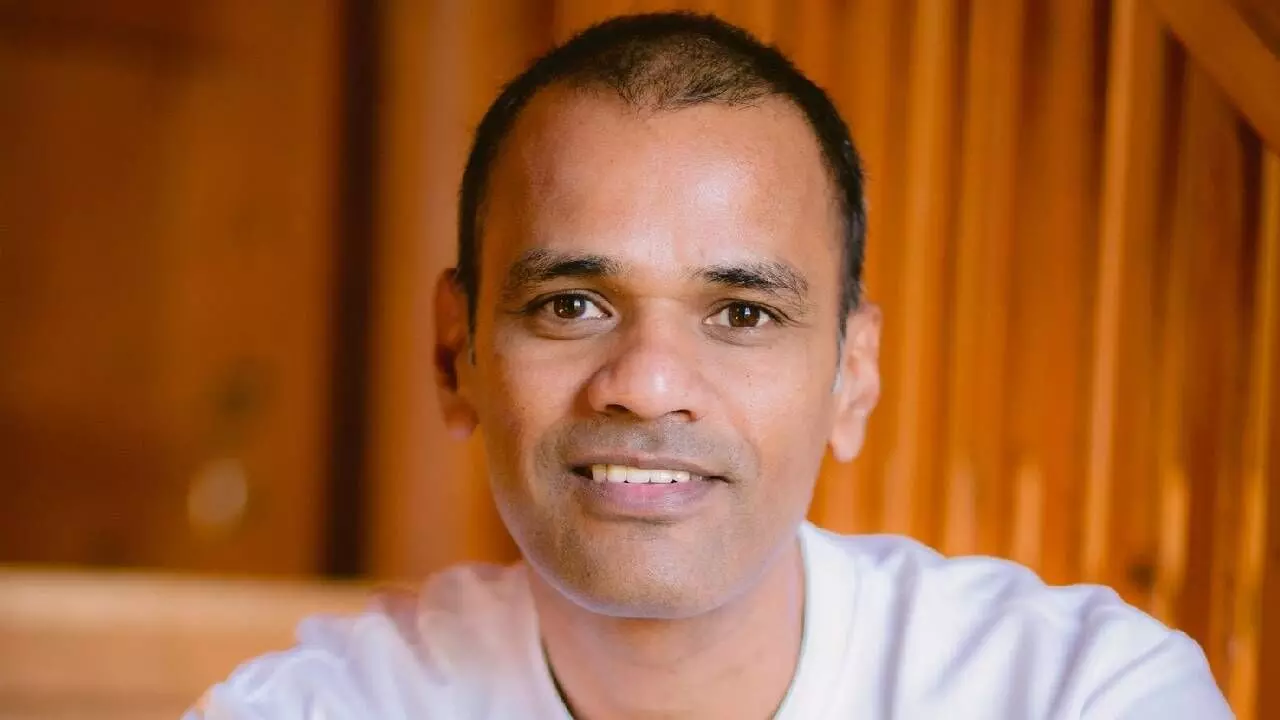
Deepankar Das, co-founder & CEO of ButtonShift, entrepreneurial journey began with a foundation in insurance and then management consulting with Accenture. The experience instilled a deep understanding of process and scale. "The tech behind Fotoley helped, and we proved our agility during Covid by quickly adapting to remote content generation and even briefly scaled operations globally before returning to focus on the Indian market post-normalcy, Das told Bizz Buzz in an exclusive interview
How would you describe ButtonShift as a platform and the core problem it solves for creative teams?
ButtonShift is a next generation Creative Workflow Platform designed to bring structure and agility to the chaotic process of visual collaboration. The core problem we solve is the fragmentation of the creative review and approval cycle. Creative work gets lost between multiple tools and conflicting feedback channels, leading to multiple versions, tracking the changes, and iterations. ButtonShift solves this by establishing the creative asset (video, design, image) as the single source of truth, providing a unified hub where feedback, version tracking, and approval processes are seamless, intuitive, and visually organized. We eliminate the chaos so creative minds can focus on creating.
When did you form it, and how is the response so far?
We launched the product in January 2025. The response has been tremendously positive because we, having a creative background, have truly identified the core operational issues of creative teams. We have conducted hundreds of personalized demos and currently have 600+ users. More importantly, ButtonShift has been delivering a significant jump in productivity. In some cases, we’ve seen as high as a 200% jump in productivity. On average, the feedback tool alone helps save two full days per week, which translates to 104 extra days in a year. We are clearly on the right track; the solution is being well accepted, and there is much more to come.
Creative workflows often get stuck between multiple tools and feedback channels—how does ButtonShift streamline this process and reduce project turnaround time?
Workflows usually stall because information sits in silos, of teams & communication channels. ButtonShift cuts through this by centralising the entire review lifecycle. Instead of deciphering vague email requests like "make it pop," our Feedback Tool allows for precise, time-coded annotations directly on videos and images. That’s just one example, but imagine having to gather feedback scattered over chats or different communication channels… the problem compounds. So, our feedback tool with built-in workflows acts as a unified hub which lets one focus on the task at hand.
We further reduce turnaround time through our Worklists. This feature ensures that every stakeholder knows exactly what is on their plate and what the priority is. Instant communication through our in-built messaging tool is designed to keep conversations focussed around projects, and with one thought in mind - “One shouldn’t have to spend time tool hopping, collating information from multiple windows and losing time that can go towards the actual task at hand.”
What sets ButtonShift apart from other project-management or collaboration tools available for creative teams today
General project management tools are great but are meant for Geeks, and not creative teams. It’s important to simply understand the difference between project status and asset status. It’s great to be managing tasks, dependencies & deadlines, but if you do not understand the evolving nature of a creative asset, then your project status is simply a manually keyed in ‘static’ status not reflective of the actual dynamic status of the asset. And hybrid work has actually made the need for real-time asset state awareness an existential necessity. Let’s take for example, an Insta reel being reviewed and tweaked till it takes final shape. The lack of a unified source of truth for the asset state means teams default to sharing via Slack attachments, email, or cloud folder links, creating a massive version control sprawl. And top this up with each version having its own set of feedback and comments from various stakeholders, which again have to be dealt with using WhatsApp, email threads and/or document notes. This chaos is what general PM tools, designed only for managing linear tasks, simply cannot track or resolve. What creative teams need is a simple tool, where assets change hands with a click of a button, versions are automatically measured and traceable; a tool where articulating and understanding feedback isn’t a drain of one’s mindspace but seamless & smooth; a tool where project management is minimal in nature, letting the creative brains be creative instead of uncomfortably attempting to be geeks in setting things up. And ButtonShift checks all these boxes.
What are some of the most common challenges creative teams face during collaboration, and how does ButtonShift address them?
The biggest challenges are fragmented feedback, version confusion, and lack of clear accountability. We address fragmented feedback using our Feedback tool, where everything is logically pinned to the file thread. No more hunting through Slack or WhatsApp. Workflow tool, addresses issues like version confusion, state of asset and iterations. Through our Worklists, we help make it visible who is currently holding up the process. If an asset is stuck in "Legal Review," the system makes that bottleneck obvious, allowing managers to intervene proactively rather than reacting once a deadline is missed.
Technology is reshaping the creative ecosystem. How is ButtonShift leveraging innovation—such as automation or AI—to enhance workflow efficiency?
We believe that for AI to be effective, the underlying workflow must first be clean and structured. Currently, we leverage automation to handle the repetitive "drudge work"—things like tracking "Time-in-State" for assets, managing version history, and automating approval notifications.
By perfecting this human-to-human collaboration layer, we are building the foundation for future AI capabilities. We see a future where the system doesn't just detect a bottleneck but orchestrates the fix, perhaps by re-routing a task if a reviewer is out-of-office or predicting a delay based on historical project data. Our innovation focus is on making the workflow "smarter" without making it more complex for the human user.
What's the revenue you earn from your operations and what are your projections for the near future?
At this stage, we are not disclosing specific revenue figures. Our current focus is entirely on user acquisition and delivering a high-value experience to our early adopters. The strong growth in our user base and the significant productivity ROI we are seeing are the key metrics we are tracking right now. We are focused on building a sustainable, subscription-led growth model that scales with our users' success.
Looking ahead, what new features or expansions can users expect from ButtonShift in the coming year?
Our top priority for 2026 is to further enhance our user experience. We want to make the "simplest tool on the market" even more intuitive. This refinement is what will ultimately set us up to launch our AI-driven features, which is our second goal for the year. Additionally, while ButtonShift is amazing at the review and approval stage, we are researching and developing features to support other stages of the creative lifecycle. Our goal is to expand our impact beyond just the final sign-off to help teams at every step, from initial brainstorming to final distribution.





