

Beyond branding: How India’s whisky consumers are prioritising authenticity and craft over brand names
India’s premium whisky consumer has shifted from being brand-first to liquid-first, says Heemanshu Ashar, Global Brand Ambassador, Paul John
Heemanshu Ashar, Global Brand Ambassador
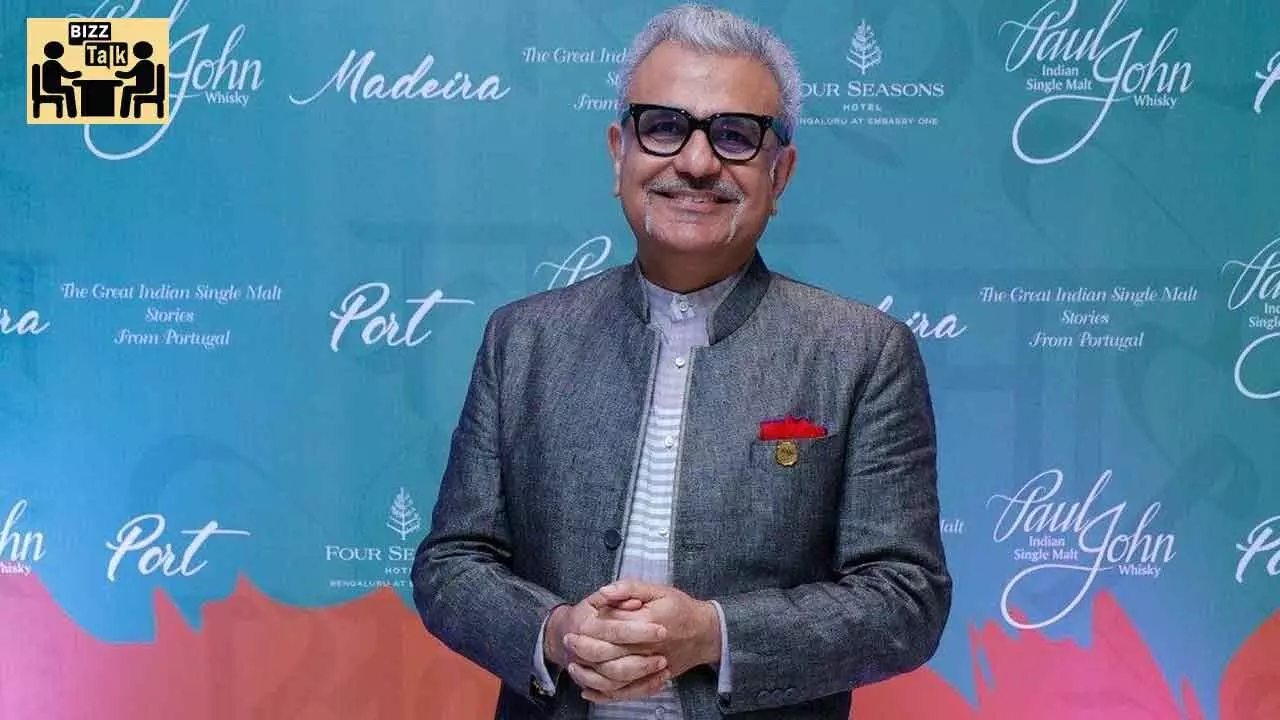
As Indian single malts continue to gain global recognition, the conversation is shifting from age statements and comparisons to Scotland, toward provenance, climate-led maturation, and a distinctly Indian sensory identity. Heemanshu Ashar, Global Brand Ambassador, Paul John brings nearly three decades of perspective to this evolution—offering nuanced insight into how Indian whisky has moved from the margins to the centre of serious global conversations.
Indian whisky. Indian single malt deserves a place at the table as world whisky, with its own flavour logic and its own standards that are being built by IMWA (Indian Malt Whisky Association). There is so much more work to be done, he told in an interview to Bizz Buzz
What narrative do you use when pitching bourbon vs single malts?
The pitch is not about Bourbon versus Single Malts, but Bourbon and Single Malts. Buffalo Trace Distillery Bourbons focus on expanding the palate, while Paul John Single Malts are defined by place, barley, distillation, and tropical ageing.
How is Paul John perceived globally?
Paul John has firmly established itself as a serious world whisky. It’s no longer seen as a novelty or exotic curiosity—it’s a credible, respected player in the international single malt space. Two key proof points underline this perception. First, Paul John is available in 44 countries, which speaks volumes about both demand and trust from global distributors.
Second, it consistently receives international media coverage. For example, The Spirits Business has repeatedly featured Paul John, highlighting it as a rapidly growing brand with strong traction in key markets such as the USA, UK, and Duty-Free channels. These factors combine to position Paul John as a globally relevant whisky brand with both scale and prestige.
Which Paul John brands are available globally?
Globally, the Paul John Single Malt range is the most recognized. Nirvana serves as the introductory expression for those new to the portfolio, offering an accessible entry point. Brilliance and Bold act as the flagship expressions, demonstrating the depth and complexity the brand can deliver.
The portfolio also includes select cask styles such as Classic, Peated, and four unique wine-cask finishes, showcasing versatility and innovation. Additionally, there are two limited releases—Zodiac and the annual Christmas Edition—which appeal to collectors and enthusiasts.
One of the brand’s guiding principles is “one liquid, one world, one ABV,” ensuring consistency in quality and experience, with the only exception being India, where the FSSAI mandates a 50% ABV for whisky sold domestically.
How do Indian single malts compare with international single malts globally?
Indian single malts don’t compete with international single malts as it is a very nascent category for the world. We are still the curious exotic discovery phase as a category.
What is Indian consumers’ perception of quality single malts?
India’s premium whisky consumer has shifted from “brand-first” to “liquid-first”: provenance, cask types, and authenticity matter more. India is also a massive whisky market by volume, so even a small shift to single malt creates real momentum.
How big is the Indian single malt market vs global (volume/value)?
For global context, the single malt Scotch market alone was valued at $8.59bn in 2024 (projected $9.22bn in 2025). This is excluding the single malts from Japan, Taiwan, Australia and New Zealand, South Korea, Thailand in the east and EU and Americas in the west who have their own single malts.
Indian single malt is miniscule than global single malt but growing on a fast base and will need another decade to but considered as a serious world category.
What is Paul John footprint in India and globally?
In India we are in 21 states and over 51 locations in CSD and PMF (Para-Military Force). Internationally, we are in 44 countries and over 20 Duty Free Stores in India and overseas.
What will your role be in ushering changes likely to happen at Paul John?
I have been honoured to be the Global Brand Ambassador for the brand, introducing and educating whisky lovers to the Paul John range, as well as anchoring the marketing and sales of the malts in the UK, USA and Australia.
Your perception of the Paul John business in India?
India is the engine market now—premiumisation is real, and Indian single malt has moved from niche to “serious consideration set”. Paul John is well placed because it has both category credibility abroad and a strong home market runway.
Paul John is now widely seen as a serious world whisky—not a novelty. Two proof points used often in global trade conversations: Availability across 44 countries, consistent international coverage in trade media like The Spirits Business (recent features still position it as “rapidly growing” with strong international traction across USA, UK and Duty Free.
Globally, the best-known set is the Paul John Single Malt range (Nirvana being the introduction to the Paul John Portfolio, Brilliance and Bold as flagships, select cask styles of Classic, Peated and 4 wine casks finishes, 2 Limited Releases of Zodiac + an annual limited Christmas Edition. We believe in one liquid, one world and one ABV (with the recent exception of FSSAI mandate of 50%abv nationally).
What growth do you expect for Paul John in India (volume/value)?
Our YOY growth is 25-30% and we hope to continue to maintain this.
How important is Goa for Paul John (manufacturing + marketing)?
Goa is foundational, it is the birthplace of Paul John Indian Single Malts. It’s where the malt distillery and maturation in coastal tropical environment shape the whisky’s identity with provenance. It’s also where whisky tourism and the Paul John story become tangible through the visitor experience.
If Indian single malt is creating its identity, what is India’s sensory vocabulary?
For Paul John-style coastal tropical maturation, builds the following sensory blocks; Malt-forward core with an oily, viscous texture derived from six-row barley. Notes of vanilla and spice from American oak highlight the wood influence.
Tropical fruits—pineapple and citrus—emerge alongside subtle coastal brine and umami in some expressions, creating a unique climatic signature DNA.
After three decades, what are you trying to change?
One simple thing: India should be judged for what it truly makes—not for old stereotypes of “Indian whisky”. Indian single malt deserves a place at the table as world whisky, with its own flavour logic and its own standards that are being built by IMWA (Indian Malt Whisky Association). There is so much more work to be done.





