

Ajay Banga’s timely lesson for India’s trade policy
Ajay Banga’s timely lesson for India’s trade policy
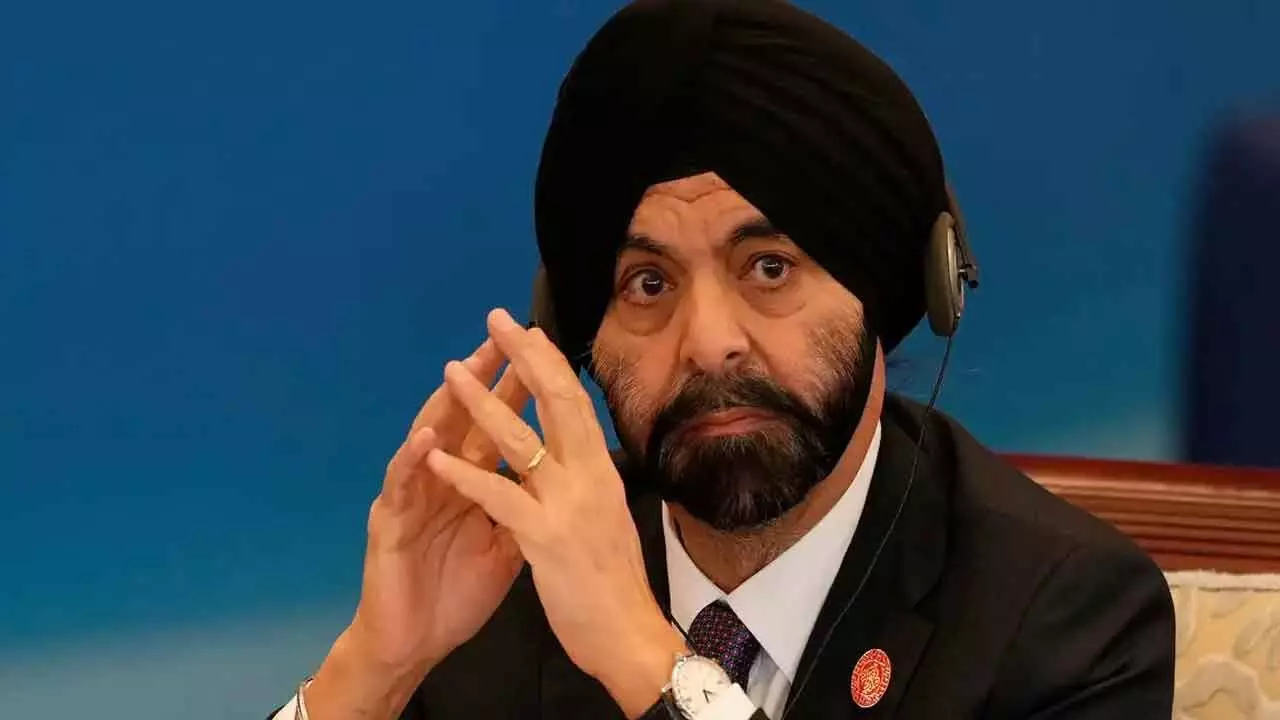
World Bank Group President Ajay Banga’s advice to India on trade is sensible and deserves careful attention. He urged India to “think less” about tariffs and focus more on opportunities. “Think less about the tariffs, and more about the opportunities like you [India] have done [with] the free trade agreement with the European Union,” he said.
A peculiar malaise afflicts our policymakers as well as its business tycoons: fear. We are afraid of almost everything—from imported goods and multinational corporations to the uncertainties of geopolitics. These fears are not always imaginary; the disruptions caused by US President Donald Trump’s tariffs, for instance, are real. But more often than not, we end up frightened of monsters that do not exist.
When India was compelled to liberalise in 1991, critics warned that policies advocated by the International Monetary Fund and the World Bank would ruin the economy, that multinational corporations would take over the country, and that the poor would become poorer. Similar doomsday scenarios were painted when India joined the World Trade Organization. None of these fears ultimately came true.
“If you look at the way trade has changed over the last two decades, global trade has quadrupled, while the share of emerging markets has doubled from 20 per cent to 40 per cent. Therefore, emerging markets like India have now become key components in global trade,” Banga pointed out. The moral is clear: India should engage more actively with global markets with enthusiasm and confidence, not with doubt and misgiving.
Yet India’s trade policy often remains trapped in a defensive mindset. Tariffs are viewed primarily as instruments of protection rather than as temporary tools of adjustment. Trade agreements are approached with suspicion, as though opening markets is inherently a concession instead of a strategic choice. This inward-looking stance risks isolating India at a time when global supply chains are being reshaped and new opportunities are emerging for countries willing to engage.
What is needed is a shift in mindset. Instead of fixating on what India might lose from trade, policymakers should focus on what India can gain—and on how to prepare domestic industry to compete. That means investing in infrastructure, improving logistics, simplifying regulations, and upgrading skills. Protection may provide short-term comfort, but competitiveness delivers lasting strength. Countries succeed in global markets not by shutting themselves off, but by building the capacity to compete with the best.
India’s demographic advantage, vast domestic market, and growing technological capabilities position it well to become a central player in global commerce. But this potential will remain underutilised if fear continues to shape policy. Trade agreements such as the one with the European Union should not be treated as exceptions, but as part of a broader, outward-looking strategy. India should seek not merely to respond to global trade trends, but to shape them, by setting standards, forging partnerships, and asserting its interests from a position of confidence.
Ultimately, embracing global trade with energy and ambition is not an act of recklessness, but one of self-belief. India’s own experience shows that opening up, when combined with sensible reforms, has strengthened the economy. Banga’s advice is a timely reminder that the future belongs to those who engage with the world.





