

Noninvasive scanning tech that can signal risk of heart disease
Until now, doctors had no precise and noninvasive way to see or measure these early changes in humans
Noninvasive scanning tech that can signal risk of heart disease
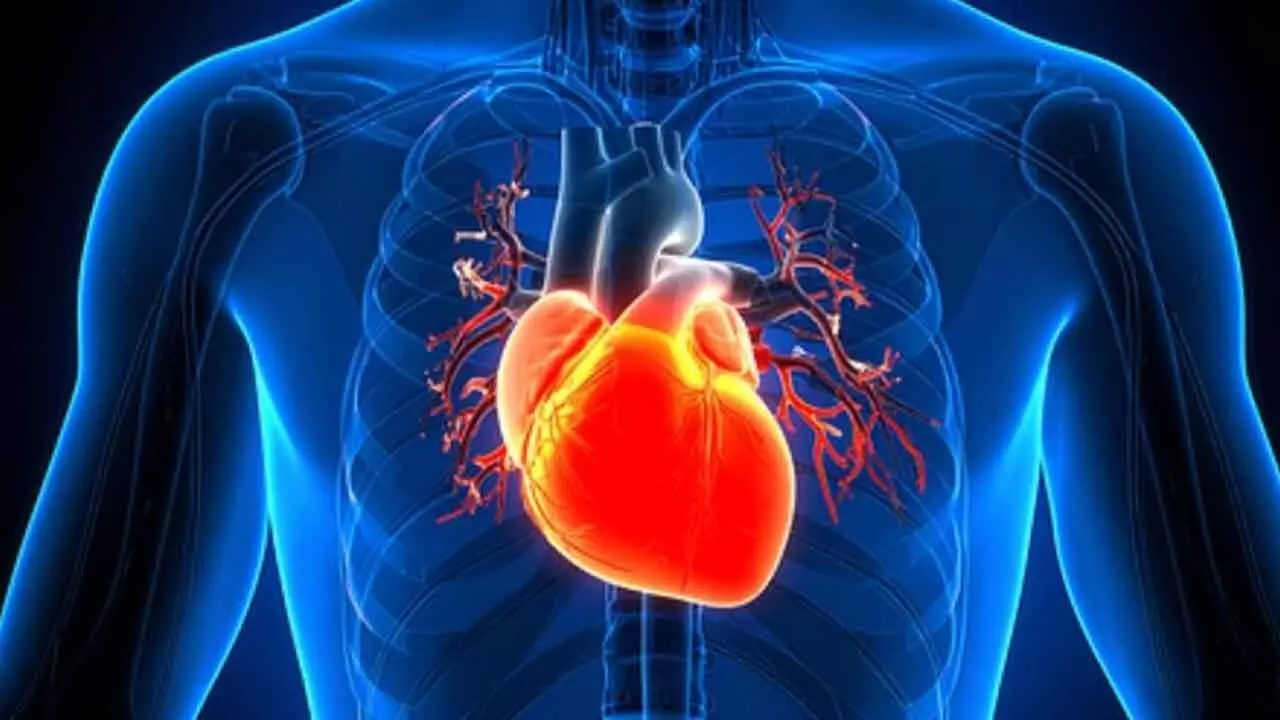
A team of German researchers has developed a new imaging technology that can noninvasively scan your skin and also reveal early signs of cardiovascular risk. Fast-RSOM skin scan can detect tiny changes in blood vessels, oxygen levels, and tissue composition that are invisible to traditional imaging.
It can capture detailed images of the smallest blood vessels directly through the skin -- and detect tiny changes in their ability to expand and contract, known as microvascular endothelial dysfunction (MiVED).
Until now, doctors had no precise and noninvasive way to see or measure these early changes in humans.
According to the team from the Helmholtz Association of German Research Centres, by revealing early signs of heart disease risk, the technology could help doctors intervene sooner, guide personalised therapies, and improve long-term heart health.
"With fast-RSOM, we can, for the first time, noninvasively assess endothelial dysfunction at single-capillary and skin-layer resolution in humans," said Dr. Hailong He, researcher at the Institute of Biological and Medical Imaging at Helmholtz Munich.
"Our novel approach offers an unprecedented view of how cardiovascular disease manifests at the microvascular level," added Dr Angelos Karlas, co-first author, vascular surgeon, and senior research scientist at Technical University of Munich (TUM) University Hospital.
The study is published in the journal Light: Science & Applications. Fast-RSOM provides high-resolution, dynamic MiVED biomarkers, describing subtle impairments in blood vessel function that are generally present before clinical symptoms or measurable macroscopic disease features appear.
These early changes are often linked to risk factors such as smoking, high blood pressure, or obesity.
However, in contrast to computing risk based on descriptive conditions, fast-RSOM can quantitatively capture the actual changes that these conditions have imposed on the microvascular system -- long before major complications develop.





