

Elevate Your Interiors with Wall Art: A Complete Guide to Stylish, Personalized, and Timeless Decor
Discover how wall art enhances interior design with color, depth, and personality. Learn styles, placement tips, trends, and ideas for homes and commercial spaces.
A complete guide to choosing, placing, and maintaining wall art to elevate residential and commercial interior spaces.
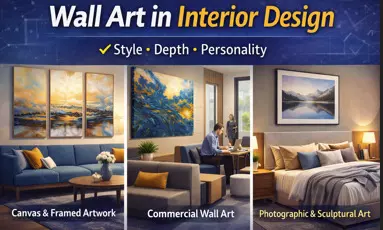
Wall art transforms dull surfaces into interesting results, which are a source of self-expression, style, and art. The images create depth, color, and personality in homes, offices, and businesses through paintings, prints, canvas designs, and sculptures. The correct furniture makes it complete; thus, none of the rooms look incomplete or unplanned.
Why Wall Art Matters in Interior Design
Wall art seems to be beyond decor. It creates a mood and is a visual stimulant. 0: The building is characterized by the well-selected pieces that attract attention and describe the building. Bright and saturated paintings stimulate an environment, and monotonous, neutral ones soothe. Furniture, accent colors, and accessories are also interconnected by wall art, which is a unity of a complete and well-polished appearance. Due to these advantages, it is a necessary element in modern-day design.
Types of Wall Art
Wall art can take a lot of different shapes, and the possibilities to be creative are unlimited:
- Canvas Prints: These are more spacious and offer vigor; these are perfect for family portraits, sights, or abstracts.
- Framed Artwork: Traditional, modern, or eclectic interiors. Highly effective in traditional, modern, and eclectic works.
- Metal and Wood Sculptures: Sculptures in 3D that provide touch and interest.
- Photographic Art: Takes a snap of a good moment, urban scenes, or natural scenery.
- Mixed Media and Collages: Pieces of different materials are used to play around with an effect.
The decision is based on the size of the room, style, illumination, and the effect that is wanted.
Selecting Wall Art for Different Rooms
Different rooms benefit from specific styles of wall art:
- Living Room: There are large statement pieces or multi-panel constructions that form the center stage and an introduction into a conversation.
- Bedroom: Relaxing, peaceful, or individual art facilitates coziness.
- Dining Area: Further enhancements include exquisite or themed furnishings to better dining experiences.
- Home Office: Motivational or abstract art promotes attention and imagination.
- Hallways and Entries: Planned progressions of smaller pieces or larger pieces of art are in use as they seek to direct traffic.
The decision to have art chosen in accordance with the purpose of the room contributes to the harmonious, conscious design.
Size, Placement, and Layout
The most important aspects of visual effects are size and position. Big artworks belong on the big walls, whereas mini pictures are enjoyed in the galleries or narrow spaces. One rule is to have the art occupy about two thirds the breadth of the furniture beneath. Hang on eye level so that one can view it perfectly and maintain uniform distances between sets (six or more panels). Vertical art helps to raise the perceived height of a ceiling, whereas horizontal objects enlarge the wall. Considerable sizing and composition do not allow art to consume the room.
Organization of Colours and Themes
Select the palette of the wall art. Coherence is provided by harmony, whereas contrast may be used to contribute energy. Neutral colors fit well in minimalistic or traditional rooms, and colorful art is appropriate in contemporary and eclectic appearances. Themes also predetermine the mood: nature works to put the mind to rest, abstracts provoke, and cityscapes are modern. With the right coordination, art is able to complement and not contradict other aspects.
Personalisation and Emotional Significance
Unique pieces of wall art add the benefit of sense and heart in any room. Families, vacation shots, homemade drawings, or inspirational quotes transform the walls into grand narratives. This kind of art makes it such a pleasant, natural ambience that it can always adapt to your preferences or the moods of the seasons. It has the ability to fit in living rooms, bedrooms, and offices, and is beautiful as well as to make one feel connected.
Durability and Maintenance
Lifestyle Wall art can last as long as its materials allow it to last. Both canvas, wood, metal, and framed prints all have certain care requirements. Regular dusting is advised, as is the removal of pieces in the direct sunlight and moderation in the humidity in order to retain the color and texture. The canvas and metal may be softly wiped using a light cloth; art that is made of paper requires protection against moisture. The right taking ensures that art remains an aesthetic sight over time.
Wall Art in Commercial Spaces
Wall art is used in commercial premises (offices, hotels, restaurants, healthcare facilities, and shopping stores) to influence the atmosphere. There are motivational or branded works in offices that motivate the employees and also represent values. Art in hotels and restaurants is utilized to provide a cozy and fashionable environment. The calming designs are used in healthcare to calm the patients and make them less stressed. Retail has been using themed art as a reinforcement of the brand identity and customer experience. Wall art is versatile and is necessary in professional interiors.
Emerging Trends in Wall Art
The present tendencies are creativity, sustainability, and customization:
- Bigger Statement Pieces: Large art is used on contemporary walls.
- Mixed Media and Textures: This material can be looked at as the mixing of materials to provide a layered effect.
- Eco-Friendly Materials: Sustainable materials or recycled materials become highly popular.
- Semi-finished Artwork: Custom-finished artwork has customizable previews and designs to satisfy the space.
These tendencies show the development of wall art, which gives not only beauty but also freedom of expression.
Frequently Asked Questions (FAQ)
Q: Can wall art work in any room?
A: Roadway (yes) has the benefit in living rooms, bedrooms, offices, dining rooms, hallways, and entryways.
Q: What is the right size to select?
A: Coordination of wall size and furniture. Sized art makes a statement; the smaller artworks fit snugly on walls or in galleries.
Q: Is it possible to make wall art individual?
A: Yes, of course, family photos, custom designs, or a meaningful message can be used to provide some individual touch.
Q: What is the correct way of keeping wall art?
A: Clean dust, do not expose to direct sunlight, and follow the guidelines for caring for the material.
Q: How long does wall art last?
A: Wall art is beautiful, and when well taken care of, it will last many years.
Conclusion
Interior design involves wall art. Galleries make blank walls into spectacular visual elements out of canvases and framed prints, as well as sculptures or mixed-media art. Wall art allows the personalization of homes and businesses in terms of size, location, and color to make any environment classy and imaginative. Wall art will provide a classic, customized, and poignant addition to any decoration of a house, office, or social setting.





