

Winning the AI Race: White House tech chief warns against self-inflicted setbacks
White House tech chief Michael Katzios outlines America’s AI strategy, warning against overregulation while stressing innovation, jobs, security, and global leadership.
Winning the AI Race
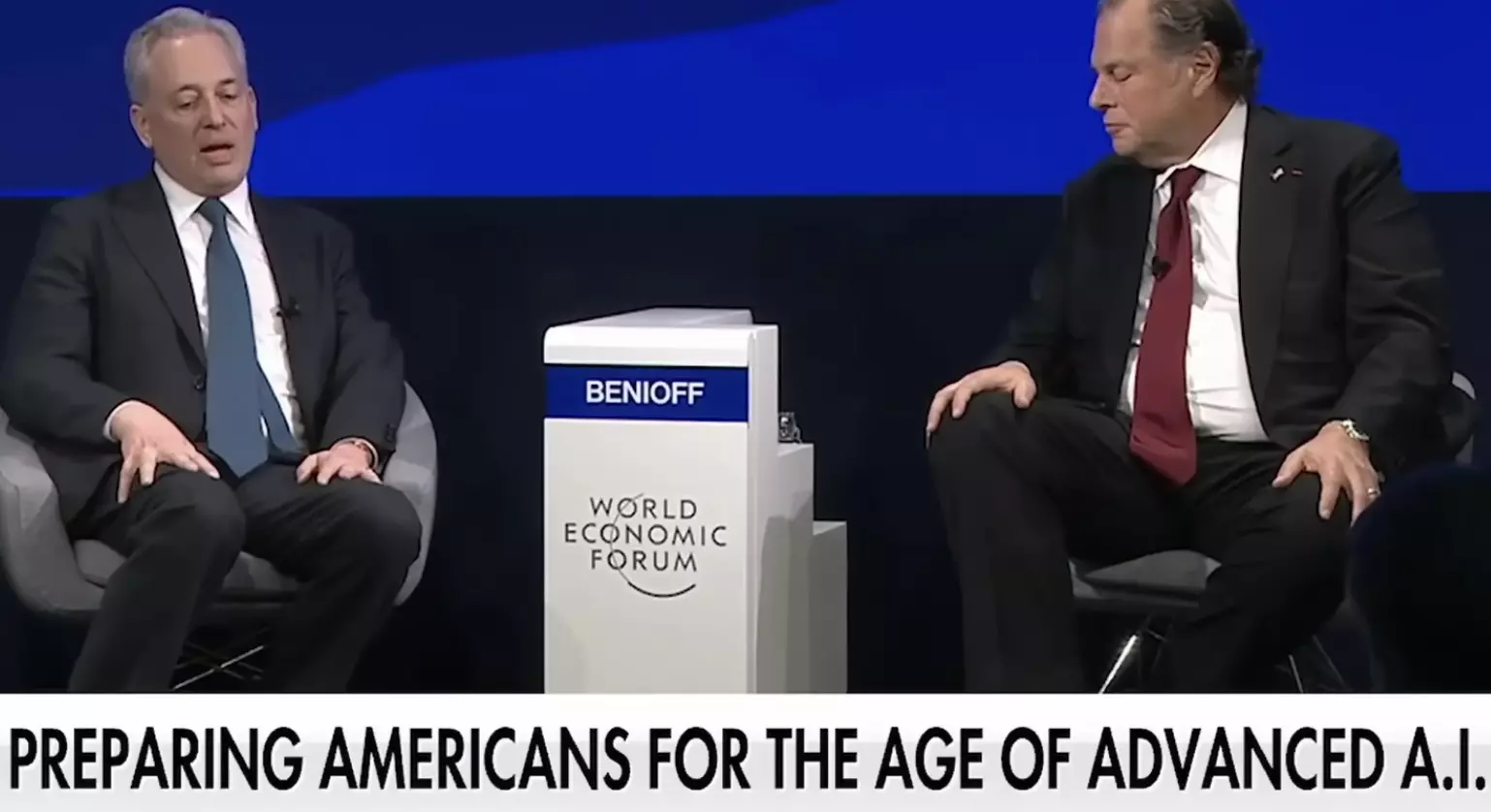
As artificial intelligence reshapes economies and geopolitics, the US is racing to secure global leadership. White House science chief Michael Katzios outlines America’s AI strategy, opportunities, risks, and why innovation, not overregulation, will determine who wins the future.
Artificial intelligence has rapidly emerged as the defining technological frontier of the 21st century, dominating conversations at global forums, including this year’s World Economic Forum. From boosting productivity to reshaping national security, AI is no longer a futuristic concept—it is a present-day force influencing wages, education, geopolitics, and everyday life.
Yet, alongside optimism, concerns are growing. Some policymakers and experts warn that excessive regulation, fragmented laws, or infrastructure restrictions could undermine America’s leadership in the global AI race. According to Michael Katzios, Director of the White House Office of Science and Technology Policy (OSTP), the biggest threat to US dominance may not come from rivals like China—but from self-inflicted policy missteps.
Speaking in a wide-ranging interview, Katzios laid out how the Trump administration views AI as central to economic growth, workforce transformation, and national security, while also acknowledging ethical concerns and public anxieties surrounding the technology.
Why Winning the AI Race Matters
Katzios stressed that winning the AI race is critical for the United States, not just for economic reasons, but for strategic and geopolitical leadership. However, he challenged the notion that “winning” simply means building the most advanced models.
“For us, winning is about adoption,” he explained. “It’s about what technologies people around the world actually use.”
According to Katzios, the US currently dominates the entire AI stack:
Hardware: Advanced chips, particularly from companies like Nvidia
Models: Leading AI systems such as ChatGPT and Google Gemini
Applications: Real-world AI tools used in healthcare, finance, government, and defense
This full-stack dominance places the US in a unique position to export AI technologies globally, reinforcing both economic strength and geopolitical influence.
Balancing Innovation and Regulation
Despite AI’s promise, Katzios voiced concern about proposals that could slow innovation. He cautioned against halting data center development or introducing a patchwork of state-level AI laws that could stifle progress.
“If we clamp down too hard on innovation, we risk losing the AI race because of a self-inflicted injury,” he warned.
The administration’s approach, he said, is to strike a careful balance—protecting public trust and safety without undermining America’s competitive edge.
Economic Impact: Jobs, Wages, and Inequality
AI’s economic implications remain one of the most debated topics. A recent report co-authored by a Stanford assistant professor suggests that AI could raise average wages by 21% while significantly reducing wage inequality.
At the same time, critics point to risks such as job displacement, misinformation, and even reports of children forming emotional or romantic attachments to AI chatbots.
Katzios acknowledged both sides, emphasizing that technological transitions have always reshaped labor markets. He pointed out that over a century ago, most Americans worked in agriculture—today, fewer than 5% do.
“New jobs we’ve never imagined will emerge,” he said. “The responsibility of the administration is to help people transition into those roles.”
Preparing the Workforce for an AI-Driven Future
To ensure AI-driven growth benefits all Americans, the administration is investing heavily in education and workforce development.
Key initiatives include:
AI Education Task Force: Established through an executive order to integrate AI learning into K–12 education
Presidential AI Challenge: Encouraging students across all 50 states to participate in AI-based projects
Reskilling and Upskilling Programs: Nearly $100 million allocated to help workers adapt to AI-powered roles
Katzios emphasized that AI should be viewed as a tool that enhances human productivity rather than replaces it.
Strengthening US Science and Research
Another pillar of the administration’s strategy is revitalizing America’s scientific enterprise. The federal government currently spends around $150 billion annually on research and innovation, but Katzios stressed the importance of maximizing return on investment.
To rebuild public trust in science, President Trump signed a “gold standard science” executive order aimed at ensuring research is transparent, reproducible, and defensible.
“Americans need to trust the scientific enterprise,” Katzios said. “That trust is foundational to innovation.”
AI and National Security
AI’s role in defense is expanding rapidly. Katzios highlighted a major Pentagon initiative to deploy AI tools across military operations, calling it a “first step” toward modernizing workflows within one of the world’s largest bureaucracies.
The goal, he explained, is to create unified platforms that can be used across the entire Department of Defense, improving efficiency, decision-making, and operational readiness.
While ethical concerns around military AI remain, Katzios argued that responsible deployment is essential to maintaining national security in an era of rapidly advancing technology.
Addressing Ethics, Safety, and Trust
Public trust, Katzios noted, is non-negotiable. Concerns about bias, privacy, censorship, and child safety could derail AI adoption if left unaddressed.
The administration is working toward a national AI framework that prioritizes safety, transparency, and accountability—especially when it comes to protecting young users.
“If people don’t trust the technology, they won’t use it,” Katzios said. “And that’s bad for everyone.”
Looking Ahead: Beyond AI
While AI dominates headlines, Katzios emphasized that it is only one part of a broader emerging technology strategy. The administration is also investing in quantum computing, nuclear technology, autonomous systems, drones, spaceflight, and even pilot programs for robotaxis across the country.
“Our competitors know that future growth depends on emerging tech leadership,” Katzios said. “We have that leadership today—and we intend to keep it.”
As AI reshapes economies, warfare, education, and daily life, the stakes could not be higher. The US stands at a pivotal moment—well-positioned to lead, but vulnerable to policy missteps that could slow innovation.
According to Katzios, the path forward is clear: invest in innovation, build the right infrastructure, prepare the workforce, and earn public trust. Done right, AI could fuel economic growth and improve lives across the nation—cementing America’s leadership for decades to come.





