

SK Telecom unveils AI-Native overhaul to rebuild network, services and data Infrastructure
At MWC 2026, SK Telecom outlines an AI-native strategy to rebuild its core systems, expand gigawatt-scale data centres, and deploy trillion-parameter models.
SK Telecom unveils AI-Native overhaul to rebuild network, services and data Infrastructure
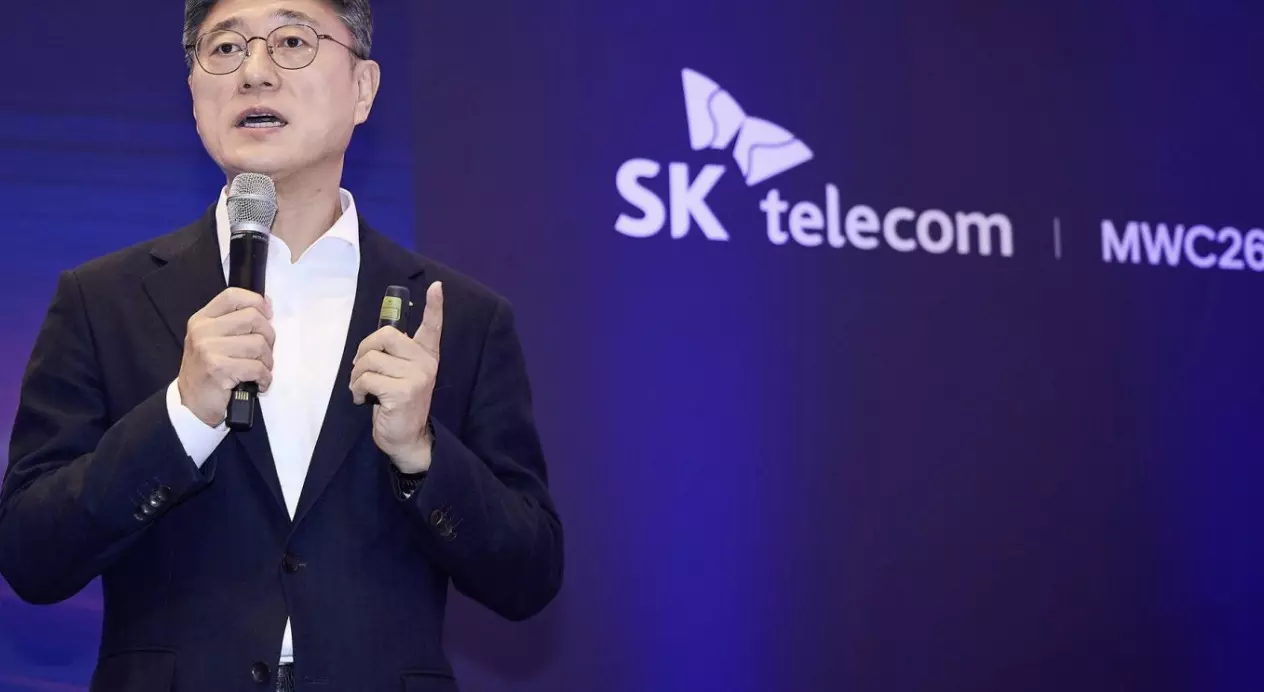
At MWC 2026 in Barcelona, SK Telecom outlined an ambitious plan to transform itself into an “AI-native” company, rebuilding its telecom core, customer operations, and data infrastructure around artificial intelligence to support national and enterprise-scale AI growth.
At the Mobile World Congress (MWC) 2026 in Barcelona, SK Telecom detailed a sweeping transformation strategy aimed at embedding artificial intelligence across every layer of its business — from network operations and IT systems to customer service and internal workflows.
Speaking at a press conference, SK Telecom CEO Jung Jai-hun said the company is rewriting its core systems and expanding infrastructure to position South Korea among the world’s top three AI powers. The strategy, which the company calls “AI Native,” goes beyond deploying AI tools and instead focuses on restructuring legacy telecom systems to make AI the operating foundation.
“SKT defines the customer as the very essence of our business,” Jung said, adding that AI-driven innovation will enable deeper personalisation and operational efficiency across services.
Rebuilding Telecom Systems Around AI
A central pillar of the plan involves redesigning SK Telecom’s integrated IT systems, including sales, billing, and line management platforms, to be optimised for AI-driven decision-making. The company said this would allow it to offer personalised pricing plans, memberships, and services based on individual customer usage patterns and behaviour.
SK Telecom also plans to implement a Zero Trust security framework across its systems, featuring enhanced authentication, access controls, network segmentation, and AI-based threat monitoring. Industry observers note that such a shift could reshape how telecom operators manage data governance, service pricing, and fault detection.
The company is also advancing autonomous network operations using AI to automate wireless quality management, traffic control, and equipment operations. With AI-RAN technology, SK Telecom aims to improve network speed and reduce latency.
Unified AI Agent for Customer Touchpoints
On the customer side, SK Telecom plans to deploy a single, integrated AI agent across its digital platforms, including its T World portal and T Direct Shop. The AI agent will analyse daily usage patterns and provide tailored recommendations across pricing, roaming, and membership services.
The company is expanding its AI Contact Center to support customer service representatives with real-time AI tools during calls. Offline retail stores will also use AI to identify customer needs and offer post-visit recommendations, supported by “AI Personas” that analyse digital behaviour across customer segments.
Building Gigawatt-Scale AI Data Centres
SK Telecom’s infrastructure ambitions include building hyperscale AI data centres across South Korea with capacity exceeding 1 gigawatt. The company aims to position the country as a major AI data centre hub in Asia and attract global investment.
The operator already runs a GPU cluster known as Haein and has deployed its Petasus AI Cloud virtualisation platform to support GPU-as-a-service workloads. SK Telecom said it plans to offer this cloud solution globally and is collaborating with OpenAI to build an AI data centre in South Korea’s southwestern region.
On the model side, SK Telecom revealed that its sovereign AI foundation model currently has 519 billion parameters — the largest in Korea — and will be upgraded to over one trillion parameters with multimodal capabilities, including image, voice, and video processing, later this year.
Enterprise and Manufacturing Focus
Beyond telecom, SK Telecom is targeting industrial applications. The company is working with SK hynix on a manufacturing-focused AI package that analyses process data in real time to reduce defect rates and improve equipment efficiency. The solution will be offered as a combined infrastructure, model, and application stack.
Internal AI-First Culture
The transformation extends to SK Telecom’s internal operations. The company has introduced an “AX Dashboard” to track AI usage across teams and an “AI Board” to oversee governance. An internal “AI playground” allows employees to build AI agents without coding, with more than 2,000 agents already deployed across departments such as marketing, legal, and public relations.
“For future growth, we must reinvent our way of working from the ground up,” Jung said, emphasising that AI will become central to SK Telecom’s corporate culture.
As telecom operators globally explore AI adoption, SK Telecom’s approach signals a shift from experimental deployments to AI as a foundational operating model — one that integrates infrastructure, models, applications, and governance under a single strategic framework.





