

OpenAI launches “OpenAI for Healthcare” to boost patient care and reduce clinician burden
OpenAI launches “OpenAI for Healthcare”
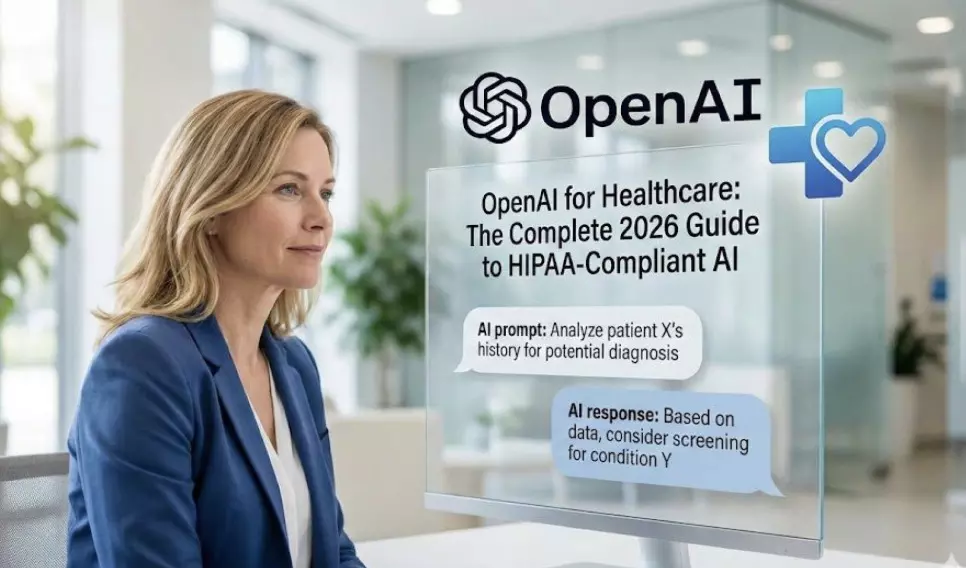
OpenAI has officially launched OpenAI for Healthcare, a suite of AI products designed to help healthcare organizations deliver more consistent, high-quality care while maintaining strict HIPAA compliance. The initiative aims to reduce administrative workload for clinicians and enable custom clinical solutions, all while safeguarding sensitive patient data.
The new offerings include ChatGPT for Healthcare, which is already being rolled out to leading institutions such as AdventHealth, Baylor Scott & White Health, Boston Children’s Hospital, Cedars-Sinai Medical Center, HCA Healthcare, Memorial Sloan Kettering Cancer Center, Stanford Medicine Children’s Health, and University of California, San Francisco (UCSF).
Additionally, the OpenAI API, widely used across healthcare, continues to support HIPAA-compliant solutions for companies like Abridge, Ambience, and EliseAI, powering applications that streamline patient care and clinical workflows.
Addressing Pressure on Healthcare Systems
Healthcare systems worldwide are facing unprecedented strain, with rising patient demand and overwhelming administrative responsibilities. Clinicians often spend hours on paperwork rather than direct patient care, while critical medical knowledge is scattered across multiple sources.
“AI adoption in healthcare is accelerating, and for good reason,” said OpenAI spokesperson. “Physicians’ use of AI nearly doubled in the past year, according to the American Medical Association. Yet many clinicians still rely on individual tools because their organizations haven’t adopted AI quickly enough—often due to regulatory and privacy concerns. OpenAI for Healthcare helps close that gap.”
What ChatGPT for Healthcare Offers
ChatGPT for Healthcare is designed specifically for clinical environments, combining secure workflows with evidence-based reasoning to support real patient care. Key features include:
Healthcare-tailored models: GPT‑5 models trained and tested for clinical, research, and operational tasks, evaluated through physician-led benchmarks like HealthBench and GDPval.
Evidence-based responses with citations: Answers reference peer-reviewed studies, clinical guidelines, and public health guidance, providing transparency and supporting confident decision-making.
Integration with institutional policies: AI responses align with an organization’s protocols and care pathways through integration with tools like Microsoft SharePoint.
Reusable templates: Automate common tasks such as drafting discharge summaries, patient instructions, clinical letters, and prior authorizations, freeing up clinician time.
Enterprise-grade governance: Centralized workspace with role-based access controls, SAML SSO, SCIM support, and organization-wide user management.
HIPAA-compliant data control: Patient data stays under organizational control, with options for data residency, audit logs, customer-managed encryption keys, and a Business Associate Agreement (BAA) with OpenAI. Importantly, content shared with ChatGPT for Healthcare is not used to train models.
Transforming Clinical and Operational Workflows
Clinicians and administrative teams can use ChatGPT for Healthcare to:
Synthesize medical evidence alongside institutional guidance for patient-specific decisions.
Draft clinical and administrative documentation quickly and accurately.
Adapt patient-facing education materials for readability, language, and accessibility.
By reducing administrative burdens, supporting adherence to shared care standards, and enhancing the patient experience, OpenAI aims to allow clinicians to focus on what matters most: patient care.
“OpenAI for Healthcare provides organizations a secure, enterprise-grade foundation for AI,” said the company. “It enables healthcare teams to deliver more reliable care while staying compliant with HIPAA and other regulations.”





