

India ranks among the top countries globally across multiple AI indicators
At Davos, IT Minister Ashwini Vaishnaw rejected the IMF’s AI ranking, saying global benchmarks place India among the world’s top-tier AI powers.
India in first group of AI Powers”: Ashwini Vaishnaw ushes back India's ranking at Davos
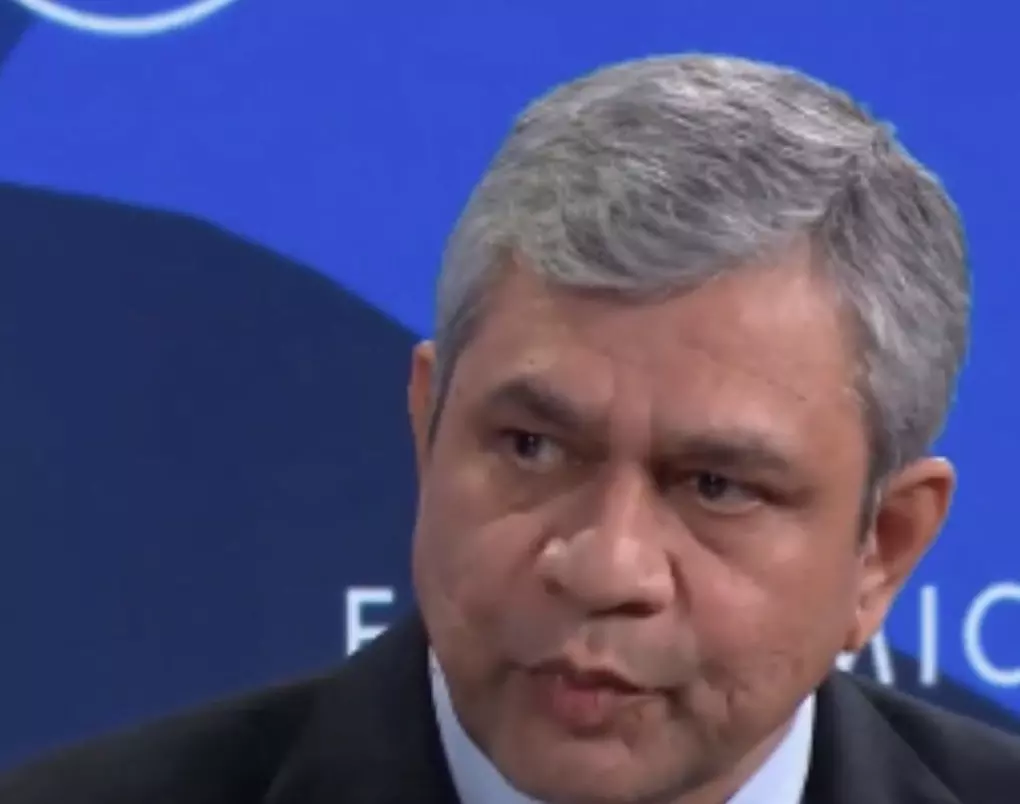
At the World Economic Forum in Davos, IT Minister Ashwini Vaishnaw rejected the IMF’s classification of India as a second-tier AI power, asserting that global benchmarks place India firmly among the world’s leading artificial intelligence nations.
India has strongly contested an assessment by the International Monetary Fund (IMF) that grouped the country among a “second tier” of artificial intelligence (AI) powers. Speaking on the sidelines of the World Economic Forum (WEF) in Davos, Union Minister for Electronics and Information Technology Ashwini Vaishnaw said the IMF’s categorisation does not reflect India’s true standing in the global AI ecosystem.
Vaishnaw was responding to comments made by IMF Managing Director Kristalina Georgieva, who had suggested that India fell into a secondary grouping of countries in terms of AI capabilities. The Minister questioned the criteria used for the assessment and pointed to independent global studies that, he said, paint a very different picture.
“I don’t know what the IMF criteria is, but Stanford places India at third in the world for AI preparedness,” Vaishnaw said. “I don’t think that classification is correct. India is clearly in the first group.”
Stanford Rankings and Global Benchmarks
Citing research from Stanford University, Vaishnaw argued that India ranks among the top countries globally across multiple AI indicators. According to him, Stanford’s assessments place India third in AI preparedness and penetration, and second globally in AI talent.
“These are globally respected benchmarks,” he said, adding that such evaluations reflect India’s growing depth in skills, research, deployment, and ecosystem readiness. “When you look at preparedness, penetration, and talent together, India’s position is very strong.”
The Minister stressed that these rankings underscore India’s emergence as a serious AI power, rather than a follower lagging behind the United States or China.
A Five-Layer AI Strategy
Vaishnaw outlined India’s AI strategy as a comprehensive, multi-layered effort that spans the entire AI value chain. He described this approach as covering five critical layers of AI architecture: applications, models, chips, infrastructure, and energy.
“India is working on all five layers, and we are making very good progress in each of them,” he said. “This is not a narrow or fragmented effort—it is a full-stack approach.”
According to the Minister, this broad-based strategy aligns with India’s wider economic momentum as the world’s fastest-growing major economy. He argued that sustained economic growth, combined with policy support and digital public infrastructure, gives India a unique advantage in scaling AI solutions.
Focus on Applications and Enterprise Use
While much global attention is focused on building ever-larger AI models, Vaishnaw emphasised that India’s strength lies in practical deployment and enterprise-focused applications. He said the real value of AI comes not from headline-grabbing model sizes, but from solving real-world business and governance problems.
“On the application layer, we will probably be the biggest supplier of services to the world,” he said. Indian companies, he explained, have a long-standing advantage in working closely with enterprises, understanding business processes, and delivering customised technology solutions.
This application-driven approach, Vaishnaw argued, is where return on investment is actually realised. “ROI doesn’t come from creating a very large model,” he said. “Most use-cases can be addressed with models in the range of 20 to 50 billion parameters.”
Building a ‘Bouquet’ of AI Models
The Minister revealed that India is developing what he described as “a bouquet” of mid-sized AI models, rather than betting solely on a single, massive foundational model. These models, he said, are already being deployed across sectors to boost productivity, efficiency, and service delivery.
From healthcare and agriculture to manufacturing and public services, AI diffusion across the economy is a key policy priority. “Our focus is on ensuring that AI adoption spreads widely,” Vaishnaw said, highlighting the government’s emphasis on inclusive and broad-based technological impact.
Challenging the IMF Narrative
Vaishnaw’s remarks reflect growing sensitivity in New Delhi to how India is positioned in global technology narratives. By publicly challenging the IMF’s classification at Davos, the government signalled that it intends to actively shape perceptions of India’s role in the AI race.
The Minister suggested that simplistic groupings fail to capture the complexity of national AI ecosystems. “You cannot look at AI leadership through one narrow lens,” he said, implying that factors such as talent depth, application scale, and deployment capability are just as important as research labs or model size.
India’s AI Summit and Global Positioning
The comments come ahead of India hosting an AI Summit next month, where the country is expected to present its vision for responsible, inclusive, and application-driven artificial intelligence. The summit will likely showcase India’s progress in AI talent development, sectoral adoption, and policy frameworks.
Vaishnaw said the upcoming summit will reinforce India’s credentials as a global AI leader that is charting its own path. Rather than aligning strictly behind the US or China, India aims to position itself as an independent pole in the global AI landscape.
“With our talent base, our digital infrastructure, and our focus on real-world applications, India is not in the second group,” he said. “We are very much in the first group of AI powers.”





