

India positions Global South at the heart of AI policy with New Delhi impact summit
India hosts the AI Impact Summit 2026 in New Delhi, bringing the Global South into AI policymaking with a focus on people, planet and progress.
India positions Global South at the heart of AI policy with New Delhi impact summit
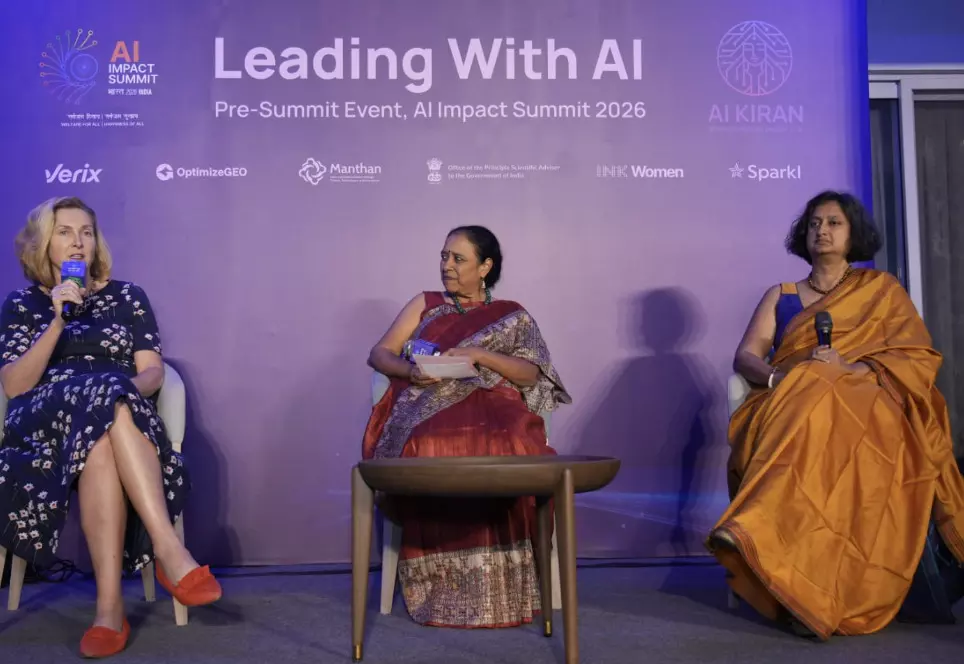
New Delhi is set to host the India-AI Impact Summit 2026 from February 16–20, as India emerges as a leading global voice on inclusive and development-focused artificial intelligence. Anchored in the three guiding “Sutras” of People, Planet and Progress, the summit reflects India’s effort to reframe the global AI conversation around public good, sustainability and shared growth, according to the Ministry of External Affairs.
India will convene one of the world’s most significant technology gatherings this month, bringing together governments, industry leaders, academics and civil society to shape a cooperative vision for artificial intelligence. The five-day summit will be held across major venues including Bharat Mandapam and Sushma Swaraj Bhawan, alongside multiple locations in the national capital.
Officials describe the scale of participation as unprecedented, with over two lakh registrations already recorded. Notably, participants include farmers and grassroots stakeholders, underscoring India’s intent to connect AI policy with real-world developmental challenges rather than limiting discussions to elite or technical circles.
The summit is structured in phases. From February 16 to 18, side events, sector-specific showcases, solution platforms and applied AI demonstrations will focus on execution models and use cases, including agriculture and public service delivery.
The leaders’ segment, beginning on February 18 and continuing through February 19, will feature high-level addresses, a formal inauguration and closed-door deliberations. The final day, February 20, will be dedicated to thematic panels and policy discussions, with strong participation from European institutions and leaders.
At the invitation of Prime Minister Narendra Modi, leaders from 20 countries are expected to attend, including prominent global figures from Europe, Latin America, Africa and Asia, alongside ministerial delegations from more than 45 countries, the UN Secretary-General and senior officials from international organisations.
Unlike previous global AI summits hosted by the UK, South Korea and France—largely focused on safety and governance—India’s approach places development at the forefront. While trust and security remain on the agenda, New Delhi is positioning AI as a catalyst for inclusive growth, particularly for emerging and developing economies.
To institutionalise this vision, the summit is organised around seven thematic “chakras”, covering areas such as democratising AI access, economic growth, science and innovation, social empowerment, human capital development and resilience. Working groups involving participants from over 100 countries have been meeting since September last year, with their recommendations set to feed directly into leaders’ discussions.
India is also expected to showcase its digital public infrastructure—spanning real-time payments and digital governance platforms—as evidence that inclusive technology deployment can transform service delivery at scale. Concerns around automation and job displacement will be addressed through focused sessions on skilling, reskilling and workforce transitions.
As New Delhi prepares to host this convergence of diplomacy and technology, the India-AI Impact Summit 2026 signals a clear shift in global AI discourse—placing people, sustainability and progress firmly at its core.





