

How AI could optimize the power grid
image for illustrative purpose
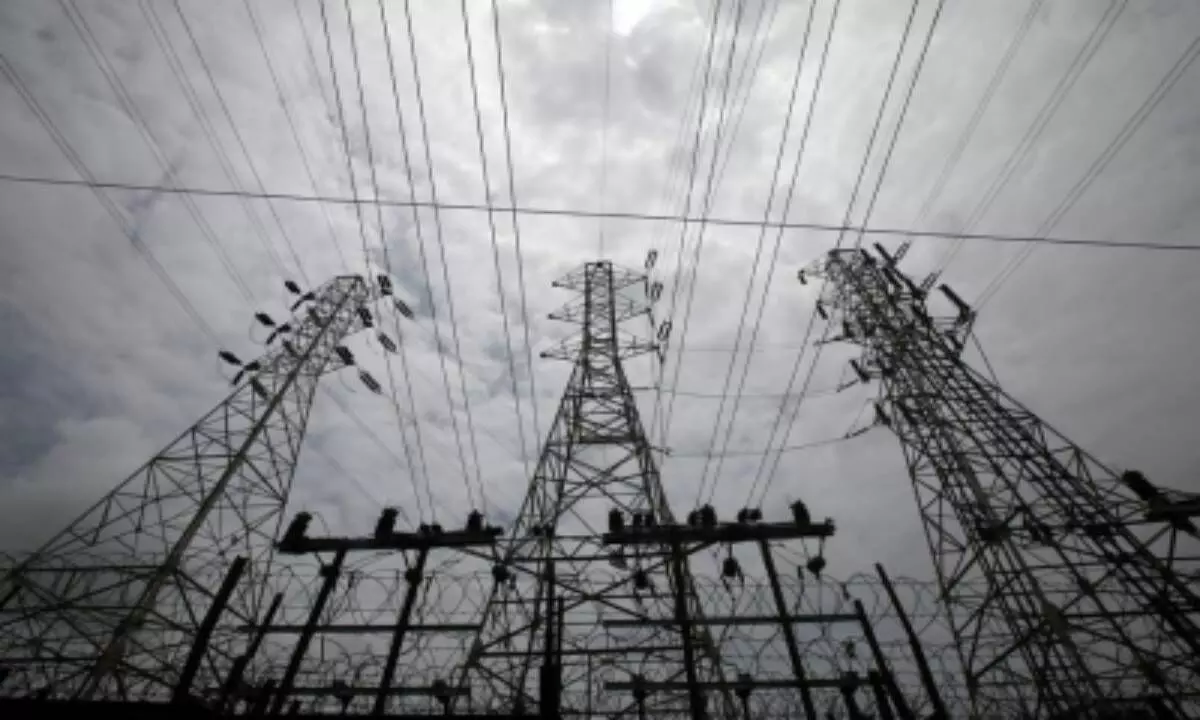
As artificial intelligence drives a surge in electricity demand particularly from energy-hungry data centers powering large AI models concerns are mounting about its environmental footprint. Yet, experts say AI could also play a crucial role in making power grids cleaner, more efficient, and more resilient.
One of the most promising applications of AI lies in optimizing the power grid itself. By improving how electricity is generated, distributed, and consumed, AI could help reduce energy waste, better integrate renewable sources, and protect infrastructure from disruptions caused by extreme weather.
MIT News spoke with Priya Donti, the Silverman Family Career Development Professor in the Department of Electrical Engineering and Computer Science at MIT and a principal investigator at the Laboratory for Information and Decision Systems (LIDS), whose research focuses on applying machine learning to power grid optimization.
Why the power grid needs optimization
Operating a power grid requires maintaining a precise balance between electricity supply and demand at every moment. On the demand side, grid operators must rely on forecasts, as consumers do not pre-register their energy usage. On the supply side, costs and fuel availability fluctuate, requiring constant adjustment.
This challenge has intensified with the growing share of renewable energy sources such as wind and solar, whose output depends heavily on weather conditions. At the same time, electricity is lost as heat when power flows through transmission lines. According to Donti, managing all these uncertainties simultaneously is why optimization is essential to grid operations.
Where AI can make the biggest impact
AI can help improve forecasts of renewable energy generation by combining historical data with real-time information, allowing operators to better anticipate how much power will be available. This could make it easier to rely on cleaner energy sources without compromising grid stability.
Machine learning can also assist with the complex optimization problems grid operators solve daily—deciding which power plants to run, how much electricity they should generate, when batteries should charge or discharge, and how flexible electricity demand can be shifted. These problems are computationally intensive, often forcing operators to rely on simplified approximations that can become increasingly inaccurate as renewable energy penetration grows.
AI-based methods can provide faster and more accurate approximations, enabling real-time decision-making and more responsive grid management. Beyond operations, AI can improve long-term grid planning by speeding up large-scale simulations, support predictive maintenance by identifying early signs of failure, and even accelerate research into advanced battery technologies needed to store renewable energy.
Weighing AI’s energy costs and benefits
Donti emphasizes that “AI” encompasses a wide range of technologies with vastly different energy footprints. Smaller, application-specific models typically consume far less energy than large, general-purpose systems. In many energy-sector use cases, the benefits of these targeted models—such as enabling decarbonization and improving efficiency—outweigh their costs.
However, she cautions that society’s current AI investments are not always aligned with the areas where the technology could deliver the greatest climate and energy benefits. Many of the most resource-intensive AI systems are not the ones that offer the largest gains for sustainability.
Applying AI to power grids also demands a higher standard of reliability. Unlike conversational models, even small errors in grid optimization can trigger large-scale outages. Donti argues that AI systems must be designed to respect the physical laws governing power systems, integrating engineering knowledge directly into their algorithms.
Looking ahead, she sees an opportunity to build AI tools that are both trustworthy and energy-efficient—while also advocating for a more democratized approach to AI development that prioritizes real-world needs over sheer computational scale.





