

Global survey finds 41% willing to use AI for mental health support
Global survey finds 41% willing to use AI for mental health support, citing faster access to help, though experts warn AI cannot replace professional care.
Global survey finds 41% willing to use AI for mental health support
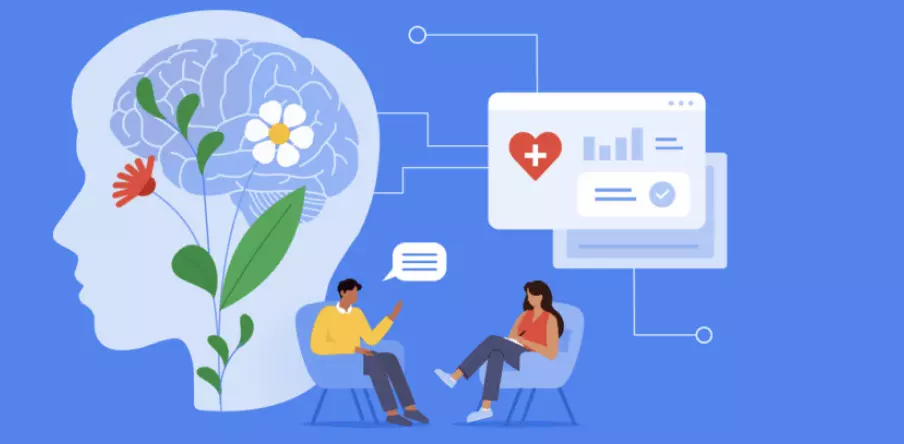
A global survey has found growing openness toward artificial intelligence in mental health support, with many respondents saying they would consider AI tools for counselling due to faster access to help.
A new international study has revealed increasing public willingness to use artificial intelligence for mental health support, with a significant proportion of people saying they would consider AI systems for counselling and emotional guidance.
The research, conducted by Bournemouth University, surveyed around 31,000 adults across 35 countries to understand how people perceive the role of large language models such as ChatGPT in everyday life.
The findings show that 41% of respondents in the United Kingdom and 61% globally said they would feel comfortable using AI for counselling or mental health support. Many participants cited the possibility of receiving quicker assistance compared with traditional healthcare systems, where appointments with professionals can involve long waiting times.
Faster access driving interest
According to study lead researcher Dr Ala Yankouskaya, the survey was designed to explore public attitudes toward integrating AI into daily services, including healthcare and education.
“If someone is experiencing depression, they do not want to wait months for an appointment, so instead they can turn to AI,” Yankouskaya said.
However, she stressed that while AI tools can provide immediate responses and guidance, they have significant limitations when it comes to addressing complex mental health conditions.
“So, it is no substitute for speaking to a health professional,” she cautioned.
Expanding role of AI in daily life
Beyond counselling, the study also found that some respondents would consider using AI for roles traditionally performed by humans, including teaching children. Researchers noted that the long-term implications of AI-assisted learning remain uncertain.
Yankouskaya said further research is needed to understand whether reliance on AI tools could affect children’s cognitive development, memory and problem-solving skills.
Experts urge responsible development
Mental health organisations believe AI could offer benefits if deployed responsibly and with proper safeguards.
Mind chief executive Dr Sarah Hughes said artificial intelligence has the potential to expand access to mental health support for many individuals.
“AI has enormous potential to improve the lives of people with mental health problems,” Hughes said.
However, she warned that innovation must be accompanied by strong ethical standards and safety measures.
“That potential will only be realised if it is developed and deployed responsibly, with safeguards proportionate to the risks,” she added. Hughes also emphasised the importance of including people with lived experience of mental health conditions in shaping future digital support systems.
Balancing technology and human care
The study highlights a growing acceptance of AI in sensitive areas such as emotional support and counselling, driven largely by accessibility and convenience.
At the same time, researchers and health advocates stress that AI tools should complement — not replace — professional mental health care, ensuring that technological progress does not compromise patient well-being.





