

Did India’s Sarvam AI really outperform Google Gemini and ChatGPT?
Sarvam AI’s Vision OCR and Bulbul V3 voice model outperform global AI tools in Indian-language tasks, marking a breakthrough for India’s sovereign AI push.
Did India’s Sarvam AI really outperform Google Gemini and ChatGPT?
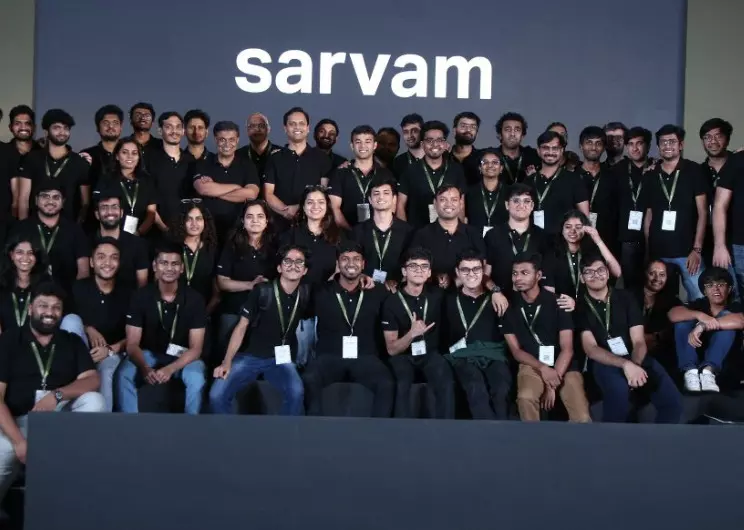
Bengaluru-based Sarvam AI is gaining global attention as its OCR tool, Sarvam Vision, and voice model Bulbul V3 outperform leading AI systems like Google Gemini and ChatGPT in Indian-language tasks, marking a major milestone for India’s emerging sovereign AI ecosystem.
India’s artificial intelligence ambitions received a significant boost as Bengaluru-based startup Sarvam AI demonstrated world-class performance in language-focused AI tools, challenging global leaders such as Google Gemini and ChatGPT in specific domains. The company’s latest breakthroughs in optical character recognition (OCR) and AI-driven voice generation are drawing attention both within India and internationally.
Sarvam AI, which describes its approach as building “sovereign AI” from the ground up in India, has introduced two key tools: Sarvam Vision, an advanced OCR system, and Bulbul V3, a next-generation text-to-speech model tailored for Indian languages. Together, these tools highlight how India-focused AI development can address gaps left by global platforms.
Sarvam Vision Sets New Benchmark in OCR
Sarvam Vision has reportedly outperformed several leading AI models on OCR benchmarks, particularly in reading and understanding documents in Indian languages. According to the company, the model achieved an accuracy score of 84.3% on the olmOCR-Bench, surpassing Gemini 3 Pro and other recent OCR systems, while ChatGPT trailed significantly on this specific evaluation.
The tool also excelled on OmniDocBench v1.5, a benchmark designed to test AI performance on real-world documents. Sarvam Vision scored 93.28% overall, with especially strong results in handling complex layouts, dense technical tables, and mathematical formulas—areas where traditional OCR systems often struggle due to irregular formatting and multi-layered content.
These results are particularly significant for India, where large volumes of documents in governance, education, and business exist in diverse scripts and formats. By focusing on Indic languages and real-world document complexity, Sarvam has carved out a niche that major global AI labs have not prioritised.
Changing Perceptions Around Indic AI
Sarvam AI had earlier faced scepticism for concentrating on smaller, Indic-language models instead of broad global systems. However, recent performance data has shifted opinions. Technology commentators and users alike have acknowledged the value of specialised, high-quality models that address local linguistic and operational challenges.
Experts now note that Sarvam’s approach fills a critical gap in AI infrastructure, especially in markets where multilingual documentation and regional language use dominate daily operations.
Bulbul V3 Advances AI Voice in Indian Languages
Alongside its OCR success, Sarvam has launched Bulbul V3, a text-to-speech (TTS) model designed to produce natural, expressive, and stable voice output. Comparable in purpose to global leaders like ElevenLabs, Bulbul V3 focuses on India-specific use cases, reducing common AI voice issues such as pronunciation errors and tonal instability.
The model currently supports more than 35 voices across 11 Indian languages, with plans to expand coverage to 22 languages. Its emphasis on content accuracy and linguistic nuance makes it particularly useful for education, customer service, accessibility, and media applications.
A Milestone for India’s AI Ecosystem
Sarvam AI’s progress reflects a broader shift in India’s AI landscape, where homegrown firms are moving beyond application layers into foundational model development. By delivering competitive performance in OCR and speech for Indian contexts, the company is demonstrating that globally relevant AI innovation can emerge from regionally focused research.





