

Chinese AI startup MizarVision maps US military deployments near Iran
Chinese AI startup MizarVision publishes satellite images tracking US military assets near Iran, raising security concerns over AI-powered open-source intelligence.
Chinese AI startup MizarVision maps US military deployments near Iran
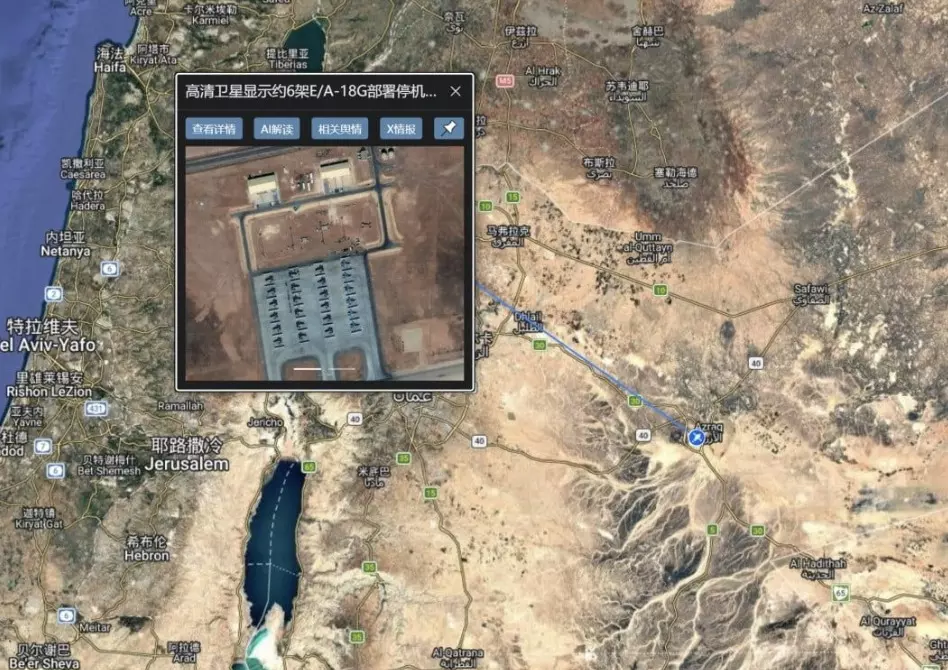
A Chinese artificial intelligence startup is drawing global attention after publishing near real-time satellite imagery of US military deployments across the Middle East during the ongoing Iran conflict. The company, MizarVision, is using AI-powered analysis to track jets, aircraft carriers, and missile systems, raising concerns among analysts that commercial satellite data could now expose sensitive military movements to the world.
AI Surveillance Enters the Battlefield
The ongoing conflict involving the United States, Israel, and Iran is witnessing a new technological dimension as satellite intelligence becomes increasingly accessible.
Chinese startup MizarVision has been publishing high-resolution satellite images of US military assets across West Asia on social media platforms, offering detailed visual insights into troop movements, aircraft deployments, and naval activity.
The images reportedly show everything from fighter jet positions to aircraft carrier configurations, including detailed views of assets such as the USS Abraham Lincoln (CVN‑72) and the USS Gerald R. Ford (CVN‑78) operating in the region.
Experts say the company’s use of AI to analyse satellite imagery could change how modern conflicts are observed and potentially influence military operations.
How MizarVision Works
Based in Hangzhou and Shanghai, MizarVision reportedly employs fewer than 200 people but relies heavily on artificial intelligence to process vast volumes of satellite data.
The company does not own satellites. Instead, it collects imagery from commercial providers—both Chinese and international—and processes the raw data using an advanced AI layer.
This AI system can automatically detect and identify military assets such as aircraft, warships, and missile batteries. Analysts say the technology can distinguish between different aircraft models, including refuelling aircraft like the KC-135 Stratotanker and KC-46 Pegasus.
Once processed, the images are annotated with labels and geolocation markers, turning raw satellite pictures into searchable intelligence products.
Tracking US Military Activity in the Middle East
According to analysts monitoring the firm’s posts, MizarVision began releasing images in late February showing US military deployments in the region.
The imagery reportedly tracked aircraft transfers to Israel’s Ovda Air Base and naval movements in the Arabian Sea. By early March, the monitoring expanded to several countries including Jordan, Kuwait, Bahrain, and the United Arab Emirates.
The company claims to have catalogued roughly 2,500 US military assets across the region. These include fighter jets, missile defence systems such as THAAD and Patriot batteries, and aircraft stationed at facilities like Al Udeid Air Base in Qatar, the largest American military base in the Middle East.
A New Era of Open-Source Intelligence
Security experts say this development reflects the rapid rise of open-source intelligence (OSINT) powered by artificial intelligence.
In the past, the ability to track individual aircraft from space was limited to major intelligence agencies and governments. Today, commercial satellite imagery combined with AI analysis can produce similar insights and make them available to the public in near real time.
Analysts warn that such transparency could weaken the traditional secrecy surrounding military operations.
Some experts say that once these images are posted online, they could potentially be accessed by state and non-state actors, including groups involved in the conflict.
Concerns Over Security Risks
Security researchers have expressed concern that the public availability of detailed satellite imagery could create risks for military operations.
Some analysts believe that adversaries could use this information to identify potential targets or track movements of strategic assets.
Several military installations catalogued in MizarVision’s imagery were reportedly later struck by Iranian missile and drone attacks. However, there is currently no confirmed evidence linking the company’s data directly to those strikes.
Experts say that even without direct coordination, publicly available intelligence can still influence battlefield decisions.
Technology Reshaping Modern Warfare
The rise of AI-powered satellite intelligence is highlighting how technology is transforming modern warfare.
What was once tightly controlled military intelligence is increasingly becoming accessible through commercial services and advanced data analysis tools.
As conflicts become more technologically complex, analysts warn that governments may need to rethink how sensitive military information is protected in an era where satellites, artificial intelligence, and social media can reveal strategic movements almost instantly.





